
Object in British Sign Language (BSL)
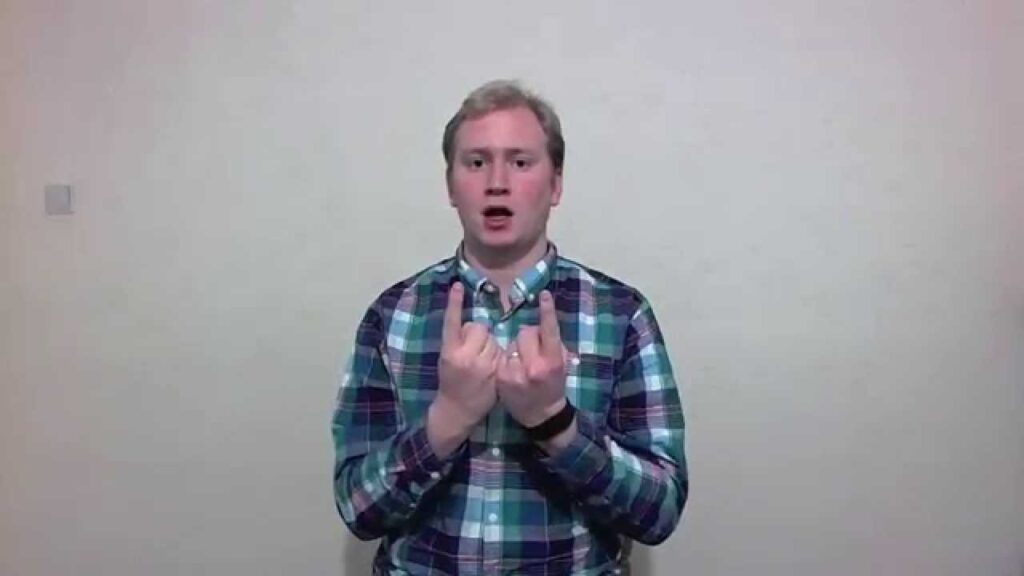
The sign for “object” in BSL refers to a physical item or thing. It’s commonly used in everyday conversations, particularly when discussing items in a classroom, at home, or in various activities. Understanding this sign can enhance communication within the UK Deaf community, allowing for clearer discussions about specific objects.
How to Sign “Object” in BSL
- Start with your dominant hand open and palm facing upward, as if you are holding an object.
- Position your hand at about waist height in front of you.
- Using your non-dominant hand, mimic the action of placing an object into your dominant hand by bringing your non-dominant hand downwards towards the dominant hand.
- As you perform this action, maintain a neutral facial expression or one that fits the context of your conversation, using slight nods to add emphasis if needed.
- Ensure to keep the sign within your signing space to maintain clarity and understanding.
Common Mistakes
- Forgetting to use the correct hand shape; be sure to keep the dominant hand open.
- Not maintaining the signing space, which can lead to confusion about what is being referenced.
- Neglecting non-manual features like facial expressions, which are essential for conveying meaning in BSL.
BSL vs ASL
In BSL, the sign for “object” focuses on the action of placing an item, while in ASL, the sign may differ significantly, often incorporating more abstract gestures. BSL relies heavily on context and the physical representation of the action, reflecting the language’s unique structure and use of space.
Related Signs
- 1 – Represents the number one, often used in counting objects.
- 10 – Represents the number ten, useful in discussions about quantities.
- 100 – Represents the number one hundred, often used when discussing larger quantities.
- 11 – Represents the number eleven, helpful in numeric contexts.
- 12 – Represents the number twelve, also useful in counting contexts.
Frequently Asked Questions
Can I use “object” in a full BSL sentence?
Yes! You can structure your sentence using the topic-comment format, for example, “OBJECT I HAVE” to indicate you have an object.
Are there regional variations for the sign “object”?
While the sign is generally consistent, some regions may have slight variations in execution. It’s beneficial to observe local signers.
What is a similar sign to “object”?
The sign for “thing” is quite similar and can often be used interchangeably in conversations.
What are some tips for learning this sign?
Practice regularly in front of a mirror to ensure your hand shapes and facial expressions are accurate, and observe native signers for context.
Can I use this sign for any object?
Yes, the sign is versatile and can be used for various objects, but adding context helps clarify your meaning.
How do I express multiple objects?
You can modify the sign to indicate multiple items by repeating the action or using number signs as needed.
Practice This Sign
Try signing Object In Bsl with your camera and get AI coaching on your handshape, movement, and location.
Free · No signup required