
Native in British Sign Language (BSL)
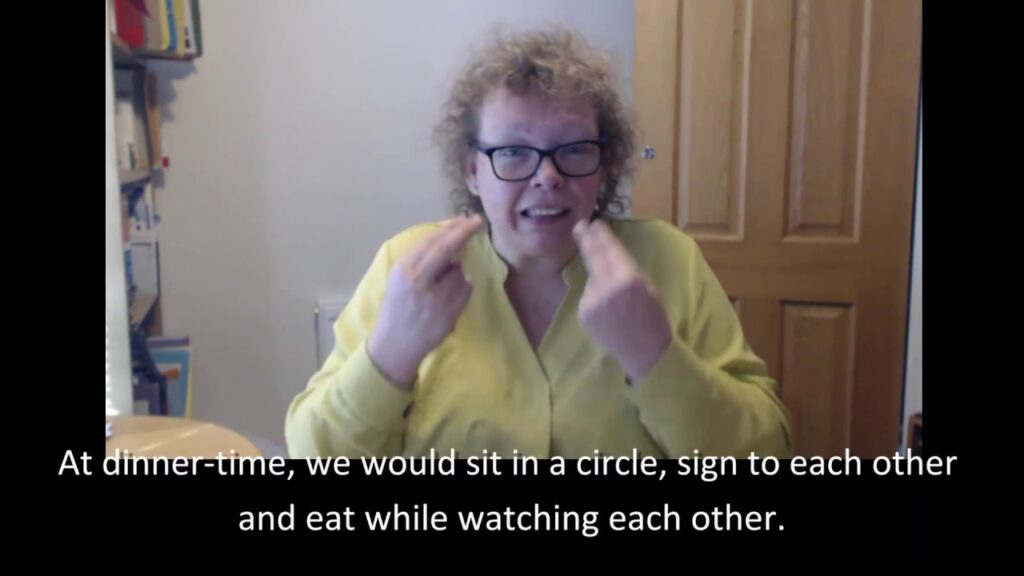
The sign for “native in BSL” is used to identify someone who has a strong connection to British Sign Language, often as their first language. This term is significant within the UK Deaf community, where cultural identity and language play vital roles in individual and collective experiences. It’s commonly used in discussions about identity, language proficiency, and cultural heritage.
How to Sign “Native” in BSL
- Start with both hands in a flat “B” handshape (palms facing down).
- Position your hands in front of your chest, about shoulder-width apart.
- Simultaneously move both hands outward from the centre, away from your body, while keeping the fingers flat.
- As you do this, maintain a neutral or slightly raised eyebrow position to indicate that you are discussing identity.
- Finish with your hands slightly apart, indicating the idea of “native” or connection to BSL.
Common Mistakes
- Using the wrong handshape; some learners may confuse it with a “C” handshape.
- Not using the correct facial expressions, which are important for conveying meaning in BSL.
- Failing to maintain the right space; the movement should be clear and deliberate to show connection to BSL.
BSL vs ASL
In BSL, the sign for “native in BSL” has a specific focus on the cultural identity tied to the language, which is less emphasized in ASL. ASL may use a sign that conveys similar ideas but often has a different handshape and movement. Understanding these differences is crucial for effective communication within each community.
Related Signs
- 1 – Represents the number one in BSL.
- 1 Dollar – Sign for one dollar in BSL.
- 10 – Represents the number ten in BSL.
- 100 – Sign for one hundred in BSL.
- 11 – Represents the number eleven in BSL.
Frequently Asked Questions
How can I use “native in BSL” in a sentence?
You can use it to describe someone by saying, “I am native in BSL,” using the topic-comment structure.
Are there regional variations for this sign?
The sign is generally consistent across the UK, but some regions may have slight variations in movement or facial expression.
What are some similar signs in BSL?
Similar signs include “Deaf” and “BSL,” which are used frequently in conversations about identity and language.
What tips do you have for learning this sign?
Practice in front of a mirror to ensure your handshape and facial expressions are correct, and try to use it in conversation to reinforce your learning.
Can I use this sign to describe someone else?
Yes, you can use it to describe another person by adjusting the topic-comment structure accordingly.
Is it important to use facial expressions when signing?
Absolutely! Facial expressions are key in BSL as they add meaning and context to the signs you make.
Practice This Sign
Try signing Native In Bsl with your camera and get AI coaching on your handshape, movement, and location.
Free · No signup required