
Natter in British Sign Language (BSL)
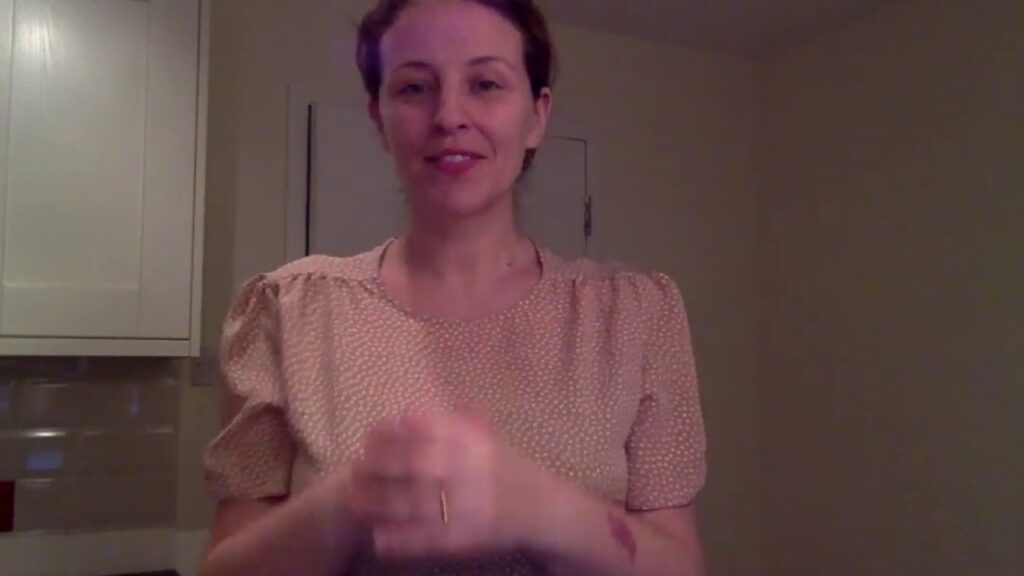
The sign “natter” is commonly used in the UK Deaf community to refer to chatting or having a conversation, often in a light-hearted or informal manner. This sign is a great way to express a friendly interaction, particularly in social settings where people are catching up or enjoying each other‘s company.
How to Sign “Natter”
- Start with your dominant hand in a loose “B” handshape (fingers extended and together, thumb across the palm).
- Position your hand near your mouth, palm facing inward.
- Move your hand slightly away from your mouth while maintaining the “B” handshape, as if you’re mimicking the action of talking.
- Incorporate facial expressions to convey friendliness and engagement; a smile is effective here.
- Use a slight upward movement of your eyebrows to indicate enthusiasm or light-heartedness.
Common Mistakes
- Forgetting to include facial expressions, which are crucial in conveying the meaning and tone of the sign.
- Using a flat handshape instead of the correct “B” handshape, which can make the sign unclear.
- Not using the appropriate movement, leading to a sign that may appear static and less engaging.
BSL vs ASL
In British Sign Language (BSL), “natter” has a specific sign involving a handshape and movement near the mouth, reflecting the action of speaking. In American Sign Language (ASL), the sign for “chat” or “talk” may differ, often using different handshapes and movements. This highlights the unique nature of each sign language and the cultural contexts they arise from.
Related Signs
- Chat – A casual conversation, often less formal than a discussion.
- Talk – A more general sign for exchanging information verbally.
- Conversation – A back-and-forth exchange of ideas or information.
- Argue – A sign used when discussing disagreements or conflicts.
- Gossip – Talking about someone who is not present, often in a light-hearted manner.
Frequently Asked Questions
Can I use “natter” in a full BSL sentence?
Yes! You can use “natter” in sentences. For example, “I want to natter with you” can be signed with the appropriate topic-comment structure.
Are there regional variations for “natter” in the UK?
While the sign is generally understood, some variations may exist based on local dialects. It’s always good to learn from your local Deaf community.
What other signs are similar to “natter”?
Signs like “chat,” “talk,” and “gossip” are related and can often be used interchangeably depending on the context.
What tips can help me learn this sign better?
Practice in front of a mirror to observe your facial expressions and hand movements. Watching native signers can also provide valuable insights.
Is it okay to sign “natter” in formal settings?
While “natter” is informal, it can still be used in lighter formal settings. Just be mindful of the context and audience.
How can I improve my BSL grammar when using “natter”?
Focus on the topic-comment structure, ensuring that you establish the topic clearly before signing the action, like “I natter.”
Practice This Sign
Try signing Natter In Bsl with your camera and get AI coaching on your handshape, movement, and location.
Free · No signup required