
ASL and BSL in British Sign Language (BSL)
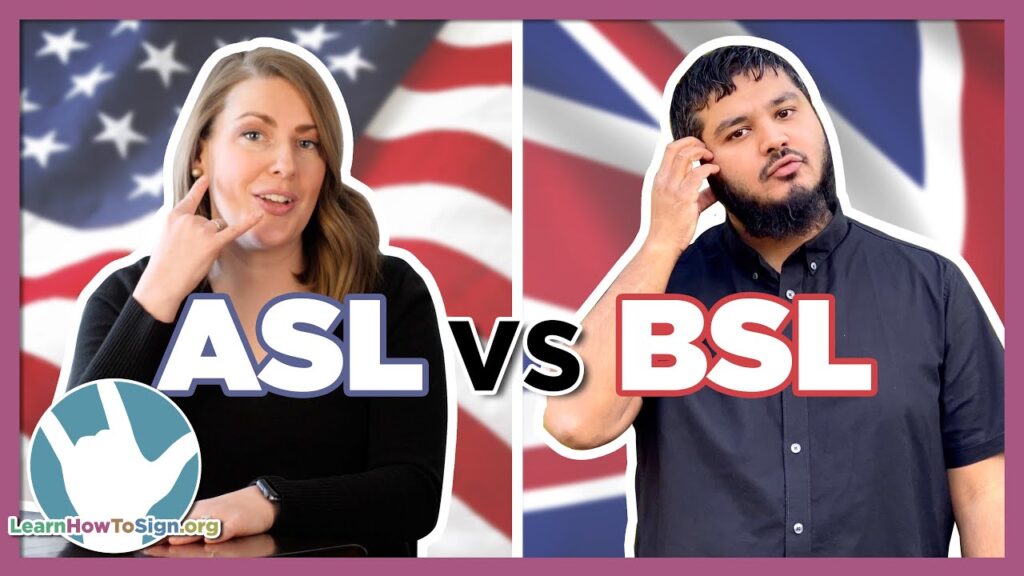
The sign for “ASL and BSL” refers to American Sign Language and British Sign Language, two distinct sign languages widely used in the Deaf communities of the United States and the United Kingdom, respectively. This sign is commonly used when discussing the differences or similarities between these two languages, especially in educational settings or among those learning about sign languages.
How to Sign “Asl And Bsl” in BSL
- Start with both hands in the “A” handshape (a closed fist with the thumb resting on the side). Position your hands in front of your body, slightly apart.
- Move your right hand towards your left hand while simultaneously moving your left hand to the right. This movement represents “ASL”.
- Next, switch to the “B” handshape (flat hand, palm facing down) with both hands. Position them close together, palms facing downwards.
- Bring your hands down slightly while maintaining the “B” shape, indicating “BSL”.
- Throughout the sign, maintain a neutral facial expression, but feel free to raise your eyebrows slightly when transitioning from “ASL” to “BSL” to show contrast.
Common Mistakes
- Using the wrong handshape for “ASL” or “BSL”; ensure you use “A” and “B” handshapes respectively.
- Failing to move the hands adequately apart when indicating the two languages, which can make the sign unclear.
- Neglecting facial expressions that help convey the contrast between the two languages.
BSL vs ASL
In BSL, the sign for “ASL” and “BSL” incorporates specific handshapes and movements that may differ from ASL. For instance, ASL uses different signs to represent other languages and often employs a more fluid movement, while BSL is more structured in its approach to indicating the two languages.
Related Signs
- (Bsl) – The sign for British Sign Language.
- 1 – The number one in BSL.
- 10 – The number ten in BSL.
- 100 – The number one hundred in BSL.
- 11 – The number eleven in BSL.
Frequently Asked Questions
Can I use “ASL and BSL” in a sentence?
Yes, you can use the sign to compare the two languages in various contexts. For example, “I study ASL and BSL.”
Are there regional variations in this sign?
The basic sign remains consistent, but some regions may have slight variations in handshape or movement. It’s always good to observe local signers.
Is there a similar sign in ASL?
Yes, ASL has its own sign for BSL, which generally uses a different handshape and movement pattern.
What tips can help me learn this sign?
Practice in front of a mirror to ensure your handshapes and movements are accurate, and consider watching videos of native signers.
How can I practice with others?
Joining a local Deaf club or BSL class can provide you with opportunities to practice with others and get feedback on your signing.
Are there resources to learn more about BSL?
Yes, many websites, online courses, and community centres offer resources for learning BSL, including dictionaries and classes.
Practice ASL Signs
Use your camera to practice signs and get real-time AI feedback on your technique.
Free · No signup required