
Walk in British Sign Language (BSL)
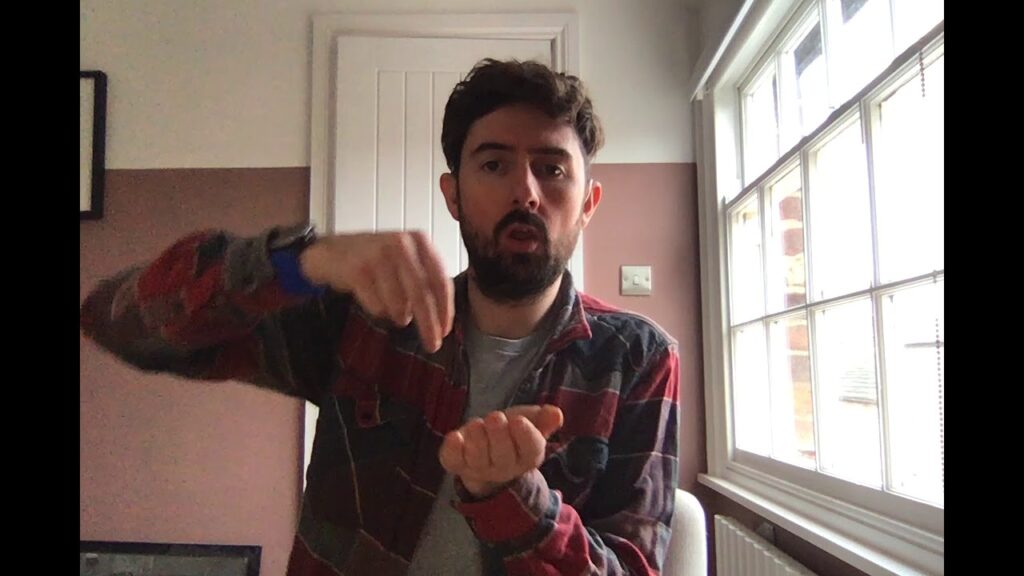
The sign “walk” in BSL represents the action of walking or moving on foot. It’s commonly used in everyday conversations within the UK Deaf community to describe both the physical act of walking and metaphorically, such as discussing plans to go somewhere. This sign can also be used in various contexts to express movement and activity.
How to Sign “Walk”

- Start with both hands open, palms facing down. Your fingers should be slightly spread apart.
- Position your hands at about waist height, with your elbows bent slightly.
- Move your hands forward in a walking motion, imitating the action of legs moving while you walk. Your hands should alternate slightly as if mimicking legs taking steps.
- As you perform the sign, maintain a friendly facial expression. This adds emphasis and context to the action of walking.
- Incorporate space by moving your hands forward to indicate the direction in which you are walking.
Common Mistakes
- Forgetting to use the topic-comment structure. Be clear about what you are discussing before signing “walk.”
- Using rigid hand movements instead of fluid, natural movements, which can make the sign look unnatural.
- Neglecting facial expressions, which are crucial in conveying emotions and context in BSL.
BSL vs ASL
In BSL, “walk” is signed with both hands mimicking legs, whereas in ASL, the sign for “walk” typically involves a single hand moving in a forward motion. This illustrates some of the structural differences between the two sign languages.
Related Signs
- Walking – A variation indicating continuous movement.
- Travel – Related to moving from one place to another.
- Stop – Often used in conjunction with walking to indicate halting movement.
- Run – A faster form of walking, used to express speed.
- Return – Used to signify going back to a previous location.
Frequently Asked Questions
How do I use “walk” in a BSL sentence?
You can use “walk” by first establishing the topic, such as “I walk to school” (TOPIC: “I”, COMMENT: “walk to school”).
Are there regional variations for “walk” in BSL?
While the sign is generally consistent, some regions may have slight variations in hand movements or facial expressions.
What are similar signs to “walk”?
Similar signs include “run” and “move,” which express different types of movement.
What are some tips for learning this sign?
Practice the sign in context and use it in conversations with Deaf friends to improve your fluency.
Can I use “walk” to describe walking in different contexts?
Yes, “walk” can be adapted to describe various contexts, such as walking for exercise or walking to a specific place.
How important are facial expressions when signing “walk”?
Facial expressions are very important in BSL as they provide additional context and emotion to your signing.
Practice This Sign
Try signing Walk In Bsl with your camera and get AI coaching on your handshape, movement, and location.
Free · No signup required