
Walking in British Sign Language (BSL)
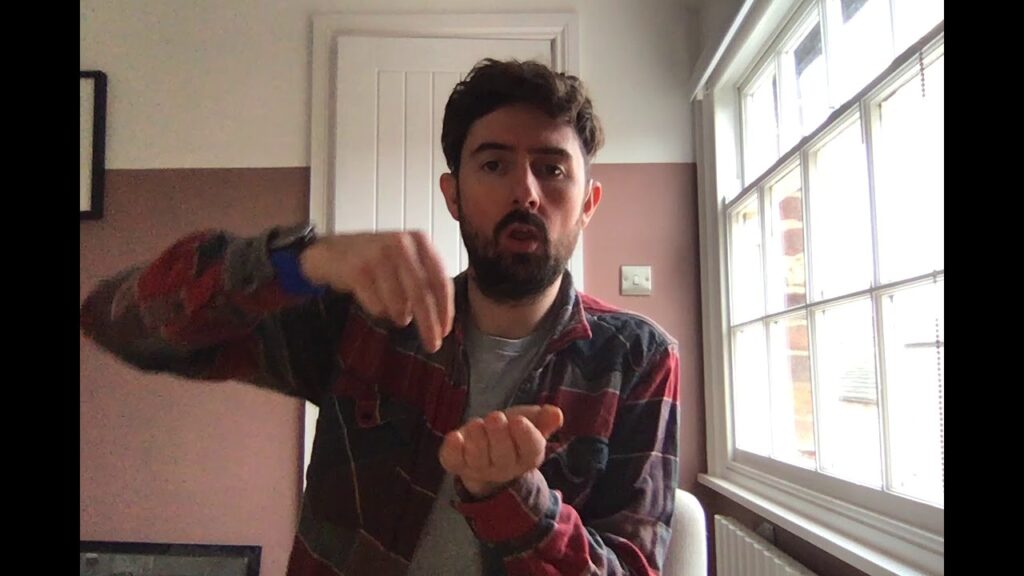
The sign for “walking” in BSL represents the action of moving on foot and is commonly used in various contexts, such as discussing activities, directions, or describing someone’s movement. This sign can be particularly useful in everyday conversations within the UK Deaf community.
How to Sign “Walking” in BSL
- Start with both hands in front of your body, in a relaxed position, palms facing down.
- Form your hands into flat ‘B’ shapes by extending your fingers and keeping them together.
- Position your hands slightly apart, about shoulder-width, and at waist height.
- Move your hands forward, mimicking the motion of walking by alternating their movement as if they are legs taking steps.
- As you perform the sign, maintain a neutral facial expression or a slight smile to convey a positive tone. You can also raise your eyebrows to indicate the action is ongoing.
Common Mistakes
- Incorrect handshape: Some learners may use a fist instead of the flat ‘B’ handshape.
- Static movement: Failing to alternate the hands’ movement can make the sign unclear.
- Neglecting facial expressions: Not using appropriate non-manual features may lead to a lack of engagement in the sign.
BSL vs ASL
In BSL, the sign for “walking” emphasizes hand movements that mimic legs in motion, while ASL uses a different handshape and motion. This reflects the unique grammar and structure of each sign language, showcasing the cultural differences between the UK Deaf community and that of the United States.
Related Signs
- 1 – The sign for the number one in BSL.
- 10 – The sign for the number ten in BSL.
- 100 – The sign for the number one hundred in BSL.
- 11 – The sign for the number eleven in BSL.
- 12 – The sign for the number twelve in BSL.
Frequently Asked Questions
How can I use “walking” in a BSL sentence?
You can use “walking” in a sentence like “I am walking to the shop,” by signing “I” (point to yourself), then “walking,” and finally “shop” (signing the word for shop).
Are there regional variations for the sign “walking”?
The basic sign for “walking” is generally consistent across the UK, but some regions may have slight variations in movement speed or hand positioning.
What are some similar signs to “walking”?
Related signs include “running” and “jogging,” which use similar hand movements but vary in speed and intensity.
What tips do you have for learning this sign?
Practice in front of a mirror to ensure your handshape and movements are clear. Watching native signers can also help you learn the nuances of the sign.
How do facial expressions enhance the sign “walking”?
Facial expressions can convey emotions or the intensity of the action, making your communication more engaging and effective.
Can children learn this sign easily?
Yes, children often pick up signs quickly, especially with fun and engaging practice. Using games or storytelling can make learning enjoyable.
Practice This Sign
Try signing Walking In Bsl with your camera and get AI coaching on your handshape, movement, and location.
Free · No signup required