
Australian Sign Language Vs American
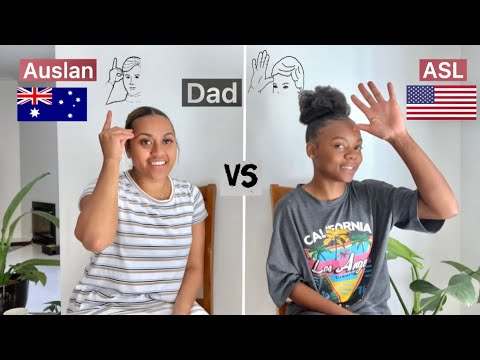
The comparison of Australian sign language vs American sign language reveals two distinct visual languages with surprisingly different origins, structures, and vocabularies. Despite both being used in English-speaking countries, Auslan and ASL are not mutually intelligible — a fluent ASL user cannot automatically understand Auslan, and vice versa. Understanding these differences provides fascinating insight into the world of sign linguistics.
Historical Origins of Auslan and ASL
Auslan and ASL evolved from entirely different linguistic family trees. Auslan developed primarily from British Sign Language (BSL), brought to Australia by Deaf immigrants and educators from Britain and Ireland in the early nineteenth century. Over more than two centuries, Auslan evolved its own unique features while retaining its BSL roots.
American Sign Language, by contrast, has its primary origins in French Sign Language (LSF). When Laurent Clerc, a Deaf educator from France, co-founded the first permanent school for the Deaf in America in 1817, he brought LSF with him. ASL emerged from the blending of LSF with existing local sign systems used by Deaf communities in America.
This means that when comparing Australian sign language vs American, you are actually comparing languages from two different sign language families: the BANZSL family (which includes BSL, Auslan, and New Zealand Sign Language) and the French Sign Language family (which includes ASL, LSF, and many other sign languages worldwide).
The different origins explain why Auslan and ASL share very few signs despite both being used in countries where English is the dominant spoken language. Sign languages develop independently of the spoken languages in their environment, following their own evolutionary paths shaped by the Deaf communities that use them.
Alphabet and Fingerspelling Differences
One of the most immediately noticeable differences between Auslan and ASL is their fingerspelling systems. ASL uses a one-handed manual alphabet where each letter is formed with a single hand. Auslan uses a two-handed manual alphabet inherited from BSL, where both hands work together to form each letter.
The two-handed Auslan alphabet tends to be more visually distinct between letters, which can make it easier for beginners to read. However, it requires both hands to be free, which can be a practical limitation in certain situations. The one-handed ASL alphabet is faster to produce and can be used while holding something in the other hand.
Fingerspelling is used differently in each language. In ASL, fingerspelling is relatively common and is used for many English words, abbreviations, and concepts. In Auslan, fingerspelling is used less frequently, primarily for proper nouns and words that lack an established sign. This difference reflects the broader linguistic patterns of each language.
The visual appearance of fingerspelling in each language is so different that a person literate in one system would need to learn the other from scratch. There is no shortcut or transfer — the handshapes, positions, and movements are entirely different for most letters. This is one of the clearest visible differences when comparing the two languages side by side.
Practice Makes Perfect
Test your sign language skills with our free practice app.
Vocabulary and Grammar Comparisons
Most vocabulary signs differ between Auslan and ASL. The sign for “thank you,” the sign for “mother,” the sign for “school,” and hundreds of other common signs are produced differently in each language. Even concepts that might seem universal — like colours, numbers, and days of the week — are expressed with different handshapes and movements.
There are a small number of signs that are similar or identical between the two languages, often because they are iconic representations of the same concept. For example, the sign for “drink” (miming a cup being tipped to the mouth) looks similar in both languages because it is based on the physical action of drinking. However, these coincidental similarities are the exception, not the rule.
Grammatically, Auslan and ASL share some features that are common across many sign languages, such as the use of facial expressions for grammatical marking, spatial referencing, and classifier systems. However, the specific rules and conventions differ. Word order, question formation, negation patterns, and verb agreement systems vary between the two languages.
Both languages use topic-comment sentence structure, but the specific ways topics are established and comments are constructed can differ. Both use non-manual features as grammatical markers, but the specific facial expressions and head movements associated with particular grammatical functions may vary. These similarities at the structural level reflect shared visual-spatial modality rather than shared ancestry.
Cultural and Community Differences
The Deaf communities in Australia and America have developed distinct cultural norms, values, and traditions shaped by their different national contexts. The American Deaf community is one of the largest in the world, with established institutions including Gallaudet University (the world’s only university designed for Deaf students), the National Association of the Deaf, and a rich tradition of Deaf arts and literature.
The Australian Deaf community, while smaller, has its own vibrant culture and institutions. State-based Deaf societies have operated for over a century, and organisations like Deaf Australia advocate at the national level. The relationship between Auslan and Indigenous sign languages used by Aboriginal and Torres Strait Islander communities adds a unique dimension to the Australian sign language landscape.
Educational approaches have also differed between the two countries. The history of Deaf education in Australia was heavily influenced by British practices, including periods of oralism (teaching Deaf children to speak and lip-read rather than sign). The American experience, while also affected by oralism, developed along a somewhat different trajectory with earlier establishment of sign language-based education.
Despite these differences, the Deaf communities of both countries share core cultural values including visual orientation, direct communication styles, and a strong sense of community identity. International Deaf events and social media have strengthened connections between Deaf communities worldwide, fostering cross-cultural exchange and mutual understanding.
Can Auslan and ASL Signers Understand Each Other
Auslan and ASL are not mutually intelligible. A person fluent in one language cannot understand the other without specific study. When Deaf Australians meet Deaf Americans, they typically use a combination of strategies to communicate: International Sign (a simplified signing system used at international Deaf events), fingerspelling, gesture, mime, and written English.
However, skilled signers from both languages can often establish basic communication relatively quickly, drawing on shared visual communication strategies and the iconic elements present in both languages. The experience of navigating a visual-spatial language gives signers transferable skills that aid cross-linguistic communication, even when the specific signs are different.
For a person who has learned one language and wants to learn the other, there are both advantages and challenges. The advantage is that you already understand how sign languages work — spatial grammar, non-manual features, classifiers, and visual thinking are familiar concepts. The challenge is avoiding interference from your first sign language, as old habits can be difficult to override when learning new signs.
The mutual unintelligibility of Auslan and ASL is a powerful reminder that sign languages are not universal. Each Deaf community around the world has developed its own natural language, shaped by local history, culture, and the creative ingenuity of its users. This linguistic diversity is something to celebrate, not to lament — it reflects the richness and adaptability of human language in all its forms.
Related Articles
- Australian Sign Language Vs ASL
- Australian Sign Language Vs British
- What Is Australian Sign Language
Practice ASL Signs
Use your camera to practice signs and get real-time AI feedback on your technique.
Free · No signup required