
Rachet in Australian Sign Language (Auslan)

The sign “rachet” in Auslan refers to a specific type of tool commonly used for tightening or loosening screws and bolts. It’s often used in contexts related to mechanics, construction, or DIY projects. This sign can be particularly useful in conversations about tools, repairs, or hobbies involving handiwork.
Table of Contents
How to Sign “Rachet”
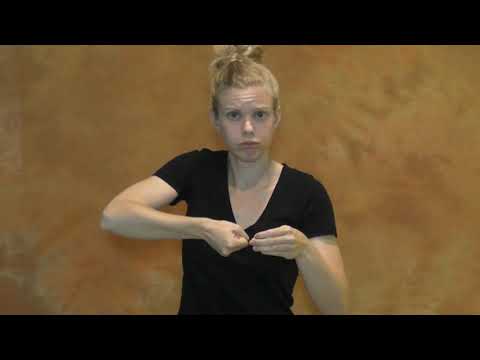
- Start with your dominant hand open, palm facing down, and fingers extended.
- Position your hand at about shoulder height, slightly in front of your body.
- With a quick motion, move your hand downwards while making a fist, simulating the action of turning a rachet tool.
- As you perform the downward motion, twist your wrist slightly to mimic the action of ratcheting.
- Facial expressions should convey focus or determination, matching the action of using a tool.
Common Mistakes
- Forgetting to twist the wrist while performing the sign, which can lead to confusion with other signs.
- Using a flat hand instead of a fist during the downward motion, which can alter the intended meaning.
- Neglecting facial expressions, which play a key role in conveying the sign’s context.
Related Signs
- 1 – The sign for the number one.
- 1 Dollar – Signifying one dollar in currency.
- 10 – The sign for the number ten.
- 100 – Representing one hundred.
- 11 – The sign for the number eleven.
Using “Rachet” in Everyday Conversations
The sign “Rachet” can fit seamlessly into various everyday conversations, particularly when discussing tools, automotive work, or even social dynamics. Here are a few example sentences:
- “I need to grab my rachet for the car repair.” (sign order: I NEED GRAB MY RACHET CAR REPAIR)
- “He used the rachet to fix the bike.” (sign order: HE USE RACHET FIX BIKE)
- “The rachet is essential for this project.” (sign order: RACHET ESSENTIAL THIS PROJECT)
These contexts may come up during casual chats about hobbies or work, especially among friends or family who share interests in DIY projects or automotive maintenance.
Cultural Notes
The sign “Rachet” carries significance beyond its literal meaning within the Australian Deaf community. It reflects a culture that values practical skills and hands-on knowledge. Many Deaf Australians engage in trades and craftsmanship, where tools like a rachet are common. This sign may vary slightly in northern and southern dialects of Auslan, where some users might incorporate different non-manual markers or facial expressions to convey emphasis or context. Such variations enrich the language and highlight the diverse experiences within the community.
Tips for Learning This Sign
To effectively learn and remember the sign “Rachet,” consider the following strategies:
- Mirror Practice: Stand in front of a mirror to practice the sign, ensuring your movements are clear and accurate. This helps you become aware of your handshape and positioning.
- Watch for Non-Manual Features: Pay attention to facial expressions and body language when signing. These non-manual features can enhance meaning and should accompany your sign.
- Use in Short Sentences: Incorporate “Rachet” into simple, everyday sentences. The more you use it, the easier it will become to remember and sign fluently.
Regular practice and engagement with the Deaf community will further solidify your understanding and use of the sign.
Frequently Asked Questions
How can I use “rachet” in a sentence?
You can say, “I need a rachet to fix my bike.” This helps contextualize the sign within a practical scenario.
Are there regional variations of this sign?
There may be slight variations in how “rachet” is signed in different areas, so it’s good to observe local Deaf communities for specific nuances.
What are similar signs to “rachet”?
Similar signs include “screwdriver” and “wrench,” both used in mechanical contexts and may share some hand movements.
How does this sign compare to BSL?
In BSL, the sign for “rachet” may differ in handshape and movement, reflecting the distinct characteristics of the language.
What tips do you have for teaching this sign?
Encourage learners to practice with actual tools to reinforce the meaning and motion of the sign, making it more relatable and memorable.
Practice This Sign
Try signing Rachet In Auslan with your camera and get AI coaching on your handshape, movement, and location.
Free · No signup required