
Raining in Australian Sign Language (Auslan)

The sign for “raining” in Auslan represents the concept of rain, which is commonly used in conversations about the weather. This sign can be used when discussing forecasts, plans affected by weather, or simply sharing your observations about the day. It’s an essential part of daily communication in many contexts.
Table of Contents
How to Sign “Raining”
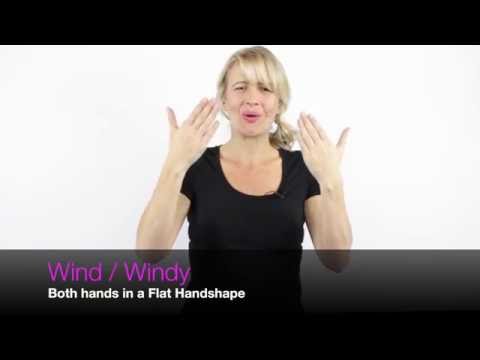
- Start with both hands in a flat shape, palms facing downward.
- Position your hands above your head, about shoulder-width apart.
- Slowly and gently move your hands downward, maintaining the flat shape. This mimics the falling motion of raindrops.
- Optionally, you can add a slight shaking motion to your hands as you lower them to enhance the effect of rain.
- Maintain a neutral facial expression or show a mild expression of concern or joy, depending on the context of your conversation.
Common Mistakes
- Some learners tend to move their hands too fast, which can lose the visual effect of gentle rain.
- Using a fist shape instead of a flat hand can misrepresent the sign, as it changes the meaning.
- Failing to adjust facial expressions may make the sign less effective or engaging in conversation.
Related Signs
- Sunny – Sign for clear and sunny weather.
- Cloudy – Represents overcast or cloudy skies.
- Snowing – Used to indicate snowfall.
- Storm – Represents a stormy weather condition.
- Wind – Sign for windy weather.
Using “Raining” in Everyday Conversations
In Auslan, the sign for “Raining” can be integrated into daily conversations to discuss the weather, make plans, or share experiences. Here are a few example sentences that illustrate its use:
- “Today Raining, stay inside.” – This might come up when discussing plans for the day with friends or family, indicating that the weather is not suitable for outdoor activities.
- “I like Raining, it makes me relax.” – This could be shared in a casual conversation about personal preferences or feelings associated with different weather conditions.
- “Raining yesterday, good for plants.” – This might be used in a discussion about gardening or environmental topics, expressing the positive impact of rain on nature.
In these examples, the use of the sign for “Raining” enhances communication and expresses feelings or observations effectively.
Cultural Notes
In the Australian Deaf community, weather-related signs, including “Raining,” often reflect the unique experiences and the natural environment of Australia. The Deaf community shares a strong connection with the land, and discussions about weather are commonplace, especially in relation to outdoor activities, farming, and community events.
There are some dialect variations in Auslan, where signs might differ slightly between northern and southern regions. However, the sign for “Raining” remains relatively consistent across Australia. It’s always beneficial to engage with members from different areas to appreciate these subtle variations and the rich diversity within Auslan.
Tips for Learning This Sign
Practicing the sign for “Raining” effectively can enhance retention and fluency. Here are some practical tips:
- Mirror Practice: Stand in front of a mirror while signing “Raining” to observe your hand movements and ensure they match the correct sign. This visual feedback helps you refine your technique.
- Watch for Non-Manual Features: Pay attention to your facial expressions and body language while signing. A relaxed face while signing “Raining” can convey contentment with the weather.
- Use in Short Signed Sentences: Incorporate “Raining” into simple phrases during practice, like “Raining now” or “I see Raining,” to build fluency and comfort in using the sign in context.
Engaging in regular practice and social interactions will help solidify your understanding and use of the sign “Raining” in Auslan.
Frequently Asked Questions
How can I use “raining” in a sentence?
You can say, “It is raining today,” by signing “Raining” followed by the sign for “today.”
Are there regional variations in the sign for “raining”?
Yes, some regions may have slight variations in hand movement or facial expression, but the general concept remains understandable.
What signs are similar to “raining”?
Similar signs include “snowing” and “storm,” which also represent weather conditions but with distinct hand shapes and movements.
How does this sign compare to BSL?
The sign for “raining” in BSL has a different hand shape and movement, highlighting the differences between Auslan and BSL.
Any tips for teaching this sign to beginners?
Encourage learners to focus on the gentle downward motion and to practice with facial expressions that match the context of their conversation.
How can I express heavy rain versus light rain?
For heavy rain, use a more vigorous motion with your hands, while for light rain, use a softer, slower movement.
Practice This Sign
Try signing Raining In Auslan with your camera and get AI coaching on your handshape, movement, and location.
Free · No signup required