
ASL vs NZSL – American and New Zealand Sign Language
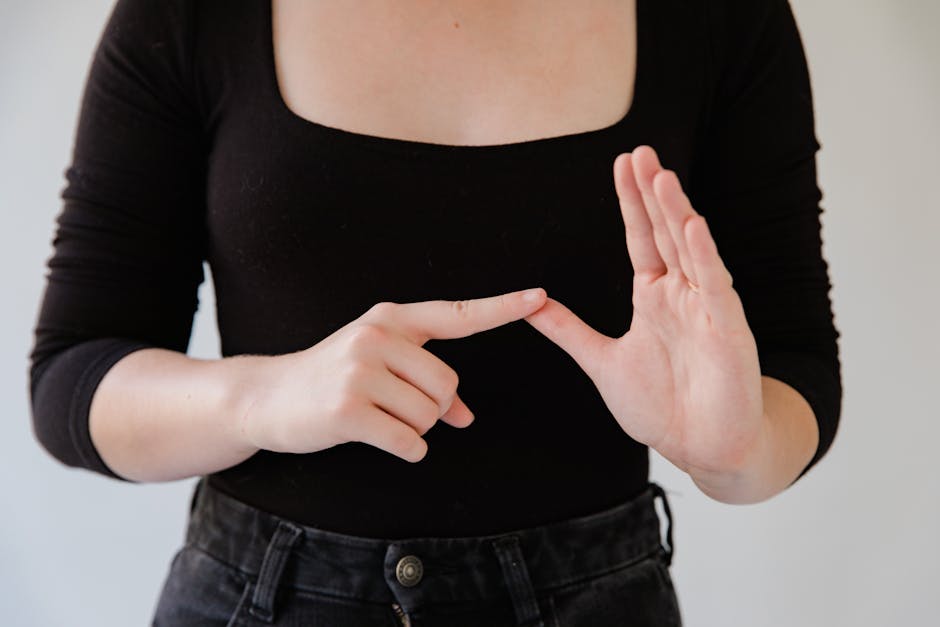
The ASL vs NZSL comparison highlights how two sign languages from English-speaking countries can be completely different. American Sign Language descended from French Sign Language, while New Zealand Sign Language shares roots with British Sign Language. They belong to different language families, use different alphabets, and have distinct vocabularies and grammars.

Origins and Families
ASL belongs to the French Sign Language family. Laurent Clerc brought LSF to America in 1817, and ASL evolved as French signing mixed with local American sign languages. This gives ASL a fundamentally different genetic heritage from NZSL, which belongs to the BANZSL (British-Australian-New Zealand Sign Language) family.
NZSL’s roots trace back to British Sign Language, brought to New Zealand through British Deaf educators in the 19th century. Over generations, NZSL developed its own identity — absorbing Māori cultural influences, developing unique vocabulary, and evolving its own grammatical preferences. But its core structural features and two-handed alphabet reflect its British ancestry.
The family difference means NZSL has more in common with BSL and Auslan than with ASL. An NZSL user would find some BSL vocabulary recognisable (same family, shared heritage) but ASL vocabulary largely foreign (different family, no shared heritage). The linguistic distance between ASL and NZSL is substantial.
Both languages serve vibrant Deaf communities — ASL’s community numbers in the hundreds of thousands across North America, while NZSL’s community is much smaller, estimated at around 4,500 users in New Zealand. This size difference affects resource availability, media representation, and the languages’ global visibility.
Practical Differences
The alphabet difference is immediately visible. NZSL uses a two-handed system (shared with BSL and Auslan) while ASL uses a one-handed system (shared with French Sign Language). Fingerspelling in one is unreadable to someone who only knows the other. This affects how names, places, and technical terms are communicated in each language.
Number systems differ. NZSL and ASL use different handshapes for counting and expressing numbers. Any numerical communication — prices, times, dates, quantities — requires knowing the specific system. Even holding up “three” looks different in each language.
Most vocabulary signs differ. The signs for common concepts — family, food, colours, emotions, weather, everyday actions — are largely different between ASL and NZSL. Some overlap exists through iconic signs (signs that visually resemble their meaning) and through ASL borrowings that have entered NZSL via American media exposure.
Practice Makes Perfect
Test your sign language skills with our free practice app.
Grammar shares broad visual-spatial principles but differs in specifics. Both languages use space grammatically, rely on facial expressions for grammatical functions, and favour topic-comment structures. But the specific rules, markers, and conventions form separate grammatical systems.
NZSL Unique Features
NZSL is one of three official languages of New Zealand (alongside English and Māori) since the New Zealand Sign Language Act 2006. This legal status provides NZSL users with rights to interpretation in legal proceedings and government services — a level of recognition that many sign languages worldwide have not yet achieved.
Māori cultural influence makes NZSL unique among sign languages. Signs for Māori concepts, protocols, and place names reflect New Zealand’s bicultural identity. Deaf Māori have developed NZSL vocabulary that connects their Deaf and Māori identities in ways that no other sign language replicates.
The small size of the NZSL community creates distinctive social dynamics. Most NZSL users know each other or know of each other, creating an intimate community network. This closeness means NZSL evolves through tight community consensus rather than the more diffuse evolution of larger sign languages like ASL.
NZSL shows less regional variation than ASL due to New Zealand’s smaller geography and population. While some differences exist between North and South Island signing (influenced by the two main Deaf schools), the variation is less pronounced than ASL’s substantial regional differences across the United States.
Learning Considerations
Learn NZSL if you’re in New Zealand or engaging with the New Zealand Deaf community. Learn ASL if you’re in North America. The choice depends on geography and community context. Resources for NZSL are more limited than ASL due to community size, but quality materials exist through Deaf Aotearoa and academic programmes.
The NZSL Online Dictionary is a valuable free resource for learners, providing video demonstrations of signs. NZSL courses are available in Auckland, Wellington, Christchurch, and other centres. Deaf Aotearoa New Zealand provides community connections and resources.
ASL’s larger resource base — extensive online content, numerous apps, and widespread course availability — reflects the larger American market. If you’re choosing between learning ASL and NZSL purely for interest rather than community connection, be aware that ASL resources are more abundant and diverse.
Both languages reward your investment with connection to remarkable Deaf communities. Whether you choose ASL’s vast, diverse American Deaf world or NZSL’s intimate, culturally rich New Zealand community, you’ll gain a language, a culture, and a perspective that most hearing people never experience.
Related Articles
- American Sign Language vs New Zealand Sign Language
- How to Learn NZSL
- How Long Does It Take to Learn NZSL
Practice ASL Signs
Use your camera to practice signs and get real-time AI feedback on your technique.
Free · No signup required