
I Love You Gebärdensprache in Deutscher Gebärdensprache (DGS)
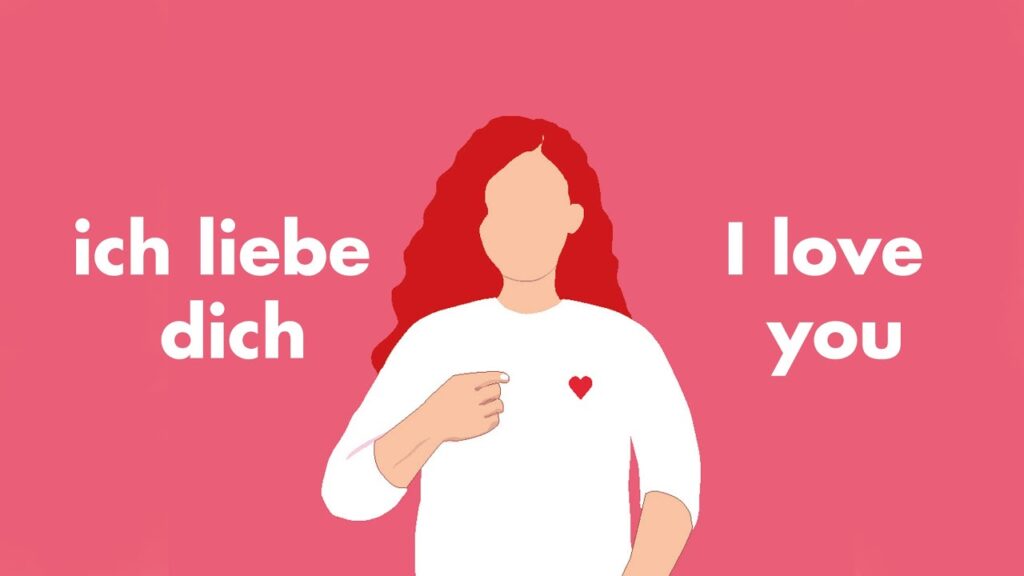
The sign for “I love you GebäRdensprache” is a beautiful expression of affection that combines elements of both American Sign Language (ASL) and German Sign Language (DGS). It’s commonly used among friends, family, and loved ones to convey deep feelings of love and appreciation. This sign is not only a representation of love but also showcases the connection between different sign languages.
Table of Contents
How to Sign “I Love You GebäRdensprache”
- Start by making the ASL hand shape for “I love you.” Hold your dominant hand up with your thumb extended, your index finger pointing up, and your middle and ring fingers folded down against your palm. This combines the letters “I,” “L,” and “Y” in ASL.
- Position your hand in front of your chest, about shoulder height.
- For the “Gebärdensprache” part, you can use the sign for “language.” To do this, take your dominant hand in a flat “B” shape and move it away from your chin, as if you are brushing off something. This motion symbolizes the sharing of communication.
- Facial expressions are important! Smile gently to convey warmth and affection as you perform this sign.
Common Mistakes
- Forgetting to include the facial expressions, which are vital for conveying emotion in ASL.
- Mixing up the hand shapes by using an incorrect configuration that doesn’t represent “I love you.”
- Performing the sign too quickly, which can make it less clear; take your time to express the sentiment fully.
Related Signs
- 1 – The sign for the number one.
- 1 Gebärdensprache – The sign for one in German Sign Language.
- 100 – The sign for one hundred.
- 11 – The sign for eleven.
- 12 – The sign for twelve.
Frequently Asked Questions
How can I use this sign in a sentence?
You can say, “I love you GebäRdensprache” while performing the sign to express your affection directly.
Are there regional variations of this sign?
Yes, signs can vary by region. It’s helpful to learn from local Deaf communities to understand any specific nuances.
Is there a similar sign in British Sign Language (BSL)?
Yes, BSL has its own sign for “I love you,” but the handshape and motion may differ from ASL.
What are some teaching tips for this sign?
Practice consistently and incorporate facial expressions. Use it in everyday conversations to build confidence.
Can I use this sign with people who are not familiar with ASL?
While they may not recognize the sign, the gesture and emotion behind it can still be understood universally.
What does the thumb represent in the sign?
The thumb represents the letter “I” in ASL, which is part of the combined expression of love.
Practice This Sign
Try signing I Love You GebäRdensprache with your camera and get AI coaching on your handshape, movement, and location.
Free · No signup required