
Otorohanga in New Zealand Sign Language (NZSL)

The sign for “Otorohanga” represents a town located in the Waikato region of New Zealand. It is commonly used when discussing places, travel, or local events within the Deaf community. Otorohanga is known for its close proximity to the Waitomo Caves and is often mentioned in conversations about tourism and local culture.
Table of Contents
How to Sign “Otorohanga” in NZSL
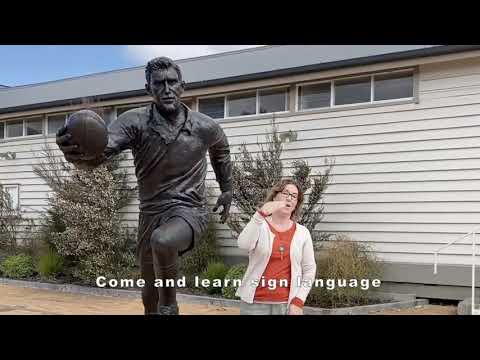
- Start with your dominant hand in a flat “O” handshape (fingers extended and touching). Position your hand just in front of your chest.
- Move your hand forward in a slight arc away from your body, maintaining the “O” handshape.
- As you finish the movement, tilt your hand slightly downwards, indicating the location of Otorohanga.
- Use an expressive facial expression to convey context or enthusiasm about Otorohanga, as facial expressions play a crucial role in NZSL.
Common Mistakes
- Forgetting to use facial expressions, which can lead to a lack of clarity in the sign.
- Incorrectly forming the “O” handshape, which may confuse the sign with other similar signs.
- Not moving the hand forward in an arc, which is essential for accurately depicting the sign.
NZSL vs ASL
In NZSL, the sign for “Otorohanga” is unique and specific to New Zealand. In contrast, ASL does not have a direct equivalent for this location. While NZSL has been influenced by British Sign Language (BSL), the signs for locations often differ significantly between these two sign languages.
Related Signs
- (Be) Born, (Give) Birth – Discusses the concept of birth.
- (Be) Careful – A sign to express caution.
- (Baby’S) Dummy – Refers to a baby’s pacifier.
- (Be) Passive – Describes a state of being passive.
- (All Of) You – A pronoun sign used to refer to a group.
Frequently Asked Questions
How do I use “Otorohanga” in a sentence?
You can use it in a sentence like, “I am going to Otorohanga tomorrow,” by signing “I go Otorohanga tomorrow.”
Are there regional variations of the sign for Otorohanga?
While the sign is generally consistent, some regional variations may exist in hand movement or facial expression, influenced by local Deaf culture.
What are similar signs to “Otorohanga”?
Signs for other towns or locations may share similar hand movements or shapes. It’s important to learn each sign uniquely for clarity.
What tips do you have for learning this sign?
Practice in front of a mirror to ensure your hand shape and movement are correct. Watching native signers can also help.
Can I use this sign when talking to hearing people?
Yes, you can use the sign in a conversation with hearing people, especially if they are familiar with NZSL or the Deaf community.
How can I improve my NZSL skills?
Engage with the Deaf community, attend NZSL classes, and practice regularly with peers who use NZSL.
Practice This Sign
Try signing Otorohanga with your camera and get AI coaching on your handshape, movement, and location.
Free · No signup required