
Minority in New Zealand Sign Language (NZSL)
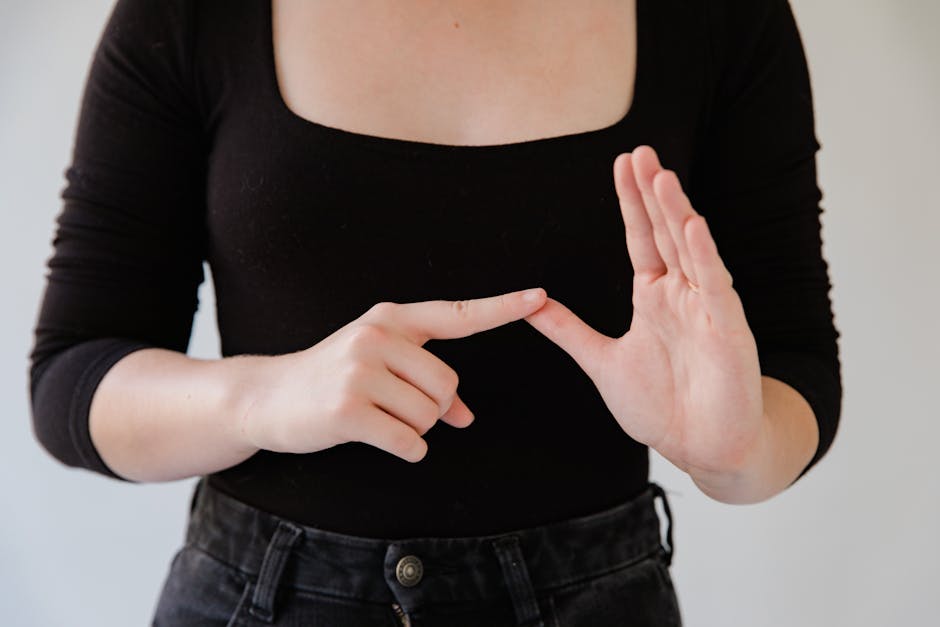
The sign “minoritytokoitinoun” refers to a group that makes up a smaller percentage of the population, often used in discussions about cultural representation and rights within the New Zealand Deaf community. This sign is particularly important in conversations surrounding inclusivity and the acknowledgment of diverse identities within smaller groups.
Table of Contents
How to Sign “Minoritytokoitinoun” in NZSL
- Start with your dominant hand in a flat ‘B’ shape (palm facing down).
- Position your hand at chest height, slightly to the side of your body.
- Move your hand in a small circular motion, while keeping the shape and position consistent.
- As you perform the circular motion, maintain a neutral facial expression, or slightly raise your eyebrows to indicate the term’s significance.
Common Mistakes
- Forgetting to keep the hand shape consistent, which can lead to confusion with other signs.
- Not using the appropriate facial expressions, which are crucial for conveying meaning in NZSL.
- Performing the movement too quickly, making it difficult for others to understand the sign.
NZSL vs ASL
In NZSL, “minoritytokoitinoun” is signed with a unique handshape and movement that differs from ASL. While ASL may use a different sign or concept altogether, NZSL incorporates cultural nuances specific to New Zealand, reflecting the local Deaf community’s values and identity.
Related Signs
- (All Of) You – A sign used to refer to a group of people collectively.
- (All Of) Youyou Allkoutou (Katoa)Pronoun – Emphasizes inclusivity in addressing multiple people.
- (Baby’S) Dummy – A common sign for a pacifier in NZSL.
- (Be) Careful – Used to advise caution in various situations.
- (Be) Passive – A sign that conveys a state of being or action in a gentle manner.
Frequently Asked Questions
What does “minoritytokoitinoun” mean in a sentence?
This sign can be used in sentences discussing the rights of minority groups within the Deaf community, for example, “The minoritytokoitinoun in our community deserve representation.”
Are there any regional variations for this sign?
While the sign is generally consistent across New Zealand, some regions may have slight variations in the handshape or movement intensity.
What are some signs similar to “minoritytokoitinoun”?
Signs like “majority” or “group” may be used in contexts discussing demographic representation, and they have distinct signs in NZSL.
How can I improve my signing of “minoritytokoitinoun”?
Practice in front of a mirror to refine your handshape and movement, and consider asking a fluent NZSL user for feedback.
Is this sign used in formal or informal settings?
The sign can be used in both formal discussions, such as advocacy meetings, and informal conversations within the Deaf community.
Can I use this sign when discussing cultural events?
Absolutely! It’s relevant in conversations about cultural events that highlight the experiences of minority groups.
Practice This Sign
Try signing Minoritytokoitinoun with your camera and get AI coaching on your handshape, movement, and location.
Free · No signup required