
Fine (adjective) in New Zealand Sign Language (NZSL)
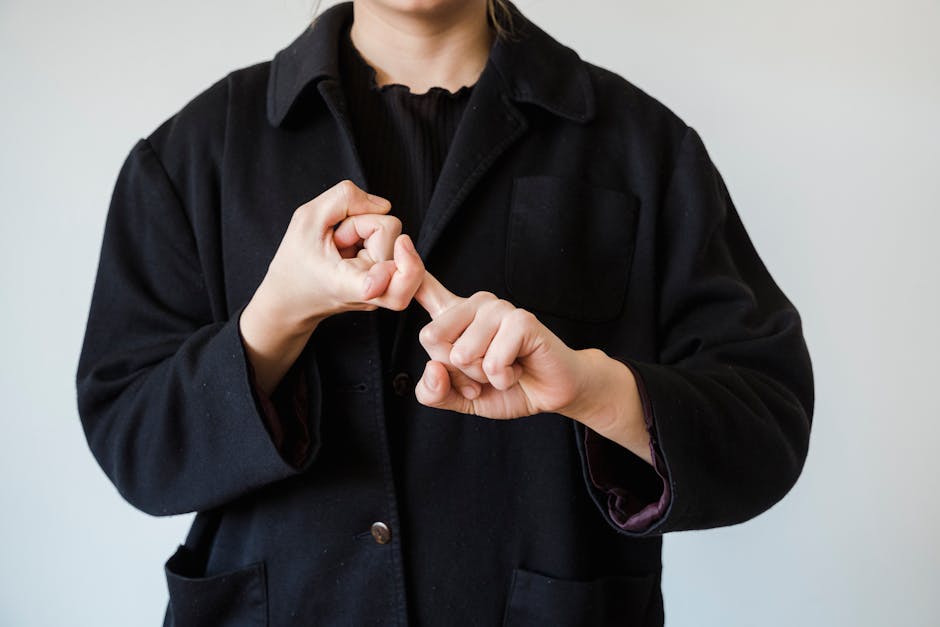
The sign for “fine, all right, good enough, ok, okaye pai ana” is commonly used in the New Zealand Deaf community to express approval or acceptance. It conveys a sense of being content or satisfied with a situation or response. This sign is versatile and can be used in various contexts, whether in casual conversation or to affirm something positively.
Table of Contents
How to Sign “Fineall Right, Good Enough, Ok, Okaye Pai Anaadjective; Interjection” in NZSL
- Start with your dominant hand in a flat handshape (like a ‘5’ hand).
- Position your hand in front of your chest, palm facing towards your body.
- Move your hand a short distance forward and slightly upward, maintaining the flat handshape.
- As you move your hand, nod your head slightly to indicate affirmation and maintain a neutral facial expression.
Common Mistakes
- Forgetting to use the appropriate facial expression; it’s crucial to express approval through your face.
- Using a clenched fist instead of a flat hand; the handshape should remain open.
- Moving the hand too far or too quickly, which can change the meaning and make it unclear.
NZSL vs ASL
In NZSL, the sign for “ok” involves a flat hand moving forward, while in ASL, the sign typically uses the “O” handshape with a different movement. This illustrates how NZSL has unique characteristics and is influenced by its own cultural context and local signs.
Related Signs
- Good – A sign expressing quality or satisfaction.
- Acceptable – Indicating something meets the required standards.
- Yes – A sign for affirmation or agreement.
- No – A sign for negation or disagreement.
- Please – A polite sign used in requests.
Frequently Asked Questions
How can I use this sign in a sentence?
You might say “Is this ok?” and use the sign to express your approval when the answer is affirmative.
Are there any regional variations in this sign across New Zealand?
While this sign is widely understood, some regions may have slight variations in movement or facial expressions.
What are some similar signs to “ok”?
Signs like “good” and “yes” are often used interchangeably in contexts of approval.
Can I use this sign in formal settings?
Yes, it’s appropriate in both informal and formal contexts to express agreement or satisfaction.
What tips do you have for learning this sign?
Practice in front of a mirror to ensure your handshape and facial expressions are accurate.
Is this sign used by both Deaf and hearing people?
Yes, many hearing people who interact with the Deaf community also learn and use this sign.
Practice This Sign
Try signing Fineall Right, Good Enough, Ok, Okaye Pai Anaadjective; Interjection with your camera and get AI coaching on your handshape, movement, and location.
Free · No signup required