
Behave (noun) in New Zealand Sign Language (NZSL)
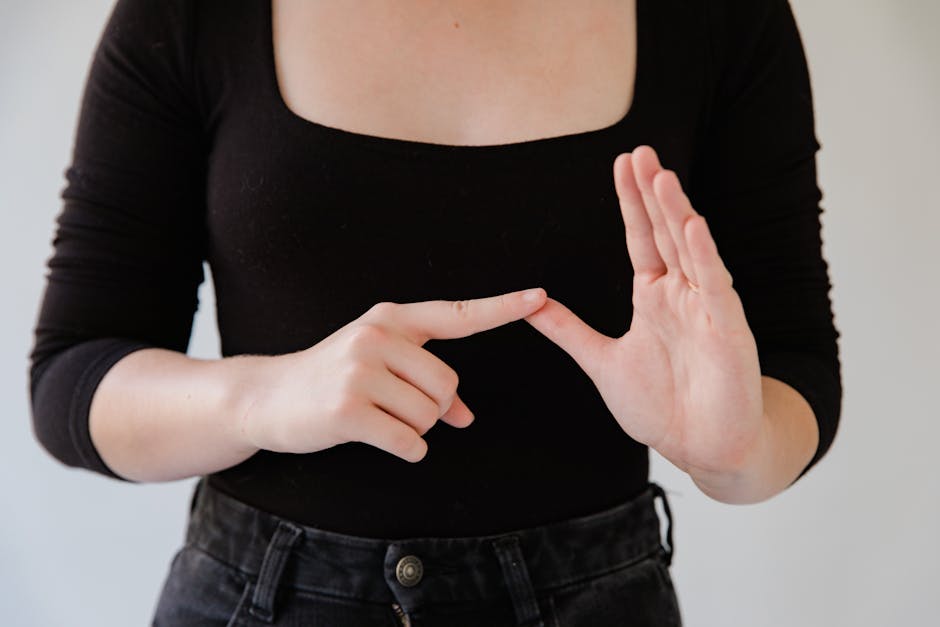
The sign “behavebehaviouri pai, he painoun; verb” is used to express good behavior or conduct in New Zealand Sign Language (NZSL). This sign is commonly used in various contexts, such as in schools, homes, and social settings, to encourage positive actions and attitudes among children and peers.
Table of Contents
How to Sign “Behavebehaviouri Pai, He Painoun; Verb” in NZSL
- Start with your dominant hand in a ‘B‘ handshape (fingers extended and together, thumb wrapped around the palm).
- Position your hand near your chest, slightly to the side.
- Move your hand outward and away from your body, while maintaining the ‘B‘ handshape.
- As you move your hand, incorporate a facial expression that conveys positivity or encouragement, such as a smile.
- End the movement at about shoulder height, keeping your hand open and relaxed.
Common Mistakes
- Forgetting to use facial expressions, which are crucial in NZSL for conveying meaning and emotion.
- Using the wrong handshape; ensure to use the ‘B‘ handshape specifically for this sign.
- Not moving the hand outward enough, which can make the sign unclear.
NZSL vs ASL
In NZSL, the sign for “behave” incorporates a unique handshape and movement that differs from American Sign Language (ASL). While ASL may use a different sign altogether or a different handshape, NZSL’s version emphasizes the positive nature of behavior through its distinct motion and facial expressions.
Related Signs
- (Be) Careful – A sign used to warn someone to be cautious.
- (Be) Passive – Signifying a lack of action or response.
- (All Of) You – Referring to a group of people collectively.
- (Baby’S) Dummy – A sign for a pacifier used for infants.
- (Be) Born, (Give) Birth – Related to the beginning of life.
Frequently Asked Questions
How can I use “behave” in a sentence?
You can say, “Please behave during the assembly,” by signing “behave” followed by the sign for “please” and the sign for “assembly.”
Are there regional variations for this sign in New Zealand?
Most regions use this sign consistently, though some local Deaf communities may have slight variations in movement or expression.
What signs are similar to “behave”?
Signs like “be careful” and “be passive” express caution and inaction, respectively, and can be related to behavior.
What tips do you have for learning this sign?
Practice in front of a mirror to check your handshape and facial expressions, and try to incorporate the sign in casual conversations.
Can I use this sign in formal settings?
Yes, “behave” is appropriate in both formal and informal settings, especially when addressing children or groups.
Is it important to express emotions while signing?
Absolutely! Facial expressions add meaning and context to your signs, making them clearer and more engaging.
Practice This Sign
Try signing Behavebehaviouri Pai, He Painoun; Verb with your camera and get AI coaching on your handshape, movement, and location.
Free · No signup required