
Army, Soldier in New Zealand Sign Language (NZSL)

In NZSL, “army” or “soldier” encapsulates the concept of the military and its personnel. Frequently employed in conversations about service, defense, or occasions concerning the armed forces within the New Zealand Deaf community, this sign holds significant value, highlighting respect for individuals serving in the military.
Table of Contents
How to Sign “Army, Soldier” in NZSL
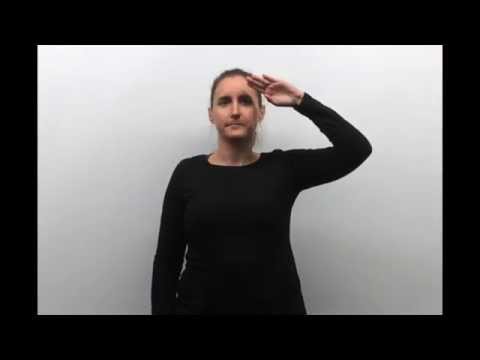
- Begin with your dominant hand in a flat handshape (like a “B” handshape), fingers extended and together.
- Position your dominant hand at your forehead, with the palm facing forward.
- Move your hand away from your forehead and slightly down, as if saluting.
- Maintain a serious and respectful facial expression to convey the gravity of the sign.
Common Mistakes
- Using a loose handshape instead of a flat handshape can change the meaning.
- Not maintaining a respectful expression may lead to misunderstandings about the sign’s significance.
- Moving the hand too quickly can make the sign unclear; it should be a smooth and deliberate motion.
NZSL vs ASL
In NZSL, the sign for “army” or “soldier” involves a salute-like gesture, whereas in ASL, the sign typically uses a different handshape and movement. This highlights the influence of local culture and the unique characteristics of each sign language.
Related Signs
- (All Of) You – A sign referring to a group of people.
- (Be) Careful – A sign for caution or being mindful.
- (Be) Passive – A sign representing a passive state or action.
Using “Army, Soldier” in Everyday Conversations
Incorporating the sign for “Army, Soldier” into your everyday conversations can help express thoughts related to military topics or service members. Here are a few example sentences that demonstrate how to use this sign naturally:
- “My brother is an army soldier.”
This phrase might come up when discussing family backgrounds or personal connections to the military.
- “The army soldier helped during the disaster.”
This scenario could arise when talking about community events or responses to emergencies.
- “I respect army soldiers for their bravery.”
You might use this sentence while expressing gratitude or admiration for military personnel.
Cultural Notes
The sign for “Army, Soldier” holds significant cultural relevance within the New Zealand Deaf community. Since NZSL became an official language in 2006, it has provided a platform for Deaf people to express their identities and experiences authentically. The military plays a unique role in New Zealand’s history, and many Deaf individuals have served or have family members who have served in the army. This connection fosters a sense of pride and respect in discussions about military service.
Additionally, the influence of te reo Māori is evident in the ways signs are created and adapted within NZSL, reflecting the rich cultural heritage of Aotearoa. Understanding these cultural contexts can help learners appreciate the nuances of the sign and its significance in broader conversations.
Tips for Learning This Sign
Practicing the sign for “Army, Soldier” can be enjoyable and effective with the following techniques:
- Mirror Practice: Stand in front of a mirror while practicing. This allows you to see your handshape and movement, ensuring accuracy.
- Facial Expressions: Pay attention to your facial expressions while signing. They can convey emotion and context, making your conversation more engaging.
- Use in Short Sentences: Incorporate the sign into short signed sentences. Regularly using it in context will help reinforce your memory and improve fluency.
- Engage with the Community: Attend Deaf events or gatherings. Interacting with native NZSL users can provide real-life practice opportunities and deepen your understanding of the sign’s use.
Frequently Asked Questions
How can I use “army” in a sentence?
You can say, “My brother is in the army” by signing “My brother” + “army”.
Are there regional variations for this sign in NZ?
Generally, the sign remains consistent across New Zealand; however, slight variations in movement can occur in different regions.
What is a similar sign to “army”?
The sign for “police” is similar, often involving a gesture that indicates authority.
What tips do you have for learning this sign?
Practice in front of a mirror to ensure your handshape and movement are correct, and watch videos of native signers.
Is there a cultural significance to this sign?
Yes, signing “army” shows respect and acknowledgment of those who serve in New Zealand’s armed forces.
Can I use this sign in casual conversations?
This sign is usually reserved for more serious discussions regarding military service, so context matters.
Practice This Sign
Try signing Army, Soldier with your camera and get AI coaching on your handshape, movement, and location.
Free · No signup required