
Assiette in LSF en Langue des Signes Française (LSF)
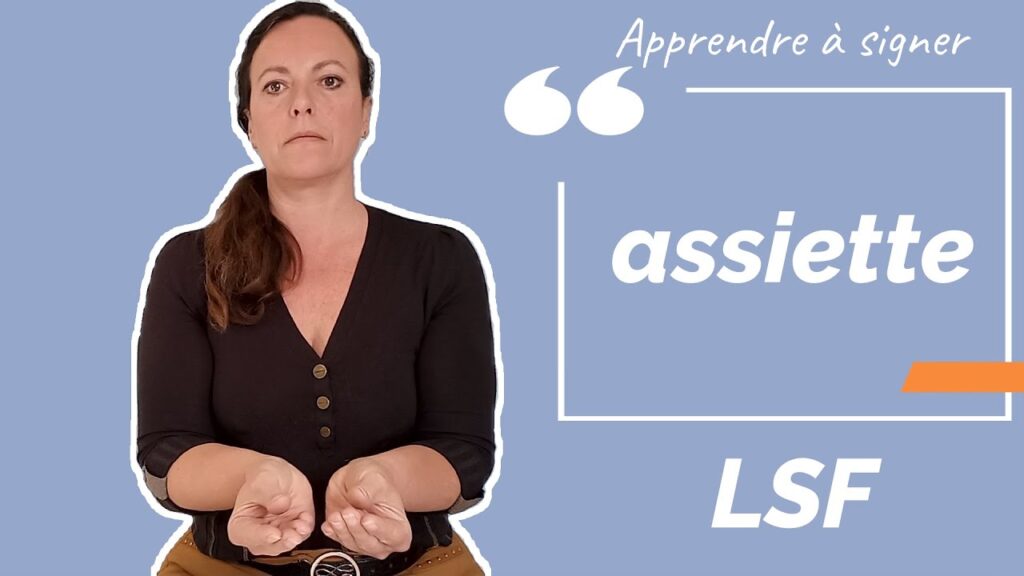
The sign for “assiette” in LSF (Langue des Signes Française) refers to a plate, commonly used when talking about food or dining. It is often used in conversations about meals, cooking, or serving food. Understanding this sign can enhance communication in social settings, especially during meals.
Table of Contents
How to Sign “Assiette In Lsf”
- Start with your dominant hand in a flat “B” handshape, palm facing down.
- Position your hand a few inches above your non-dominant hand, which is also in a flat “B” handshape, palm facing up.
- Move your dominant hand in a circular motion, mimicking the shape of a plate, while keeping your non-dominant hand steady.
- Maintain a neutral facial expression, but feel free to show enthusiasm if discussing food or a meal.
Common Mistakes
- Some learners may forget to keep both hands in a flat “B” handshape, which can lead to confusion.
- Not mimicking the circular motion properly can make the sign less recognizable.
- Using an exaggerated facial expression can distract from the sign’s meaning; it’s best to keep it simple and relevant to the topic.
Related Signs
- 1 – The sign for the number one.
- 1 Dollar – A sign representing one dollar, often used in discussions about money.
- 10 – The sign for the number ten.
- 100 – A sign indicating one hundred, useful in various contexts.
- 1000 In Lsf – The sign for one thousand, a number commonly referenced in conversations about larger quantities.
Frequently Asked Questions
How would I use “assiette” in a sentence?
You could say, “I need a clean assiette for dinner,” signing “I” + “need” + “assiette” + “clean” + “for” + “dinner.”
Are there any regional variations of this sign?
While the sign for “assiette” is generally consistent, some regions may have slight variations in hand movement or facial expressions.
Are there similar signs in ASL?
Yes, signs for other dining-related items, such as “cup” or “fork,” may have similar handshapes or movements.
How does this sign compare to BSL?
BSL (British Sign Language) has its own sign for “plate,” which may look different from the LSF sign. Comparing the two can highlight the diversity in sign languages.
What teaching tips can help with this sign?
Practice in front of a mirror to ensure correct handshape and movement. Additionally, pairing the sign with actual objects can reinforce understanding.
Is context important when using this sign?
Yes, context is key. Ensure the conversation is about food or dining to make the sign clear and relevant.
Practice This Sign
Try signing Assiette In Lsf with your camera and get AI coaching on your handshape, movement, and location.
Free · No signup required