
You’re Welcome in British in British Sign Language (BSL)
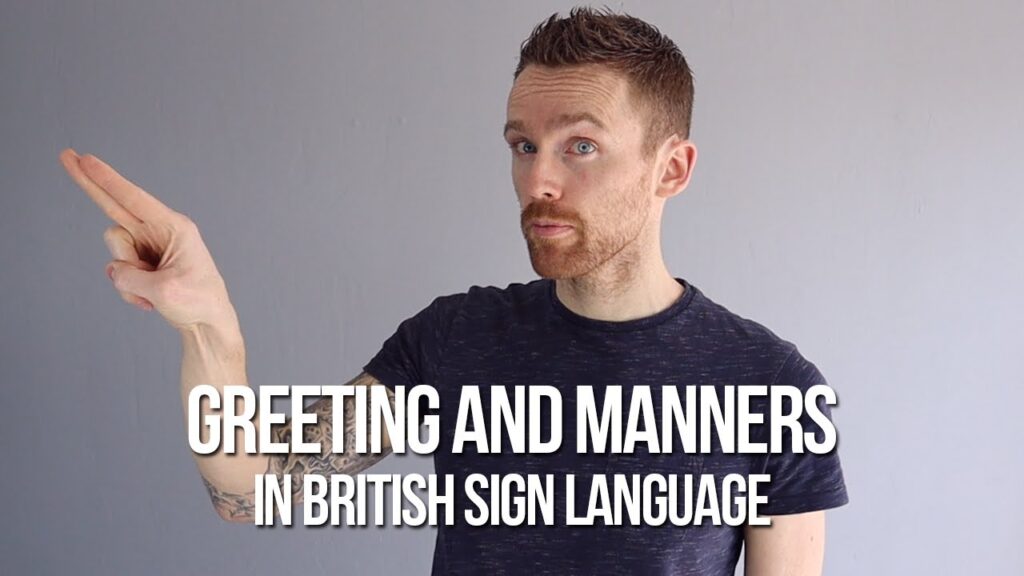
The sign for “you’re welcome” in British Sign Language (BSL) is commonly used in response to expressions of gratitude among the Deaf community in the UK. It conveys a friendly acknowledgment that the assistance or service provided was given willingly and without expectation of anything in return.
How to Sign “You’re Welcome In British” in BSL
- Start with your dominant hand in a flat shape (like the palm of your hand), fingers extended together.
- Position your hand near your chest, with the palm facing towards your body.
- Gently move your hand away from your body, slightly outward, while maintaining the flat handshape.
- As you perform the movement, smile and nod slightly to add warmth to your expression, which is an important non-manual feature in BSL.
Common Mistakes
- Some learners may forget to use facial expressions, which are crucial for conveying the right tone in BSL.
- It’s common to see the hand moving too far from the body; the movement should be subtle and not exaggerated.
- Using the wrong handshape (for example, a fist instead of a flat hand) can change the meaning of what you are trying to express.
BSL vs ASL
In American Sign Language (ASL), “you’re welcome” is signed differently, typically using a different handshape and movement. While BSL emphasizes the facial expressions and the hand movement away from the body, ASL might involve a more direct gesture without the same level of non-manual features.
Related Signs
- Thank You – The sign used to express gratitude.
- Please – A polite request sign that is often used in conjunction with gratitude.
- Yes – A sign used to affirm or agree, often used in conversations.
- No – A simple sign to indicate negation or refusal.
- Excuse Me – Used to gain someone’s attention politely.
Frequently Asked Questions
How do I use “you’re welcome” in a BSL sentence?
You can use “you’re welcome” after someone signs “thank you.” For example, if someone signs “thank you” for a favour, you would respond with the sign for “you’re welcome.”
Are there regional variations of this sign in the UK?
While the sign is generally consistent, some regional dialects may have slight variations in handshape or movement. It’s always good to observe local signers.
What is a similar sign to “you’re welcome”?
The sign for “thank you” is often paired with “you’re welcome,” creating a full exchange of politeness in conversation.
Any tips for learning this sign?
Practice in front of a mirror to check your handshape and facial expressions. Watching native BSL users can also help reinforce your learning.
Can I use this sign in a formal setting?
Yes, “you’re welcome” is appropriate in both formal and informal settings. Just ensure to use polite facial expressions to match the context.
What is the importance of non-manual features in BSL?
Non-manual features like facial expressions and body language are essential in BSL as they convey emotions and nuances that words alone cannot express.
Practice ASL Signs
Use your camera to practice signs and get real-time AI feedback on your technique.
Free · No signup required