
V.s. ASL in British Sign Language (BSL)

The sign for “British Sign Language v.s. ASL” is used to highlight the differences and similarities between British Sign Language (BSL) and American Sign Language (ASL). This sign is often used in discussions about sign language education, culture, and communication within the UK Deaf community. It serves as a way to inform and engage about the unique aspects of BSL.
How to Sign “V.S. Asl” in BSL
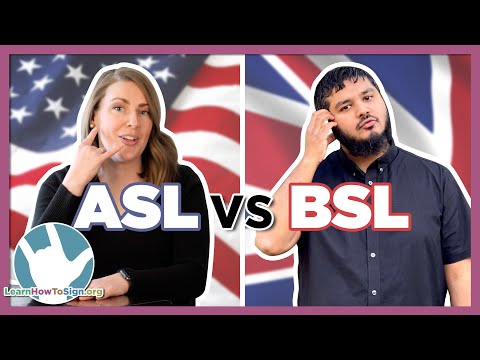
- Begin with both hands in a flat, open-handed shape (similar to the letter “B”).
- Position your dominant hand (usually the right) slightly in front of you, palm facing down.
- With your non-dominant hand, mirror the dominant hand’s position but place it slightly behind your dominant hand, palm also facing down.
- As you perform the sign, move your dominant hand side to side while maintaining a focused expression. This indicates a comparison.
- Use your facial expression to show curiosity or interest, which enhances the meaning of the sign.
Common Mistakes
- Forgetting to use facial expressions, which are essential for conveying meaning in BSL.
- Not maintaining proper hand shapes; learners may use closed fists instead of open hands.
- Neglecting the movement of the dominant hand, which is crucial for indicating a comparison.
BSL vs ASL
In BSL, the sign utilizes a topic-comment structure where the focus is on British Sign Language, followed by the comparison to ASL. In contrast, ASL has a different sign formation and grammar rules, reflecting their unique linguistic structures. BSL incorporates more non-manual features and regional variations that are distinct from ASL.
Related Signs
- (Bsl – A sign for American Sign Language.
- (Bsl) – Another representation of BSL in comparison.
- 1 – The sign for the number one, often used in counting.
- 10 – The sign for the number ten, useful in numerical contexts.
- 100 – The sign for the number one hundred, frequently used in discussions of quantities.
Frequently Asked Questions
How do I use this sign in a sentence?
You can use this sign to compare BSL and ASL, such as “BSL v.s. ASL is different because…”.
Are there regional variations in the UK for this sign?
While the sign is generally consistent, some regional variations may occur in the movement or facial expression.
What are similar signs to “v.s. ASL”?
Signs like “compare” or “difference” can be used in conjunction with this sign for clarity.
What tips can help me learn this sign?
Practice in front of a mirror to ensure proper hand shape and movement, and watch native signers for reference.
Is this sign widely understood in the Deaf community?
Yes, it is commonly used in discussions about sign language education and cultural differences.
How can I practice this sign with others?
Engage in conversations with other BSL users about sign languages, using this sign to initiate discussions.
Practice ASL Signs
Use your camera to practice signs and get real-time AI feedback on your technique.
Free · No signup required