
And American Sign Language in British Sign Language (BSL)

The sign for “difference between British Sign Language and American Sign Language” is often used in conversations to clarify the distinctions between these two languages. This sign is particularly important within the UK Deaf community for discussions about communication preferences, cultural identity, and language education.
How to Sign “And American Sign Language” in BSL
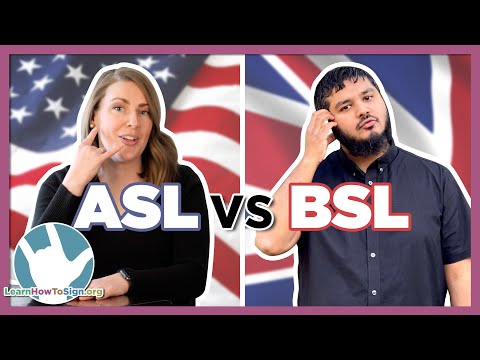
- Start by placing your dominant hand in a flat “B” shape (palm facing down) to represent “difference.” Position this hand slightly in front of your chest.
- Using your non-dominant hand, create an “A” shape (with the thumb and fingers forming a closed fist) and place it next to the flat “B” hand.
- Move the “B” hand away from the “A” hand to show the concept of difference, while maintaining a neutral facial expression.
- Next, transition to signing “American Sign Language.” For “American,” use a flat hand shape with your dominant hand and move it from your chin outward, simulating the iconic ‘A’ handshape for “ASL”.
- Finish by signing “sign language” with both hands in an open “L” shape, moving them in opposite directions to indicate the term.
Common Mistakes
One common mistake is using the wrong handshape for “difference,” such as a closed fist instead of a flat hand. Another error is not using facial expressions to indicate the contrast properly. Learners may also forget to use space effectively to show the relationship between BSL and ASL.
BSL vs ASL
In BSL, the sign is performed with a focus on the topic-comment structure, while ASL uses a different handshape and movement to convey the same concept. BSL tends to incorporate more non-manual features to express nuances, whereas ASL relies heavily on facial expressions and space to show relationships between signs.
Related Signs
- 1: The sign for the number one in both languages.
- 1 Dollar: A sign used to indicate a single dollar.
- 10: The sign representing the number ten.
- 100: For expressing one hundred.
- 11: The sign for eleven.
Frequently Asked Questions
How do I use this sign in a sentence?
You can use it in a sentence like, “The difference between BSL and ASL is significant.” Sign it by indicating ‘difference’ first, followed by ‘BSL’ and ‘ASL’.
Are there regional variations of this sign in the UK?
Yes, some regions may have slight variations in the signing of ‘difference’ or ‘American Sign Language’, but the overall concept remains consistent.
Are there similar signs in BSL?
Yes, the sign for ‘similar’ is often confused with ‘difference’. Pay attention to the handshapes and movements used.
What tips do you have for learning this sign?
Practice in front of a mirror to check your handshapes and movements. Watch native signers and imitate their facial expressions.
How important is facial expression in this sign?
Facial expressions are crucial as they convey the tone and context of the sign, enhancing understanding.
Can I use this sign to explain other language differences?
Absolutely! You can adapt the sign for other languages by changing the names accordingly while keeping the structure intact.
Practice ASL Signs
Use your camera to practice signs and get real-time AI feedback on your technique.
Free · No signup required