
Obese in British Sign Language (BSL)

The sign for “obese” in British Sign Language (BSL) refers to someone who is significantly overweight. This sign is often used in discussions about health, body image, and societal perceptions of weight. It is important to use this sign sensitively, keeping in mind the diverse experiences of individuals within the Deaf community.
How to Sign “Obese” in BSL
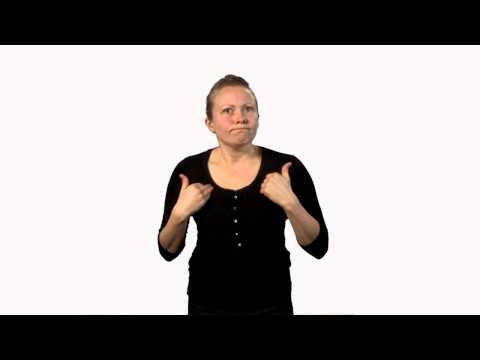
- Start with both hands in a flat ‘B’ handshape (with fingers extended and together).
- Position your hands in front of your body, about waist height, with palms facing towards you.
- Move both hands outward from your body, away from the centre, while maintaining the ‘B’ handshape.
- As you move your hands outwards, use facial expressions to convey the meaning. A serious or neutral expression works best.
- End the movement when your hands are about shoulder-width apart, indicating a larger size.
Common Mistakes
- Forgetting to use non-manual features like facial expressions, which are vital for conveying meaning in BSL.
- Using a closed fist instead of the flat ‘B’ handshape, which can change the meaning of the sign.
- Not using enough space when signing, as the sign relies on indicating size visually.
BSL vs ASL
In American Sign Language (ASL), the sign for “obese” differs significantly from BSL. ASL may use different handshapes or movements to convey the same concept, reflecting the unique grammar and structure of each sign language. BSL relies more on spatial context and non-manual features.
Related Signs
- Overweight – A sign for someone who is slightly above a healthy weight.
- Fat – A more general term that can describe body size.
- Healthy – Represents a state of good health, often used in contrast.
- Skinny – Refers to someone who is underweight.
- Body – A general sign that can relate to discussions about body image.
Frequently Asked Questions
How can I use “obese” in a BSL sentence?
You can say: “I see that person, they are obese,” by signing the topic first (the person) and then using the sign for “obese” to comment.
Are there regional variations for the sign “obese”?
While the sign is generally consistent across the UK, some regions may have slight variations in handshape or movement. It’s best to learn from local community members.
Is there a sign for overweight?
Yes, the sign for “overweight” is different and may be more subtle than “obese.” It typically indicates a smaller size than “obese.”
What are some tips for learning this sign?
Practice in front of a mirror to check your handshape and movement. Also, watch native signers to see how they incorporate facial expressions.
Can I use this sign in a medical context?
Yes, it’s appropriate in medical discussions, but always be mindful of the sensitivity surrounding weight-related topics.
What similar signs should I know?
Familiarize yourself with related signs like “fat,” “skinny,” and “healthy,” so you can discuss body image more comprehensively.
Practice This Sign
Try signing Obese In Bsl with your camera and get AI coaching on your handshape, movement, and location.
Free · No signup required