
Are You Okay in British in British Sign Language (BSL)

The sign “Are you okay?” is a friendly and common way to check in on someone in the UK Deaf community. It’s often used in casual conversations among friends or to show care for someone’s well-being. This sign conveys concern and support, making it an important part of social interactions.
How to Sign “Are You Okay In British” in BSL
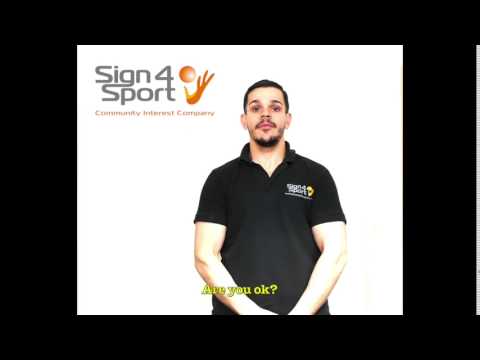
- Start with your dominant hand in a flat handshape (like a “B” handshape) and place it in front of your chest.
- Move your hand slightly forward and upward, as if reaching out to the person you are addressing.
- While doing this, raise your eyebrows and tilt your head slightly forward to indicate a question.
- Hold this position for a moment to give the person time to respond.
Common Mistakes
- Forgetting to use non-manual features like facial expressions, which are crucial for conveying the questioning tone.
- Using a flat handshape instead of the proper “B” handshape, which can change the meaning.
- Not maintaining eye contact, which is important in BSL to show engagement.
BSL vs ASL
In BSL, the sign for “Are you okay?” is more reliant on facial expressions and the handshape used, while in ASL, the sign is different and often incorporates a more direct movement of the hands. Understanding these differences can help you communicate more effectively in each language.
Related Signs
- Okay – A sign to express agreement or that everything is fine.
- Help – Used to ask for assistance or support.
- How – A common sign used in questions.
- Yes – A simple affirmation sign.
- No – Used to express negation.
Frequently Asked Questions
Can I use this sign in different contexts?
Yes, you can use this sign in various informal settings to check on someone’s well-being, whether they are friends or acquaintances.
Are there regional variations for this sign in the UK?
While the sign is generally consistent, some regional variations may exist in facial expressions or slight hand movements.
What are some similar signs?
Signs like Help or Okay can be used in similar contexts when expressing concern.
How can I improve my signing?
Practice regularly with Deaf friends or attend BSL classes to enhance your skills and gain confidence.
Is it important to use facial expressions?
Yes, facial expressions convey meaning and emotion in BSL, making them essential for effective communication.
What if I’m not fluent yet?
Don’t worry! It’s okay to learn at your own pace. Just keep practicing and engaging with the Deaf community.
Can I use this sign in a formal setting?
While it’s primarily informal, it can be used in formal situations where checking on someone’s well-being is appropriate, like during meetings.
Practice ASL Signs
Use your camera to practice signs and get real-time AI feedback on your technique.
Free · No signup required