
Are You Okay in British Sign Language (BSL)

The sign “are you okay in BSL” is a friendly way to check in on someone’s well-being within the UK Deaf community. It is often used in casual conversations among friends or acquaintances to express care and concern. This sign reflects the supportive nature of the Deaf culture, where communication is visual and expressive.
How to Sign “Are You Okay In Bsl” in BSL
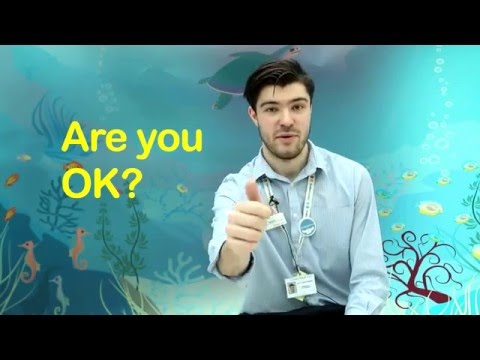
- Start with your dominant hand in a flat ‘B’ shape (fingers extended together, palm facing down).
- Position your hand in front of your chest, about shoulder height.
- Move your hand slightly forward while raising your eyebrows to indicate a question. This facial expression is crucial for conveying the meaning.
- To sign “okay,” use your dominant hand to form the letter ‘O’ and place it near your chin, then move it slightly away from your face.
- Combine the two signs smoothly to convey the complete question, ensuring your facial expression remains engaging and attentive.
Common Mistakes
One common mistake is forgetting to use appropriate facial expressions, which are vital in BSL for indicating questions. Another error is not maintaining the correct hand shape; using a flat hand instead of the ‘B’ shape can change the meaning. Lastly, learners may rush through the sign, making it less clear; take your time to ensure clarity.
BSL vs ASL
In BSL, the sign for “are you okay” uses specific hand shapes and movements that differ from American Sign Language (ASL). While ASL may use a different gesture for “okay,” BSL emphasizes facial expressions and the topic-comment structure, making each sign distinct in its cultural context.
Related Signs
- How – Asking about a method or process.
- Help – Offering assistance or support.
- Good – To express satisfaction or agreement.
- Fine – Indicating that something is acceptable.
- Thank You – A sign of gratitude.
Frequently Asked Questions
Can I use this sign in BSL sentences?
Yes, you can incorporate it into sentences. For example, “You are okay?” is a common way to check in.
Are there regional variations in this sign?
Generally, the sign remains consistent across the UK, but some regional dialects may have slight variations in facial expressions or speed.
What are some similar signs?
Signs like “how” and “fine” are similar in that they relate to well-being and checking in with others.
What are some tips for learning this sign?
Practice regularly with a friend and pay attention to facial expressions, as they enhance understanding in BSL.
Can this sign be used in formal settings?
While it’s more casual, you can use it in formal settings, but consider the context and the relationship with the person.
Is this sign universal in the Deaf community?
No, while many Deaf individuals may understand it, signs can vary significantly between different countries and their respective sign languages.
Practice ASL Signs
Use your camera to practice signs and get real-time AI feedback on your technique.
Free · No signup required