
Australian Sign Language Alphabet Video — Learn Auslan

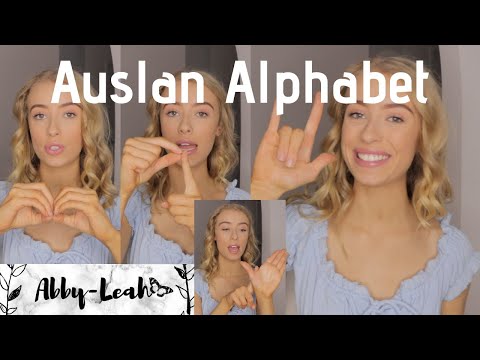
Watching an australian sign language alphabet video is one of the most effective ways to learn Auslan fingerspelling, because video captures the movements and transitions that static images cannot show. Several Auslan letters involve tapping, tracing, or sliding motions that are impossible to convey through photographs or illustrations alone. This guide helps you find quality video resources, explains what to look for, and provides a structured approach to using video for fingerspelling practice.
Why Video Is Essential for Learning
Sign languages are visual-gestural languages, which means they exist in three-dimensional space and incorporate movement as a fundamental element. A printed alphabet chart can show you the static endpoint of each letter, but it cannot show you how to get there — the motion, rhythm, and flow that distinguish natural fingerspelling from robotic letter production.
Several Auslan letters include movement as part of their formation. The letter J, for example, requires tracing a J-shaped path in the air. The letter Z involves a zigzag motion. Without seeing these movements demonstrated in video, learners often produce static approximations that may be misunderstood by fluent signers.
Video also demonstrates the pace and rhythm of real fingerspelling. In fluent Auslan, letters are not produced as discrete, separated units — they flow together in a continuous stream of hand movements. Watching a fluent signer fingerspell reveals the transitional movements between letters, the natural pauses at word boundaries, and the overall cadence that makes fingerspelling readable.
Non-manual markers are another critical element that video captures. When fingerspelling a person’s name, for instance, the signer’s eye gaze, lip movements, and facial expression all contribute information. Video shows these elements in their natural context, helping learners understand that Auslan communication involves the whole face and body, not just the hands.
Finding Quality Auslan Alphabet Videos
The most reliable Auslan alphabet videos come from Deaf-led organisations and qualified Auslan educators. Here are the best sources to check.
Deaf Australia and state-based Deaf societies occasionally publish educational videos on their websites and social media channels. These videos are produced by Deaf community members and reviewed for linguistic accuracy. Check the websites of Deaf Victoria, Deaf Queensland, Deaf Society of NSW, and DeafWA for video resources.
Australian universities with Auslan programs sometimes host instructional videos as part of their open educational resources. Macquarie University, which has one of Australia’s leading Auslan programs, and RMIT both produce learning materials that may include alphabet demonstrations. TAFE colleges offering Certificate and Diploma courses in Auslan may also share introductory videos publicly.
Signbank, the online Auslan dictionary maintained by researchers at Macquarie University, is an invaluable resource. While its primary focus is vocabulary signs rather than the alphabet specifically, the platform demonstrates the level of quality and accuracy you should expect from any Auslan video resource.
Practice Makes Perfect
Test your sign language skills with our free practice app.
Be cautious with user-generated content on general video platforms. While there are excellent Auslan alphabet videos created by Deaf Australians and qualified interpreters, there are also videos that use the wrong alphabet system (showing ASL instead of Auslan), contain errors in letter formation, or are produced by unqualified individuals. Always verify the creator’s credentials and check comments for corrections or warnings from Deaf viewers.
A simple quality check: the video should show a two-handed alphabet. If the presenter is using only one hand, they are demonstrating ASL or another one-handed system, not Auslan. This is the most common error in online “Auslan alphabet” videos, and catching it saves you from learning the wrong system.
What to Look for in a Video
Not all Auslan alphabet videos are equally useful for learning. These criteria will help you evaluate videos and choose the ones that will support your progress most effectively.
Camera angle is crucial. The best instructional videos show the signer’s hands from the viewer’s perspective (mirror view), so you can copy the movements directly without needing to mentally reverse left and right. Some videos are filmed from the signer’s perspective, which requires you to mirror the movements — this is fine for more advanced learners but can confuse beginners.
Pacing should be appropriate for your level. Look for videos that demonstrate each letter slowly and clearly, ideally holding each formation for two to three seconds before moving to the next. Some videos include both a slow demonstration and a faster run-through, which allows you to learn at the slow pace and then test yourself at a more natural speed.
Clear hand visibility matters enormously. The signer’s hands should be well-lit, positioned against a plain contrasting background (not patterned clothing or a cluttered room), and close enough to the camera to see individual finger positions. Long sleeves that cover the wrists are ideal, as they help define where the hand ends and the arm begins.
Verbal or text annotations add significant value. Videos that display the letter on screen while the signer demonstrates it, or that include verbal narration describing the handshape and movement, provide multiple learning channels that reinforce memorisation. Look for signs like learn being demonstrated with similar clarity.
The presenter’s credentials matter. Videos created by Deaf native signers, qualified Auslan interpreters (NAATI-certified), or Auslan teachers at accredited institutions are the most reliable. Check video descriptions, channel about pages, or the presenter’s introduction for credential information.
Structured Video Practice Method
Simply watching a video passively produces minimal learning. Use this structured method to extract maximum value from Auslan alphabet video resources.
On your first viewing, watch the entire alphabet video without attempting to copy the signs. Focus on getting an overall sense of the system — notice how the two hands work together, observe the general size and position of letters in space, and pay attention to which letters involve movement versus static holds.
On your second viewing, pause after each letter and attempt to replicate it. Compare your hand position to the screen and adjust as needed. Spend extra time on letters that feel awkward or unfamiliar. Do not move to the next letter until you can produce the current one comfortably from the pause screen.
On subsequent viewings, try to sign along with the video in real time. Start with the slow demonstration speed if the video offers one. When you can match the slow speed without pausing, try the normal-speed version. This progression builds both accuracy and speed simultaneously.
Record yourself signing the alphabet and compare your recording to the instructional video side by side. This self-assessment technique reveals discrepancies between what you think your hands are doing and what they are actually doing. Many learners discover that their letter formations look quite different from the inside (felt) versus the outside (seen).
Practise fingerspelling common words along with the video. After learning all 26 letters, move on to video resources that demonstrate fingerspelled words and phrases. Spelling hello, thank you, and your own name using video guidance develops the transitional movements between letters that are essential for fluent fingerspelling.
Combining Video with Other Resources
Video works best as part of a multi-resource learning approach rather than as your only study tool. Combining video with other materials creates a more robust learning experience.
Pair video with a printed alphabet chart. Use the chart as a quick reference during the day when you want to check a specific letter without loading a video. Use the video during dedicated practice sessions when you want to focus on movement, pacing, and accuracy. The chart reinforces what you learn from video, and the video adds depth to what the chart can show.
Use video to learn and a mirror to practise. After studying a video, stand in front of a mirror and practise the letters you just watched. The mirror provides immediate visual feedback similar to what the video viewer sees, helping you verify that your letter formations match the demonstrated standard.
Supplement alphabet videos with Auslan vocabulary videos. Once you can fingerspell, expand your viewing to include videos of complete signs, sentences, and conversations. This contextualises fingerspelling within the broader language and shows you when and how fluent signers switch between vocabulary signs and fingerspelling in natural communication.
Seek out receptive practice videos specifically. Some creators produce videos designed to test your fingerspelling reading skills — they spell words at various speeds and challenge you to decode them. This receptive skill is often the harder half of fingerspelling competency and benefits enormously from dedicated video practice.
Consider enrolling in a formal Auslan course that uses video as a teaching tool. TAFE colleges, community centres, and private Auslan schools across Australia offer beginner courses that combine in-person instruction with video homework. The structured curriculum, expert feedback, and community connection of a formal course accelerate learning far beyond what self-study with videos alone can achieve. Starting with signs like good and building from there gives you a practical vocabulary alongside your alphabet skills.
Related Articles
- Australian Sign Language Alphabet Chart
- Auslan Sign Language Alphabet PDF
- Australian Sign Language Alphabet Printable
- Auslan How to Learn
Practice ASL Signs
Use your camera to practice signs and get real-time AI feedback on your technique.
Free · No signup required