
You Want More in Australian Sign Language (Auslan)
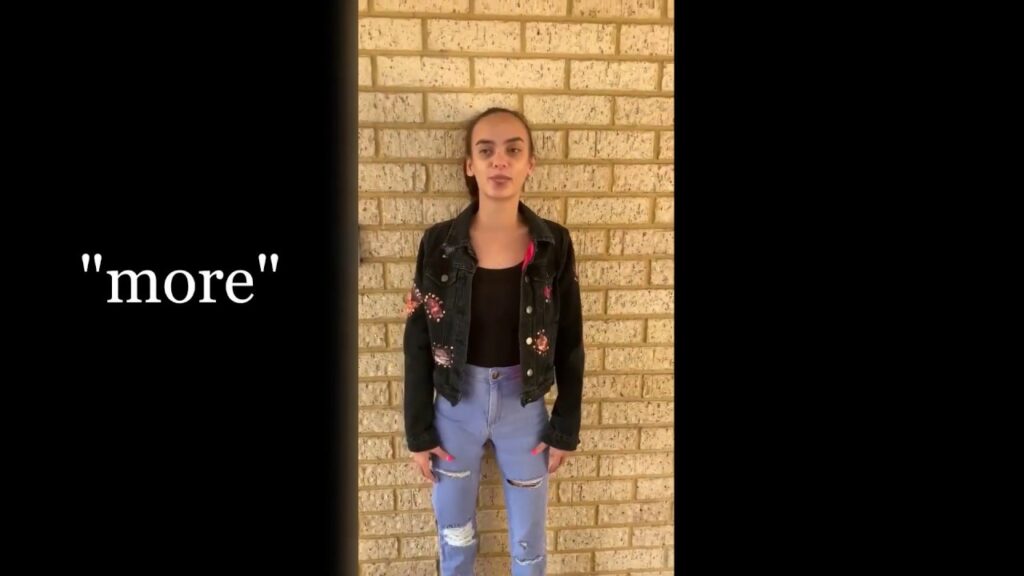
The sign for “you want more” in Auslan is useful in various everyday situations, such as when requesting more food, information, or assistance. This sign conveys a clear desire for additional items or support and is commonly used in both casual and formal settings.
Table of Contents
How to Sign “You Want More”
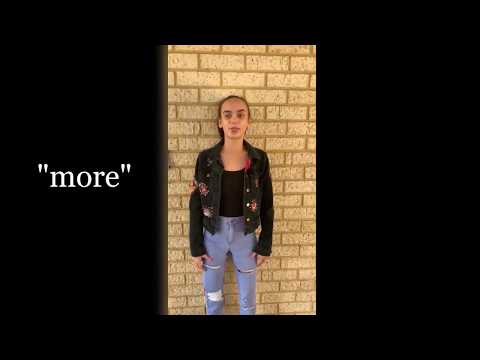
- Start with your dominant hand in a flat open palm shape, facing upwards.
- Place your hand just below your chin, with your fingers slightly curled and your palm facing up.
- Move your hand away from your chin in a smooth, outward motion while keeping your palm facing up.
- Maintain a friendly expression, as facial expressions are crucial in Auslan to convey emotion and intent.
Common Mistakes
- Forgetting to use facial expressions, which can lead to misunderstandings about the request.
- Using an incorrect handshape; ensure your palm is open and facing up during the sign.
- Rushing the movement; make sure to perform the sign smoothly to communicate clearly.
Related Signs
- 1 – The sign for the number one.
- 1 Dollar – The sign for one dollar.
- 10 – The sign for the number ten.
- 100 – The sign for the number one hundred.
- 11 – The sign for the number eleven.
Using “You Want More” in Everyday Conversations
The sign “You Want More” is often used in various everyday situations, especially when communicating preferences or desires. Here are a few example sentences that illustrate its use:
- Example 1: “You want more cake?” (You Want More Cake) – This can come up during a birthday party when offering dessert.
- Example 2: “You want more music?” (You Want More Music) – This might be used at a social gathering when asking if someone would like the music to be turned up.
- Example 3: “You want more time?” (You Want More Time) – This can be useful in a classroom setting when checking if a student needs more time to finish an assignment.
In these situations, “You Want More” is a direct and clear way to engage in conversation, allowing for a smooth exchange of needs and wants.
Cultural Notes
In the Australian Deaf community, the phrase “You Want More” transcends mere functionality; it embodies a sense of connection and engagement. Asking if someone wants more of something, whether it’s food or conversation, reflects a communal spirit and hospitality valued in Deaf culture. This sign is often accompanied by facial expressions and body language that enhance the meaning.
In terms of dialect, while Auslan is relatively uniform across Australia, some variations may exist between northern and southern regions. For instance, the intensity or speed of the sign may differ, as well as the non-manual features accompanying it. Being aware of these nuances can help in understanding and integrating into the local Deaf community.
Tips for Learning This Sign
To effectively learn and remember the sign “You Want More,” consider these practical tips:
- Mirror Practice: Stand in front of a mirror while practicing the sign. This will help you ensure your hand shape and movement are accurate.
- Watch for Non-Manual Features: Pay attention to facial expressions and body posture while using the sign. These non-manual features add important context and emotion.
- Use in Short Signed Sentences: Incorporate “You Want More” into simple sentences during conversation practice. This reinforces your ability to use it contextually and helps solidify your memory.
Regular practice in a supportive environment will help you become more comfortable with this sign, enhancing your overall Auslan skills.
Frequently Asked Questions
How can I use this sign in a sentence?
You can use it in a sentence like: “You want more food?” by incorporating facial expressions that show eagerness.
Are there regional variations for this sign?
While the basic sign remains consistent, there can be slight variations in speed and facial expressions based on regional dialects.
What are some similar signs?
Signs like “you want” and “more” can be used in similar contexts, but the combination of both is specific to expressing a desire for more.
How does this sign compare to BSL?
In British Sign Language (BSL), the sign may look different, as BSL has its own unique signs for similar phrases.
What are some teaching tips for this sign?
Practice in front of a mirror to check your hand shape and facial expressions, and use role-playing scenarios to reinforce its use.
Practice This Sign
Try signing You Want More In Auslan with your camera and get AI coaching on your handshape, movement, and location.
Free · No signup required