
You Okay in Australian Sign Language (Auslan)

The sign “you okay” in Auslan is a friendly way to check in on someone’s well-being. It’s often used in casual conversations among friends or acquaintances to express care and concern. This sign can be especially helpful in social settings where you want to ensure that someone is feeling good or not going through a tough time.
Table of Contents
How to Sign “You Okay”
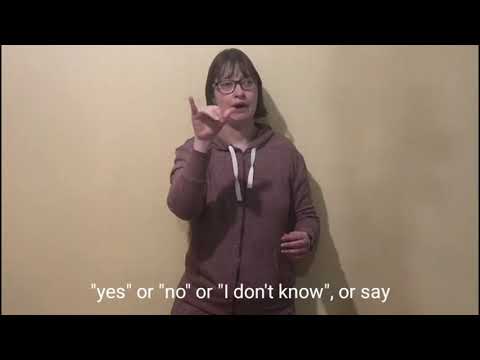
- Start with your dominant hand (usually your right hand) in a “flat hand” shape, with your palm facing towards the person you are communicating with.
- Position your hand at about chest level, slightly away from your body.
- Move your hand towards the person while keeping your fingers extended, maintaining the flat hand shape.
- As you move your hand, raise your eyebrows and tilt your head slightly forward to convey a questioning tone.
- Finish the sign by holding the position for a moment, allowing the person to respond.
Common Mistakes
- Using a fist instead of a flat hand can change the meaning of the sign.
- Not using facial expressions can make the sign unclear; remember to show concern with your eyebrows and head tilt.
- Rushing the motion may lead to misunderstanding; take your time to ensure clarity.
Related Signs
- 1 – The sign for the number one.
- 10 – The sign for the number ten.
- 100 – The sign for the number one hundred.
- 16 – The sign for the number sixteen.
Using “You Okay” in Everyday Conversations
The sign “You Okay” is a versatile way to check in on someone, expressing care and concern. Here are a few example sentences where this sign naturally fits into everyday conversations:
- Example 1: When you see a friend looking upset, you might sign: You okay? (sign) Friend sad (sign).
- Example 2: After a colleague has had a long meeting, you can sign: You okay? (sign) Meeting tough (sign).
- Example 3: When a family member seems distracted while watching a movie, you could ask: You okay? (sign) Movie boring (sign).
These examples illustrate how “You Okay” can be integrated into various contexts, making it a valuable part of daily communication.
Cultural Notes
In the Australian Deaf community, the sign “You Okay” carries an inherent sense of connection and support. It reflects the Deaf culture’s emphasis on community and looking out for one another. Using this sign is not just a simple inquiry; it signifies a deep care for the well-being of others.
Dialect variations can also exist within Auslan, particularly between northern and southern regions of Australia. While “You Okay” is widely understood, some signs may have slight variations in execution or facial expressions, reflecting local nuances in communication styles. Being aware of these regional differences can enrich your understanding and use of Auslan.
Tips for Learning This Sign
Practicing the sign “You Okay” effectively can enhance your confidence and fluency in Auslan. Here are some practical tips:
- Mirror Practice: Use a mirror to observe your hand movements and facial expressions while signing. This helps ensure accuracy and enhances your non-manual features.
- Watch for Non-Manual Features: Pay attention to facial expressions and body language, which are crucial in Auslan. A genuine smile or concerned look can convey your intent behind the sign.
- Use in Short Signed Sentences: Incorporate “You Okay” in brief conversations with friends or fellow learners. The more you use it, the more natural it will feel.
By consistently practicing these techniques, you’ll become more comfortable with the sign and its appropriate contexts, enriching your Auslan communication skills.
Frequently Asked Questions
Can I use “you okay” in a formal setting?
This sign is more casual, so it’s best suited for informal settings among friends or familiar acquaintances.
Are there regional variations in this sign?
While the sign is generally understood across Auslan users, some regions may have slight variations in movement or facial expression.
What is a similar sign?
The sign for “how are you?” is similar in intent but uses different hand shapes and movements.
How does this compare to BSL?
British Sign Language (BSL) has different signs for “you okay,” so it’s important to learn the specific signs for the community you are communicating with.
What are some teaching tips for this sign?
Practice with a partner to get feedback on your hand shape and facial expressions, and watch native signers for clarity.
Practice This Sign
Try signing You Okay In Auslan with your camera and get AI coaching on your handshape, movement, and location.
Free · No signup required