
Range Check in Australian Sign Language (Auslan)
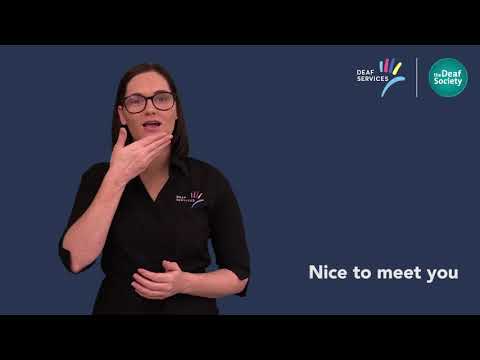
The sign “range check in Auslan” is used in contexts where you need to verify or assess a range of options or parameters. It might be commonly used in discussions around technology, programming, or even in everyday conversation when checking limits or possibilities.
How to Sign “Range Check”
- Start with your dominant hand in a flat “B” handshape (palm facing down).
- Position your hand in front of your body at about waist height.
- Keep your non-dominant hand in a similar flat “B” handshape, positioned below your dominant hand.
- Move your dominant hand upward, while your non-dominant hand remains static, as if you are indicating a range or scale.
- Maintain a neutral facial expression initially, but feel free to add emphasis to your expression as you convey the importance of the range being checked.
Common Mistakes
- Forgetting to keep both hands in the correct flat “B” handshape, which can lead to confusion.
- Moving the dominant hand too quickly, making it difficult for the viewer to understand the range being indicated.
- Neglecting facial expressions, which are crucial for conveying the context and meaning of the sign.
Related Signs
- 1 – The sign for the number one, useful for counting.
- 10 – The sign for the number ten, often used in various counting contexts.
- 100 – The sign for the number one hundred, helpful in discussions about larger quantities.
- 12 – The sign for the number twelve, frequently used in contexts involving dates or times.
- 15 – The sign for fifteen, useful in counting or discussing age.
Frequently Asked Questions
How can I use “range check in Auslan” in a sentence?
You might say, “Can you do a range check in Auslan for the project?” This indicates you want to verify the parameters for the project.
Are there regional variations for this sign?
While the sign is generally consistent, some regions may have slight variations in handshape or movement. It’s always good to observe local signing.
Are there similar signs to “range check”?
Yes, signs that indicate limits or boundaries, like “limit” or “check,” might be related, depending on context.
How does this sign compare to BSL (British Sign Language)?
There may be differences in the specific signs for similar concepts. It’s beneficial to learn both if you’re interacting with BSL users.
What are some teaching tips for this sign?
Encourage students to practice in pairs, focusing on clarity of handshape and facial expressions to reinforce understanding.
Practice This Sign
Try signing Range Check In Auslan with your camera and get AI coaching on your handshape, movement, and location.
Free · No signup required