
Variables in Australian Sign Language (Auslan)
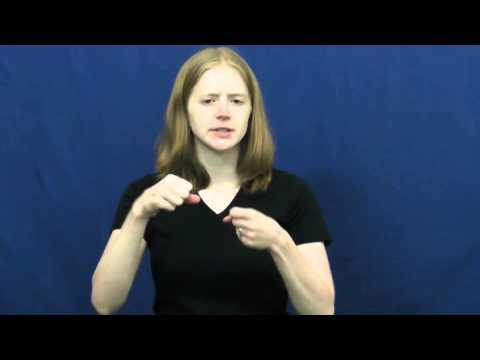
The sign for “variables in Auslan” represents the concept of changing or different elements within a context, often used in discussions about mathematics, programming, or logic. This sign is particularly useful in educational settings or when discussing concepts that involve varying factors.
Table of Contents
How to Sign “Variables”
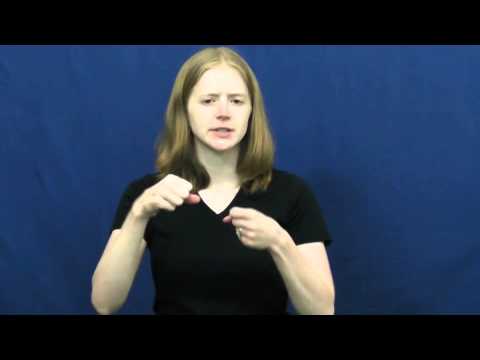
- Start with both hands in a flat shape (similar to the ASL letter “B”).
- Position your dominant hand in front of your chest, palm facing down.
- Using your non-dominant hand, move it in a circular motion around your dominant hand while keeping both hands flat.
- As you perform the circular motion, shift your facial expression to indicate a thoughtful or questioning tone.
- Finish the sign by returning your hands to the starting position in front of your chest.
Common Mistakes
- Some learners may forget to keep their hands flat, which can change the meaning of the sign.
- Not using facial expressions can make the sign less effective, as facial cues are essential in ASL for conveying emotion and context.
- Moving the hands too quickly can confuse the sign, making it harder for others to understand.
Related Signs
- 1 – Represents the number one.
- 10 – Represents the number ten.
- 100 – Represents the number one hundred.
- 15 – Represents the number fifteen.
- 16 – Represents the number sixteen.
Using “Variables” in Everyday Conversations
The sign “Variables” is often used in discussions about mathematics, science, or even in casual conversations when talking about options or possibilities. Here are a few example sentences to illustrate its use:
- When discussing math: “MATH I VARIABLE SOLVE.” (In a math class, a student may sign about solving for a variable.)
- Talking about different choices: “CHOICE VARIABLE MANY.” (In a group discussion about event planning, a Deaf person might express that there are many variable options to consider.)
- In a science context: “EXPERIMENT VARIABLE CHANGE.” (During a lab, a student might refer to how changing a variable affects the experiment’s outcome.)
These examples show how “Variables” can seamlessly fit into everyday conversations, making it a useful sign across various contexts.
Cultural Notes
In the Australian Deaf community, the concept of “Variables” extends beyond mathematics to encompass the idea of choices and options in life. The term is often discussed in educational settings, particularly in STEM (Science, Technology, Engineering, and Mathematics) subjects, where variables play a crucial role in understanding complex concepts. This sign may also reflect the Australian Deaf community’s emphasis on inclusivity and adaptability, as members frequently navigate various communication styles, environments, and preferences.
While there are generally consistent signs across the country, some regional variations exist. For example, in some northern areas, the sign may be slightly modified in handshape or movement to better suit local signing preferences. It is always beneficial to observe and adapt to the signing styles of those around you to ensure clear communication.
Tips for Learning This Sign
To effectively learn and remember the sign “Variables,” consider the following tips:
- Mirror Practice: Stand in front of a mirror and practice the sign while observing your handshape and movement. This will help reinforce muscle memory and improve your signing technique.
- Watch for Non-Manual Features: Pay attention to facial expressions and body language while signing. These non-manual features provide essential context and enhance understanding.
- Incorporate in Short Sentences: Use “Variables” in simple signed sentences, connecting it to everyday topics. This contextual practice will help solidify your understanding and usage of the sign.
Regular practice in diverse situations will make the sign feel more natural and integrated into your Auslan vocabulary.
Frequently Asked Questions
How can I use “variables in Auslan” in a sentence?
You might say, “In programming, we often use variables to store data,” while signing the concept of variables in Auslan.
Are there regional variations for this sign?
While the sign is generally consistent, some regions may have slight variations in hand movements or facial expressions.
What are some signs similar to “variables”?
Signs related to mathematics or programming concepts, like 1 or 100, can be useful when discussing variables.
How does this sign compare to BSL?
British Sign Language (BSL) has its own sign for “variables,” which may look different, so it’s good to be aware of these differences when communicating with BSL users.
What tips do you have for teaching this sign?
Encourage learners to practice facial expressions and slow down their movements to ensure clarity when signing “variables in Auslan.”
Practice This Sign
Try signing Variables In Auslan with your camera and get AI coaching on your handshape, movement, and location.
Free · No signup required