
Said in Australian Sign Language (Auslan)
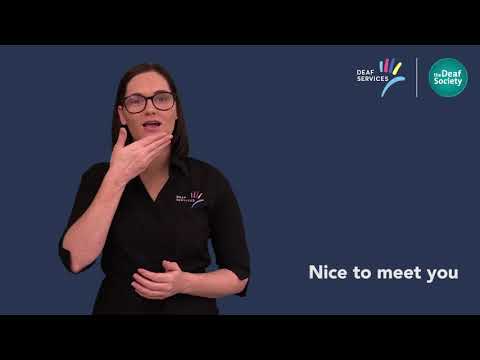
The sign for “said” in Auslan is used to convey that something has been verbalized or expressed by someone. It’s commonly utilized in conversations to refer back to something previously mentioned or to report speech. This sign is essential for effective communication in storytelling or discussing conversations.
Table of Contents
How to Sign “Said”

- Start with your dominant hand in a flat handshape (like an open palm) facing forward.
- Position your hand near your mouth, as if you are about to speak.
- Move your hand slightly away from your mouth, extending it forward while keeping the palm facing out.
- As you move your hand, use an expressive facial expression that matches the context of what was said, such as a slight nod or a raised eyebrow.
Common Mistakes
- Some learners may forget to use facial expressions, which are crucial for conveying tone and context in ASL.
- Using the wrong handshape; ensure your hand is flat and not in a fist or another shape.
- Not moving the hand far enough from the mouth, which can make the sign unclear.
Related Signs
- 1 – The sign for the number one.
- 1 Dollar – The sign used for one dollar.
- 10 – The sign for the number ten.
- 100 – The sign for the number one hundred.
- 11 – The sign for the number eleven.
Using “Said” in Everyday Conversations
The sign “Said” is frequently used in conversations to convey information or recount previous statements. Here are a few example sentences illustrating its use:
- Example 1: “She said, ‘I will be late.'”
Auslan Sign Order: She SAID late. - Example 2: “He said he enjoyed the movie.”
Auslan Sign Order: He SAID movie enjoy. - Example 3: “They said to meet at the café.”
Auslan Sign Order: They SAID meet café.
These examples show how “Said” helps clarify who is communicating and what was communicated, making it an essential part of storytelling and sharing experiences in Auslan.
Cultural Notes
The use of “Said” in Auslan reflects not just the language but the rich cultural context of the Australian Deaf community. In this community, storytelling is a vital aspect of social interaction, and accurately conveying what someone has said is important for maintaining the narrative flow. The sign is widely understood and integral to effective communication.
While there are no significant dialect variations for the sign “Said” across northern and southern Australia, it’s essential to be aware of regional signs and variations in expression. Engaging with local Deaf communities can provide insights into subtle differences and enrich your understanding of how “Said” fits into larger conversational patterns.
Tips for Learning This Sign
Practicing the sign “Said” effectively can enhance your fluency in Auslan. Here are some concrete ways to incorporate it into your learning:
- Mirror Practice: Stand in front of a mirror to practice the sign. This helps you see your movements and ensure you’re forming the sign correctly.
- Watch for Non-Manual Features: Pay attention to facial expressions and body language when signing “Said.” These non-manual features add context and meaning to your communication.
- Use in Short Signed Sentences: Create simple sentences using “Said” and practice signing them aloud. This will help you remember the sign in context and improve your overall signing skills.
By incorporating these practices into your routine, you’ll find it easier to remember and use “Said” naturally in conversations.
Frequently Asked Questions
How can I use “said” in a sentence?
You can say, “She said she would come to the party” by signing “SHE SAID PARTY COME.”
Are there regional variations for this sign?
While the sign for “said” is generally consistent, some regions may have slight variations in facial expressions or movement.
What signs are similar to “said”?
Signs like “tell” and “speak” might have overlapping meanings and can be used in similar contexts, but they each have distinct signs.
How does “said” compare to BSL?
In BSL, the sign for “said” is different; it’s important to learn both if you interact with users of either sign language.
Any tips for teaching this sign?
Encourage students to practice with a partner to enhance their facial expressions and hand movements, which are key to ASL communication.
Practice This Sign
Try signing Said In Auslan with your camera and get AI coaching on your handshape, movement, and location.
Free · No signup required