
Page Breaks in Australian Sign Language (Auslan)

The sign for “page breaks in Auslan” is used to indicate the transition between different sections of a document or text, similar to how one might refer to a new chapter or part in a book. This sign is particularly useful in educational contexts, conversations about literature, or when discussing documents that have multiple parts. It’s a way to communicate the concept of division in written material effectively.
How to Sign “Page Breaks”
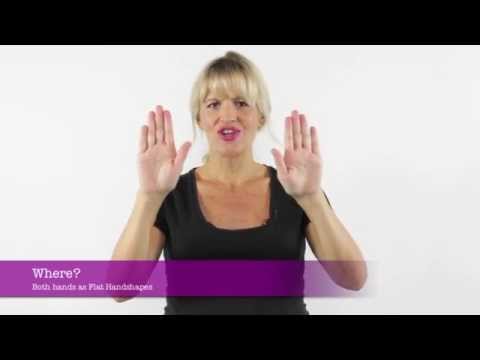
- Start with both hands in a flat “B” shape, with your palms facing down.
- Position your hands parallel to each other, about shoulder-width apart.
- Slowly move the hands apart, maintaining the flat “B” shape, to signify the separation of pages.
- As you move your hands apart, nod your head slightly to emphasize the change.
- Finish the sign by bringing your hands back together in the starting position to indicate that you are ready to continue discussing the new section.
Common Mistakes
- Using a fist instead of a flat “B” handshape, which can change the meaning of the sign.
- Not moving the hands apart clearly, making it difficult for the viewer to understand the concept of a page break.
- Forgetting to incorporate facial expressions, which are crucial for conveying meaning in Auslan.
Related Signs
- 1 – The sign for the number one.
- 10 – The sign for the number ten.
- 100 – The sign for the number one hundred.
- 11 – The sign for the number eleven.
- 12 – The sign for the number twelve.
Frequently Asked Questions
How can I use this sign in a sentence?
You might say, “When you finish this section, we will have a page break,” signing the concept as you speak.
Are there regional variations for this sign?
While the core sign remains the same, different regions may have slight variations in speed or hand positioning. It’s best to observe native signers in your area.
What are some signs that are similar to “page breaks”?
Signs like “chapter,” “section,” or “new” might be used in similar contexts to convey changes in written material.
How does this sign compare to BSL?
In BSL, the sign for “page” is quite different, focusing more on the action of turning a page rather than breaking it. Understanding these differences can enhance your communication across sign languages.
What tips do you have for teaching this sign?
Encourage learners to practice in pairs, focusing on clarity of movement and facial expressions to ensure the meaning is conveyed effectively.
Practice This Sign
Try signing Page Breaks In Auslan with your camera and get AI coaching on your handshape, movement, and location.
Free · No signup required