
Obtuse Angle in Australian Sign Language (Auslan)

The sign for “obtuse angle” in Auslan is used primarily in educational settings, particularly in mathematics and geometry discussions. It helps convey the concept of an angle that is greater than 90 degrees but less than 180 degrees. This sign is essential for students and educators alike when discussing shapes and angles.
How to Sign “Obtuse Angle”
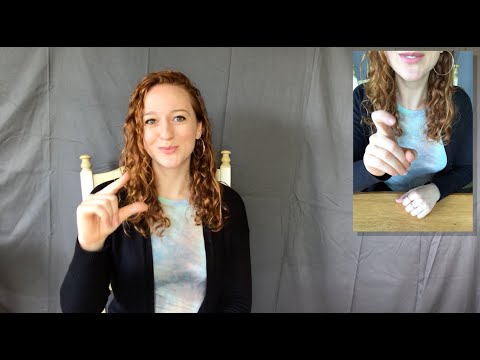
- Start with your dominant hand in a “B” handshape (flat and palm down).
- Position your hand about shoulder height in front of you, maintaining a slight bend in your elbow.
- With your non-dominant hand, form a “B” handshape as well and place it parallel to your dominant hand.
- Slowly move your dominant hand to create a wide angle between your two hands, mimicking the shape of an obtuse angle.
- Use a facial expression that reflects concentration or focus, as this helps convey the mathematical context.
Common Mistakes
- Many learners mistakenly create an acute angle instead of an obtuse angle, resulting in a misunderstanding of the sign’s meaning.
- Some may forget to maintain the “B” handshape, leading to a less clear representation of the angle.
- Facial expressions are often overlooked, which can make the sign less effective in conveying the intended concept.
Related Signs
- 1 – The sign for the number one, often used in counting and mathematical contexts.
- 10 – This sign represents the number ten, commonly used in various counting scenarios.
- 100 – The sign for one hundred, useful in discussions about larger numbers.
- 12 – This sign is for the number twelve, often used in math classes.
- 14 – The sign for fourteen, relevant in numeric discussions and calculations.
Frequently Asked Questions
How can I use “obtuse angle” in a sentence?
You can say, “In geometry class, we learned about an obtuse angle.” Sign the phrase with the appropriate signs for each word.
Are there regional variations for this sign?
While the sign is fairly standard, some regions may have slight variations in handshape or movement. It’s always good to learn from local Deaf communities.
Is there a sign similar to “obtuse angle”?
Yes, the sign for “acute angle” is similar but uses a tighter angle between the hands, representing an angle less than 90 degrees.
How does this sign compare to BSL?
In BSL, the concept of an obtuse angle may have a different sign or variation, reflecting the unique characteristics of British Sign Language.
What are some teaching tips for this sign?
Encourage students to practice with a partner, focusing on the angle and handshape, while also using facial expressions to convey understanding.
Practice This Sign
Try signing Obtuse Angle In Auslan with your camera and get AI coaching on your handshape, movement, and location.
Free · No signup required