
National Auslan Interpreter Booking and Payment Service in Australian Sign Language (Auslan)
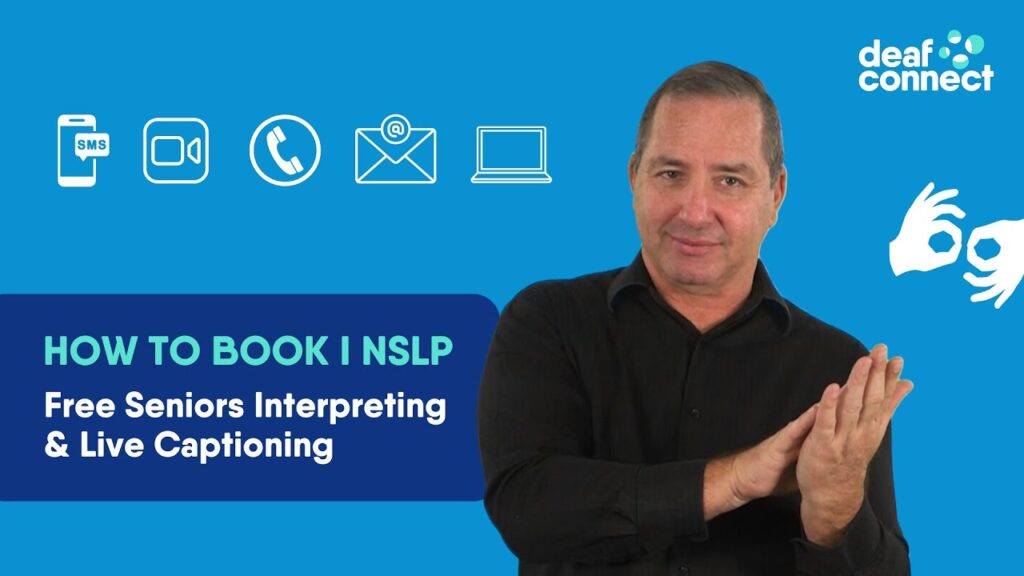
The sign for “national auslan interpreter booking and payment service” refers to services that help individuals book and pay for Auslan interpreters, ensuring effective communication access for the Deaf community. This sign is commonly used in contexts where individuals are discussing interpreter services or making arrangements for accessibility during events or appointments.
How to Sign “National Auslan Interpreter Booking And Payment Service”
- Start with your dominant hand in a flat ‘N’ shape (like the letter N in fingerspelling). Place it near your chest.
- Move your hand outward slightly while keeping the ‘N’ shape, as if you are emphasizing the “national” aspect.
- Next, transition to the sign for “Auslan” by using your dominant hand in a ‘A’ shape, moving it in a circular motion in front of your body.
- For “interpreter,” use your dominant hand in an ‘I’ shape, and place it above your non-dominant flat hand (palm up), then twist your wrists outward.
- To sign “booking,” form both hands in ‘B’ shapes, and move them together as if you are placing something down.
- For “payment,” use a flat ‘B’ handshape on your non-dominant palm, and tap it twice to indicate the action of paying.
- Finally, combine all these elements smoothly, maintaining eye contact and facial expressions that convey the importance of the service.
Common Mistakes
- Forgetting to maintain the facial expressions that indicate the importance of the service, which can lead to misunderstandings.
- Incorrectly forming the handshapes, especially during the transition between signs, which may cause confusion.
- Rushing through the signs instead of using smooth transitions, making it difficult for others to follow.
Related Signs
- (Auslan) – The sign for Australian Sign Language, emphasizing its unique cultural identity.
- 1 – The sign for the number one, often used in various contexts.
- 1 Dollar – Represents a single dollar, useful in financial discussions.
- 10 – The sign for the number ten, frequently used in counting.
- 100 – Represents one hundred, commonly used in financial contexts.
Frequently Asked Questions
How can I use this sign in a sentence?
You can say, “I need to book a national Auslan interpreter service for my meeting.” This emphasizes the importance of accessibility.
Are there regional variations of this sign?
While the sign is generally consistent, some regions may have slight variations in handshape or movement based on local dialects.
Is there a similar sign in BSL?
Yes, BSL has its own sign for interpreter services, but it may differ in structure and handshapes compared to ASL.
What tips do you have for teaching this sign?
Encourage students to practice with partners and focus on facial expressions to convey the importance of the service.
Can I use this sign when discussing other services?
Yes, the structure can be adapted to discuss various services by changing the relevant keywords while maintaining the overall flow.
How do I clarify if someone doesn’t understand the sign?
Use gestures or fingerspell key components to ensure clarity, and encourage open communication for understanding.
Practice This Sign
Try signing National Auslan Interpreter Booking And Payment Service with your camera and get AI coaching on your handshape, movement, and location.
Free · No signup required