
Facilitator in Australian Sign Language (Auslan)

The sign for “facilitator” in Auslan refers to someone who helps guide, support, or enable communication within a group, often in educational or community settings. This term is used in various contexts, especially in workshops, meetings, or events where facilitation is key to effective participation.
Table of Contents
How to Sign “Facilitator”
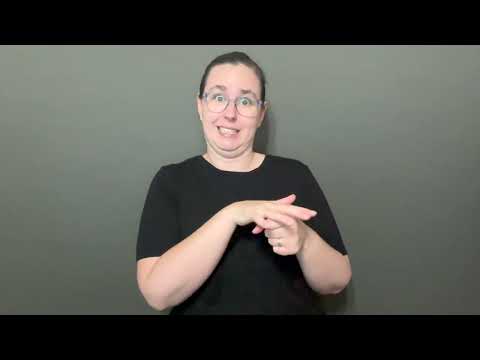
- Start with your dominant hand open, palm facing down, and fingers extended. This hand represents the facilitator.
- Position your hand about shoulder height, slightly in front of your body.
- Move your hand in a gentle circular motion, as if guiding or leading a discussion.
- Maintain an inviting facial expression, showing openness and encouragement, as this reflects the role of a facilitator.
Common Mistakes
- Some learners may use a closed fist instead of an open hand, which can change the meaning of the sign.
- Forgetting to include appropriate facial expressions can make the sign less effective.
- Not positioning the hand at the right height can lead to confusion about the sign’s meaning.
Related Signs
- 1 – Represents the number one.
- 1 Dollar – Indicates a single dollar amount.
- 10 – Signifying the number ten.
- 100 – Represents one hundred.
- 11 – Indicates the number eleven.
Using “Facilitator” in Everyday Conversations
Incorporating the sign “Facilitator” into your daily Auslan conversations can enhance clarity and connection, especially in discussions about education, community events, or meetings. Here are a few example sentences:
- “The facilitator will lead the workshop next week.” (FACILITATOR WORKSHOP NEXT WEEK)
- “I appreciate the facilitator’s help during the meeting.” (MEETING FACILITATOR HELP APPRECIATE)
- “Can you recommend a good facilitator for our event?” (EVENT GOOD FACILITATOR RECOMMEND CAN YOU?)
These sentences often arise in contexts such as planning community gatherings, educational settings, or professional environments where effective communication is crucial.
Cultural Notes
The term “Facilitator” holds significant cultural relevance within the Australian Deaf community. Facilitators often play a pivotal role in bridging communication gaps among Deaf and hearing individuals, ensuring that everyone’s voice is heard. They are crucial in settings such as Deaf education, workshops, and community events, where inclusivity is paramount.
In terms of dialect, while the sign for “Facilitator” remains consistent, variations in sign usage can occur between northern and southern regions of Australia. These differences may be subtle but are essential for effective communication within local Deaf communities. Engaging with local Deaf individuals can enhance understanding and fluency in regional signs.
Tips for Learning This Sign
To effectively learn and remember the sign for “Facilitator,” consider these practical strategies:
- Mirror Practice: Stand in front of a mirror and practice the sign. This will help you observe your hand shapes and movements, ensuring they match the correct sign.
- Watch for Non-Manual Features: Pay attention to facial expressions and body language when signing. These non-manual features can convey additional meaning and context.
- Use in Short Signed Sentences: Incorporate the sign in various contexts by creating short sentences. This will help reinforce memory and contextual usage.
Regular practice and engagement with the Deaf community will also enhance your confidence and proficiency in using the sign for “Facilitator.”
Frequently Asked Questions
How can I use “facilitator” in a sentence?
You can say, “The facilitator will lead the workshop,” by signing “facilitator” followed by the sign for “will” and “lead.”
Are there regional variations of this sign?
Yes, some regions may have slightly different signs for “facilitator,” so it’s helpful to learn from local Deaf community members.
What are some similar signs?
Signs like “leader” or “guide” can be similar, but each has its own specific meaning and context.
How does this compare to BSL?
While Auslan and BSL share some signs, there are distinct differences; it’s best to learn each language‘s signs separately.
What are some teaching tips for this sign?
Focus on demonstrating the sign in context and encourage students to practice in pairs to reinforce their understanding.
Practice This Sign
Try signing Facilitator In Auslan with your camera and get AI coaching on your handshape, movement, and location.
Free · No signup required