
Facetime in Australian Sign Language (Auslan)
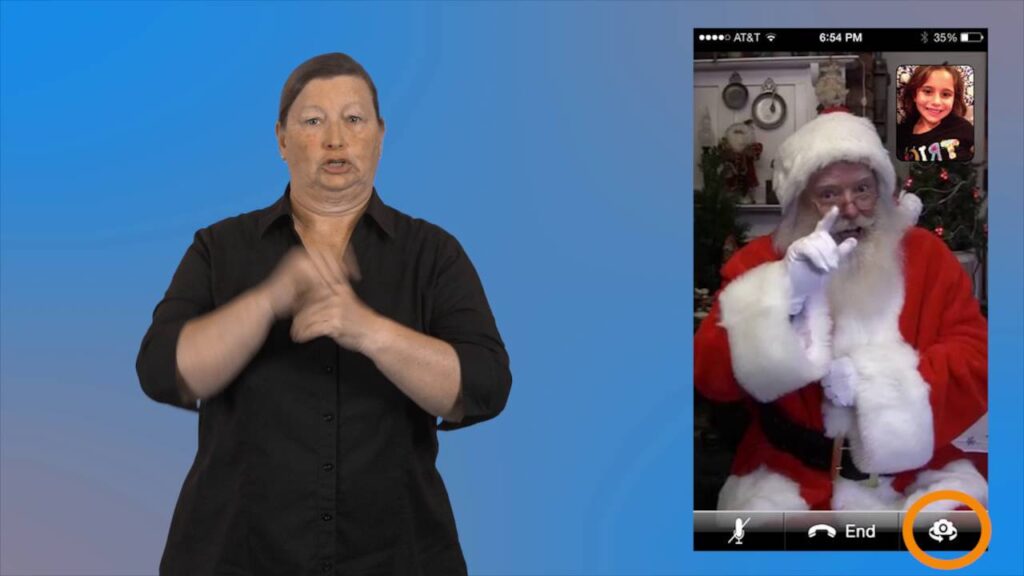
The sign for “Facetime” in Auslan represents the act of using video calling to connect with someone. It’s commonly used when discussing communication through various video platforms, especially in a social context. This sign can be useful when sharing plans to connect or catch up with friends and family.
Table of Contents
How to Sign “Facetime”
- Start with your dominant hand in a flat “B” handshape (palm facing down).
- Bring your hand to your forehead and then move it away slightly, as if mimicking the action of holding a phone to your face.
- While doing this, keep your facial expression engaged and friendly, as if you are excited to connect with someone.
- Finally, bring your hand back toward your forehead and then away again, emphasizing the “face” part of the sign.
Common Mistakes
- Some learners may forget to use a friendly facial expression, which is crucial for conveying the social nature of the sign.
- Others might make the handshape unclear, using a fist instead of a flat “B,” which can change the meaning.
- Not moving the hand away from the forehead enough can make the sign look incomplete or confusing.
Related Signs
- 1 – Represents the number one.
- 10 – Represents the number ten.
- 100 – Represents the number one hundred.
- 15 – Represents the number fifteen.
- 11 – Represents the number eleven.
Using “Facetime” in Everyday Conversations
The sign for “Facetime” is commonly used in casual conversations among Deaf individuals, especially when discussing communication methods. Here are a few example sentences where the sign fits naturally:
- English: “I Facetime my family every weekend.”
Auslan: ME FAMILY EVERY WEEKEND FACETIME. - English: “Did you Facetime your friend last night?”
Auslan: YOU LAST NIGHT FRIEND FACETIME? - English: “Let’s Facetime later to catch up.”
Auslan: WE LATER CATCH UP FACETIME.
These examples illustrate how the sign can be integrated into everyday dialogue, making it relatable and practical for daily use.
Cultural Notes
The sign for “Facetime” holds significant cultural relevance within the Australian Deaf community. It represents not only a method of communication but also a bridge that connects Deaf individuals with their hearing peers, family, and friends. This form of visual communication is celebrated for enhancing relationships and promoting accessibility.
In terms of dialect variation, while the sign for “Facetime” is generally consistent across the country, some regional differences in sign language usage may occur between northern and southern states. It’s beneficial for learners to engage with signers from various areas to appreciate these subtle nuances.
Tips for Learning This Sign
Practicing the “Facetime” sign effectively can help reinforce your memory and improve your signing skills. Here are some concrete tips:
- Mirror Practice: Use a mirror to observe your handshape and movement. This feedback can help you adjust your signing to match the correct form.
- Watch for Non-Manual Features: Pay attention to facial expressions and body language that accompany the sign. These non-manual features convey emotions and contextual meaning.
- Use it in Short Signed Sentences: Create simple sentences incorporating “Facetime” and practice them regularly. This contextual usage helps solidify your understanding and comfort with the sign.
By incorporating these techniques, you can enhance both your confidence and fluency in using the sign for “Facetime” in conversations.
Frequently Asked Questions
Can you use “Facetime” in a sentence?
Yes! You can say: “I will Facetime you later,” which conveys your intention to connect via video call.
Are there regional variations for this sign?
While the sign may be similar, some regions might have slight variations in movement or facial expressions. It’s always best to ask local signers.
Is there a sign similar to “Facetime”?
Yes, signs for “video call” or “video chat” are similar and can often be used interchangeably depending on context.
How does this sign compare to BSL?
In BSL, the sign for video calling may differ in handshape and movement, reflecting the unique aspects of each sign language.
What are some teaching tips for this sign?
Encourage learners to practice with a partner, emphasizing the importance of facial expressions and clear handshapes for effective communication.
Practice This Sign
Try signing Facetime In Auslan with your camera and get AI coaching on your handshape, movement, and location.
Free · No signup required