
Eclipse in Australian Sign Language (Auslan)

The sign for “eclipse” in Auslan represents the occurrence when one celestial body moves into the shadow of another, commonly used during discussions about astronomy or when viewing solar and lunar eclipses. This sign can be a great way to engage with the Deaf community during educational events or conversations about space.
Table of Contents
How to Sign “Eclipse”
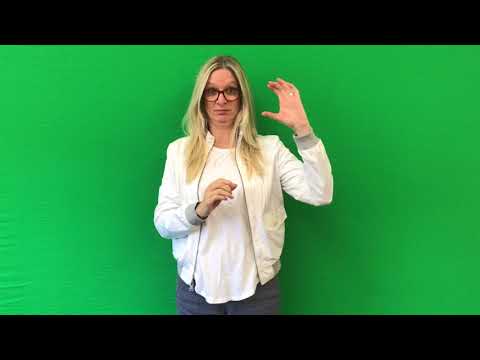
- Start with both hands open, palms facing down, and fingers spread slightly.
- Position your dominant hand above your non-dominant hand, with both hands parallel to each other.
- Slowly move your dominant hand in a circular motion above your non-dominant hand, mimicking the motion of an eclipse.
- As you perform the circular motion, maintain a facial expression that conveys curiosity or wonder, reflecting the awe often associated with celestial events.
Common Mistakes
- Some learners may forget to use both hands, which can make the sign feel incomplete.
- Moving the dominant hand too quickly can confuse the meaning; the motion should be smooth and deliberate.
- Neglecting facial expressions can make the sign less engaging; remember to show interest or amazement.
Related Signs
- 1 – The sign for the number one, often used in counting or as a reference.
- 100 – The sign for one hundred, useful for numerical discussions.
- 10 – The sign for ten, frequently seen in various contexts including counting.
- 12 – The sign for twelve, part of the basic number signs.
- 16 – The sign for sixteen, another number sign relevant for counting and age.
Using “Eclipse” in Everyday Conversations
The sign for “Eclipse” can be used in various everyday conversations, particularly when discussing astronomical events or expressing excitement about nature. Here are a few example sentences that demonstrate how to incorporate this sign naturally:
- “Did you see the eclipse last night?” (ECLIPSE last night SEE?)
- “The solar eclipse is happening next month.” (SOLAR ECLIPSE NEXT month HAPPENING?)
- “I love watching eclipses; they are so beautiful!” (I LOVE WATCHING ECLIPSE; THEY SO BEAUTIFUL!)
These conversations often arise during social gatherings, educational settings, or community events where people share their experiences and excitement about celestial phenomena.
Cultural Notes
The concept of an eclipse holds significance within the Australian Deaf community, as it often serves as a topic of shared interest and cultural pride. In many Indigenous Australian cultures, celestial events like eclipses are tied to storytelling and traditional beliefs. This can lead to rich discussions among Deaf individuals about the meanings and legends associated with eclipses.
While Auslan is generally consistent across Australia, slight variations in signs can occur between northern and southern dialects, particularly in the speed and emphasis of the sign. Observing the local Deaf community can provide insights into these nuances, enhancing communication and cultural understanding.
Tips for Learning This Sign
To effectively learn and remember the sign for “Eclipse,” consider these practical tips:
- Mirror Practice: Stand in front of a mirror while signing. This allows you to see your hand movements and facial expressions, helping you refine your technique.
- Observe Non-Manual Features: Pay attention to the facial expressions and body language that accompany the sign. These non-manual features are essential for conveying meaning in Auslan.
- Create Contextual Sentences: Practice using the sign in short sentences relevant to your daily life. For example, talk about upcoming astronomical events or share your experiences with friends.
By integrating these practice methods, you’ll not only master the sign for “Eclipse” but also deepen your overall understanding of Auslan and its cultural context.
Frequently Asked Questions
How can I use “eclipse” in a sentence?
You might say, “Did you see the eclipse last night?” which can be signed as “ECLIPSE LAST NIGHT SEE?”
Are there regional variations for this sign?
While the sign for “eclipse” is generally consistent, some local Deaf communities may have their own variations or gestures.
What are some signs similar to “eclipse”?
Signs like “moon,” “sun,” and “stars” are related and can be used in conjunction with “eclipse” when discussing celestial events.
How does this compare to BSL?
In British Sign Language (BSL), the sign for “eclipse” may differ, reflecting the unique linguistic structure of BSL.
What are some teaching tips for this sign?
Encouraging students to visualize the motion of the eclipse can help them remember the sign. Use videos or drawings to illustrate the concept.
Practice This Sign
Try signing Eclipse In Auslan with your camera and get AI coaching on your handshape, movement, and location.
Free · No signup required