
Cabdriver in Australian Sign Language (Auslan)
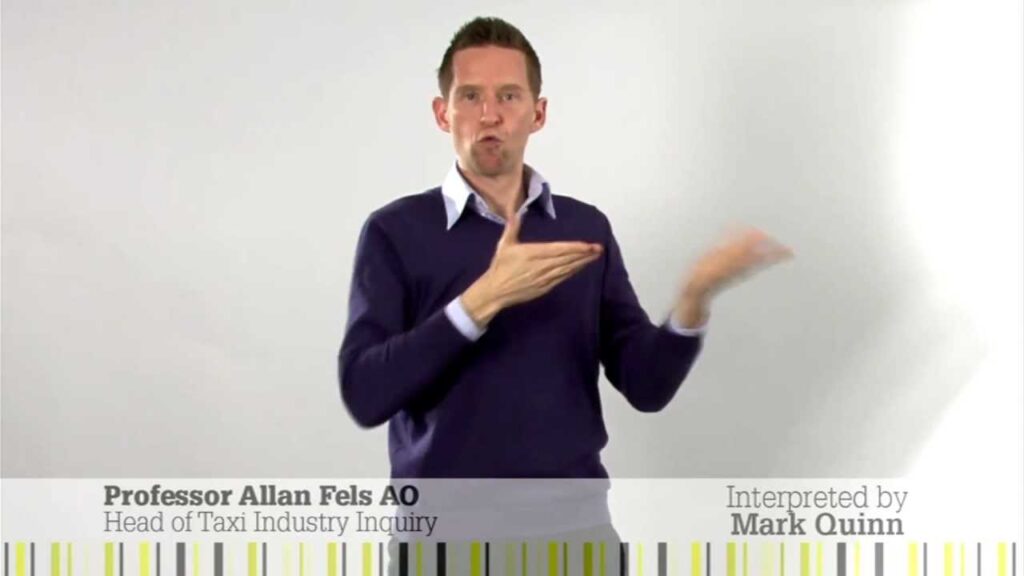
The sign for “cabdriver” in Auslan refers to someone who drives a taxi, providing a vital service in transportation. This sign is commonly used in conversations about travel, jobs, or when discussing transportation options.
Table of Contents
How to Sign “Cabdriver”

- Start with your dominant hand in a “C” handshape, with your fingers curled and your thumb extended.
- Position your hand near the side of your head, as if you are holding a steering wheel.
- Make a small circular motion with your hand, mimicking the action of driving a car.
- Maintain a neutral and friendly facial expression to convey the meaning of the sign.
Common Mistakes
- Some learners may forget to use the “C” handshape, opting for a flat hand instead.
- Others might not make the circular motion, which can lead to confusion about the meaning.
- Facial expressions are often overlooked; remember to keep your expression neutral and friendly.
Related Signs
- 1 – The sign for the number one.
- 1 Dollar – Signifying a single dollar bill.
- 10 – The sign for the number ten.
- 100 – The sign for one hundred.
- 11 – The sign for the number eleven.
Using “Cabdriver” in Everyday Conversations
Incorporating the sign for “cabdriver” into your everyday conversations can enhance your communication and make interactions more fluid. Here are a few example sentences where this sign can be naturally used:
- I need to call a cabdriver to take me to the airport. (I NEED CALL CABDRIVER AIRPORT)
- The cabdriver was very friendly and helped me find my way. (CABDRIVER VERY FRIENDLY HELP ME FIND WAY)
- My friend is training to become a cabdriver. (MY FRIEND TRAINING BECOME CABDRIVER)
These situations often arise in social settings, travel discussions, or when talking about occupation-related topics, making the sign relevant and practical.
Cultural Notes
The sign for “cabdriver” holds particular significance in the Australian Deaf community, where accessible transport is a common topic of discussion. Transportation services, including ridesharing and taxis, are essential for independence and mobility among Deaf individuals. Understanding and using this sign can foster connections and show awareness of shared experiences.
While there is generally consistency in the sign across Australia, some subtle differences may exist between northern and southern dialects. For example, in certain regions, the movement or handshape may vary slightly based on local signing preferences. Engaging with members from different parts of Australia can enrich your understanding of these variations.
Tips for Learning This Sign
To effectively learn and remember the sign for “cabdriver,” consider these practical strategies:
- Mirror Practice: Use a mirror to observe your handshape and movement. This visual feedback can help ensure that your sign matches the correct form.
- Watch Non-Manual Features: Pay attention to facial expressions and body language while signing. These non-manual features convey additional meaning and context.
- Use in Short Sentences: Practice incorporating “cabdriver” in brief sentences during conversations with peers or in practice groups. This will help reinforce memory and context.
Regular practice and engagement with the Deaf community will enhance your skills and confidence in using this sign.
Frequently Asked Questions
How can I use “cabdriver” in a sentence?
You might say, “My friend is a cabdriver,” which would emphasize the person’s job in the context of your conversation.
Are there regional variations for this sign?
While “cabdriver” is generally understood, some regions may have slight variations in handshape or movement. It’s good to observe local signers.
What are some similar signs?
Signs like “bus driver” or “chauffeur” have similar movements but may differ in handshape. Observing the context can help clarify meaning.
How does this sign compare to BSL?
British Sign Language (BSL) may have a different sign for “cabdriver.” It’s beneficial to learn regional signs if you communicate with BSL users.
Any tips for teaching this sign?
Encourage learners to practice in pairs to refine their technique and emphasize the importance of facial expressions in conveying meaning.
Practice This Sign
Try signing Cabdriver In Auslan with your camera and get AI coaching on your handshape, movement, and location.
Free · No signup required