
Auslan Interpreter Tis in Australian Sign Language (Auslan)
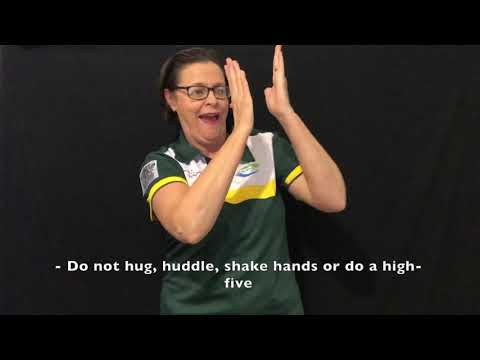
The sign “auslan interpreter tis” is used to refer to an interpreter who translates Auslan (Australian Sign Language) in various settings, such as educational or professional environments. This sign emphasizes the role of the interpreter in facilitating communication between Deaf and hearing individuals. It’s commonly used in contexts where accessibility and inclusivity are important.
Table of Contents
How to Sign “Auslan Interpreter Tis”
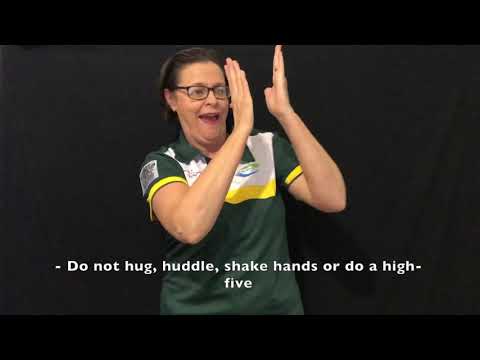
- Start by holding your dominant hand in the shape of the letter “I” (a fist with the pinky finger extended).
- Position your hand near your dominant shoulder, palm facing inward.
- Move your hand outward and slightly away from your body in a smooth, circular motion.
- While doing this, use facial expressions to convey the meaning of “interpreter,” showing clarity and connection.
- Finish the sign by bringing your hand back to the starting position, maintaining eye contact to engage with your audience.
Common Mistakes
- Forgetting to use appropriate facial expressions, which are crucial for conveying meaning in ASL.
- Incorrectly positioning the hand, leading to confusion with other signs.
- Overemphasizing movement, making the sign look exaggerated or unclear.
Related Signs
- Auslan – The sign for Australian Sign Language.
- 1 – The sign for the number one, often used in counting.
- 10 – The sign for the number ten, useful in various contexts.
- 100 – The sign for one hundred, frequently used in discussions about quantity.
- 15 – The sign for fifteen, helpful in numerical discussions.
Using “Auslan Interpreter Tis” in Everyday Conversations
The sign “Auslan Interpreter Tis” is commonly used in various everyday situations where communication needs to be facilitated between Deaf individuals and hearing individuals or when referring to the role of an interpreter. Here are a few example sentences that illustrate its use:
- At a doctor’s appointment: “I need Auslan interpreter Tis for my appointment.” This situation arises when a Deaf person wants to ensure effective communication with their healthcare provider.
- During a community event: “Can you arrange Auslan interpreter Tis for the meeting tomorrow?” This is relevant when planning events to ensure inclusivity for Deaf attendees.
- In a classroom setting: “The Auslan interpreter Tis will help me understand the lecture.” Here, it highlights the essential role of the interpreter in educational environments.
Cultural Notes
The sign “Auslan Interpreter Tis” holds significant cultural importance within the Australian Deaf community. It emphasizes the value placed on accessibility and communication in all spheres of life, from healthcare to education and social events. In Australia, there is a strong advocacy for the rights of Deaf individuals to receive information in their primary language, Auslan.
Dialect variations can occur between northern and southern regions. For instance, while the core sign remains the same, some variations in facial expressions or signing speed might be noted. It’s beneficial to engage with local Deaf communities to learn these subtle differences.
Tips for Learning This Sign
Practicing the sign “Auslan Interpreter Tis” can be fun and effective with the following methods:
- Mirror Practice: Use a mirror to observe your own signing. This helps in refining your hand shapes and movements, ensuring proper execution.
- Watch for Non-Manual Features: Pay attention to facial expressions and body language, which are crucial in Auslan. They add context and clarity to your signs.
- Use in Short Signed Sentences: Try incorporating the sign into everyday conversations. Use it contextually with simple phrases to reinforce your memory and understanding.
Regular practice and immersion in the Deaf community will enhance your skills and confidence in using “Auslan Interpreter Tis.”
Frequently Asked Questions
How can I use “auslan interpreter tis” in a sentence?
You could say, “I need an auslan interpreter tis for the meeting,” to express your need for an interpreter.
Are there regional variations for this sign?
Yes, while the core sign remains consistent, some regions may have slight variations in movement or facial expression.
Are there similar signs in ASL?
Yes, signs like “interpreter” and “translator” may have similar hand shapes but differ in movements and contexts.
How does this sign compare to BSL?
The sign for “interpreter” in BSL is different, reflecting the unique grammar and structure of British Sign Language.
What teaching tips can help with this sign?
Practice in front of a mirror to ensure your hand positioning and facial expressions are clear and effective.
Practice This Sign
Try signing Auslan Interpreter Tis with your camera and get AI coaching on your handshape, movement, and location.
Free · No signup required