Practice sign language with AI coachingTry it free →
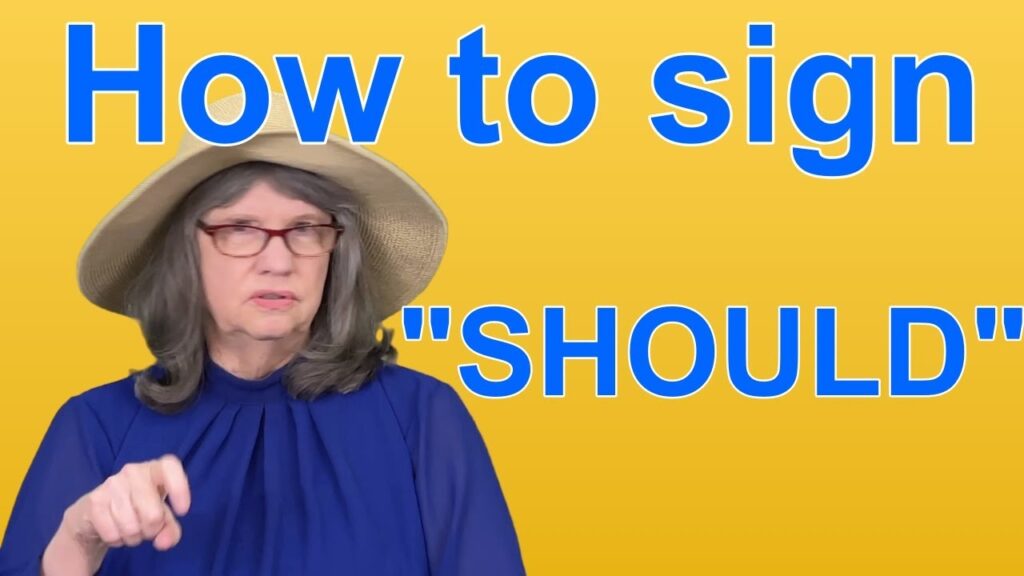
The sign for “should” in American Sign Language (ASL) is a commonly used verb that conveys obligation or recommendation. It’s often used when discussing advice or suggesting what might be the right course of action in a situation.
You can use the sign for ‘should’ to express recommendations or obligations in various contexts. For example, you might say, ‘You should study for the exam’ by signing ‘you’ followed by the sign for ‘should’ and then ‘study.’
Are there regional variations of the sign for ‘should’?
Yes, there can be slight variations in the sign for ‘should’ depending on the region. Some signs may have different handshapes or movements, so it’s beneficial to interact with local Deaf communities to learn and adapt to these differences.
Is there a difference between formal and informal usage of the sign for ‘should’?
While the sign itself remains the same, the context in which you use it can differ. In formal settings, you might pair it with a more serious facial expression, whereas in informal situations, a lighter tone may be appropriate. Always consider the context and your audience when using the sign.
What are some similar or easily confused signs with ‘should’?
The sign for ‘should’ can sometimes be confused with signs for ‘could’ or ‘would’ due to similar hand movements. Pay close attention to the context and accompanying facial expressions to distinguish between them effectively.
How does the sign for ‘should’ compare to BSL (British Sign Language)?
The sign for ‘should’ in BSL differs significantly from its ASL counterpart. In BSL, the sign incorporates different handshapes and movements, so it’s essential to learn each language‘s unique signs and structures if you are communicating with BSL users.
What are some effective teaching tips for the sign for ‘should’?
Encourage students to practice the sign in various contexts and sentences to build confidence. Use role-playing exercises to help them understand the nuance of obligation and suggestion, and emphasize the importance of facial expressions to convey meaning accurately.