
Owl in Sign Language (ASL)
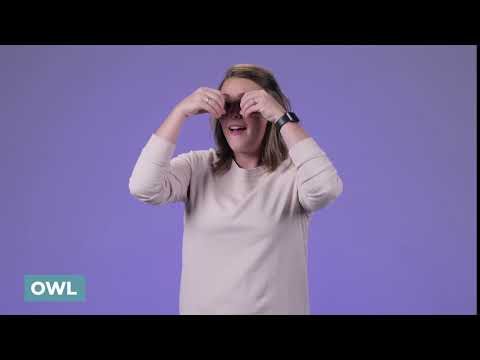
The sign for Owl represents the familiar nocturnal bird known for its large eyes and distinctive hoot. This sign is commonly used in conversations about wildlife, nature, and nocturnal animals. It can also appear in storytelling and educational contexts related to animals.
[VIDEO_PLACEHOLDER]
Table of Contents
Forming the sign
- Handshape: Start with your dominant hand in the form of a ‘C’ shape, as if you’re creating a claw.
- Location: Position your hand near your forehead, with the palm facing downwards.
- Movement: Move your hand slightly forward and downwards while simultaneously opening and closing the ‘C’ shape to mimic the action of an owl’s beak.
- Non-manual signals: Combine the sign with a facial expression that resembles the wide-eyed gaze of an owl for added context.
When performing the sign, remember to maintain a steady handshape and ensure your movement is fluid to effectively convey the concept of an owl. The facial expressions you apply can greatly enhance the meaning, making the sign more engaging and expressive.
Using “Owl” in sentences
The sign “Owl” can be used in various contexts, such as:
- “I saw an owl in the tree last night.” – Here, you would sign “Owl” after mentioning seeing it to clarify the subject.
- “Did you know that owls can rotate their heads almost all the way around?” – In this case, you can emphasize the sign to highlight the topic of discussion.
- “Our school is having a project on owls.” – “Owl” here is used to explain the focus of the project.
In each of these examples, the sign plays a crucial role in providing clarity and context to the conversation. You can also use it in storytelling to enrich the narrative.
Signs related to “Owl”
Here are some signs that are often associated with or relevant to “Owl”:
- Bird – A broader category that includes owls along with other types of birds.
- Night – Since owls are nocturnal, this sign can often accompany discussions about them.
- Hoot – The sound owls make, which can add depth to your communication about them.
- Forest – Owls commonly inhabit forested areas, making this sign relevant in related conversations.
Regional variation
The sign for “Owl” can have slight variations depending on the region or community. Some Deaf communities may incorporate different aspects of facial expressions or hand movements to convey the sign’s meaning. It’s beneficial to observe local signers or ask community members how they express the sign for “Owl” in their context. This awareness can help enhance communication and understanding within different Deaf cultures.
FAQ
What is the significance of the expression while signing “Owl”?
The expression adds emotional tone and context, making the sign more engaging and informative. It mimics the owl’s watchfulness and can convey fascination or caution.
Are there different signs for different types of owls?
While “Owl” typically refers to the general concept, some regions may have specific signs for different species of owls, especially in educational or scientific contexts.
Can I use “Owl” in casual conversation?
Absolutely! The sign is appropriate in casual settings, whether discussing wildlife, sharing stories, or participating in nature-themed discussions.
Is the handshape for “Owl” similar to other signs?
Yes, the ‘C’ handshape is used in several other signs, so context is essential to ensure clarity. Pay attention to movement and facial expressions to differentiate meaning.
How can I practice the sign “Owl” effectively?
Practice in front of a mirror to ensure your handshape, movement, and facial expressions are aligned. Consider incorporating it into storytelling or conversation with friends.
Practice ASL Signs
Use your camera to practice signs and get real-time AI feedback on your technique.
Free · No signup required