
Bird in Sign Language (ASL)
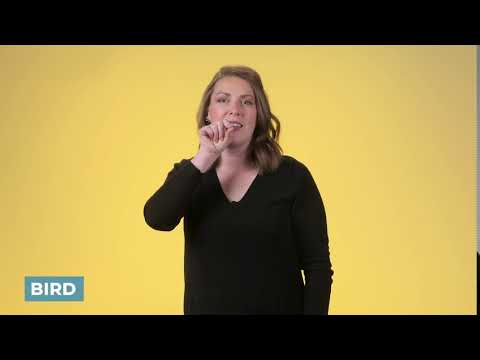
The sign “Bird” represents the concept of a bird, an avian creature that can be found in various environments. It is commonly used in everyday conversation, especially when discussing animals, nature, or specific birds. The sign is characterized by a simple yet expressive handshape that mimics the motion of a bird, making it visually intuitive.
[VIDEO_PLACEHOLDER]
Table of Contents
Forming the sign
- Handshape: Use your dominant hand in an open ‘B’ shape, with fingers extended and together, while keeping the thumb extended outward.
- Location: Position your hand near your mouth, as if mimicking a bird’s beak. This placement adds to the visual representation of the sign.
- Movement: Move your hand slightly forward and down, simulating the action of a bird flapping its wings. This motion can be subtle yet conveys the essence of flight.
- Non-manual signals: Raise your eyebrows slightly while performing the sign to add emphasis. This expression can indicate excitement or curiosity about the bird being discussed.
The sign effectively captures the essence of a bird through a combination of handshape and movement, allowing for a quick and clear understanding of what is being conveyed. It is often used in conjunction with other signs to create more complex phrases or sentences in ASL.
Using “Bird” in sentences
In ASL, “Bird” can be used to talk about specific types of birds, their behaviors, or even as a metaphor in various contexts. Here are a few examples:
- I saw a beautiful bird today. (You would sign “Bird” followed by signs for “see” and “beautiful.”)
- What kind of bird is that? (You can sign “What kind” using the relevant signs for “kind” and “that” after showing “Bird.”)
- I love to watch birds fly. (This sentence combines “Bird” with signs for “love,” “to watch,” and “fly.”)
Using “Bird” in various contexts helps to deepen your conversational skills in ASL, making it a useful sign to master.
Signs related to “Bird”
- Eagle: A specific type of bird known for its majestic appearance and hunting skills.
- Owl: A nocturnal bird often associated with wisdom and mystery.
- Fly: The action of birds in motion, often used in conjunction with “Bird.”
- Feather: The part of a bird that allows for flight, can be related to discussions about birds.
- Nest: Where birds live and lay their eggs, relevant when discussing birds’ habitats.
Common confusion with a similar sign
It’s important to differentiate between the sign for “Bird” and the sign for “Airplane.” While both involve flying, the handshape and movement significantly differ. “Airplane” is formed by holding the dominant hand in a ‘flat’ shape, gliding it forward in a straight line, while “Bird” involves a more fluid motion resembling flapping wings. Understanding these distinctions can help prevent miscommunication when discussing flying entities.
FAQ
What is the significance of the handshape in the sign “Bird”?
The handshape mimics a bird’s beak, visually representing the concept of a bird and making it easier for viewers to understand what is being signed.
Can the sign “Bird” be used in different contexts?
Yes, “Bird” can be used to discuss different species, behaviors, and even metaphorical contexts, enhancing your ability to express various ideas in ASL.
Are there regional variations of the “Bird” sign?
While the basic sign remains consistent, some regions may have unique variations or additional signs for specific birds, reflecting local culture and wildlife.
How can I practice the sign “Bird” effectively?
Practice in front of a mirror to ensure your handshape and movement are correct. Combine the sign with sentences, and engage in conversations about birds to reinforce your skills.
Practice ASL Signs
Use your camera to practice signs and get real-time AI feedback on your technique.
Free · No signup required