
Day in Sign Language (ASL)
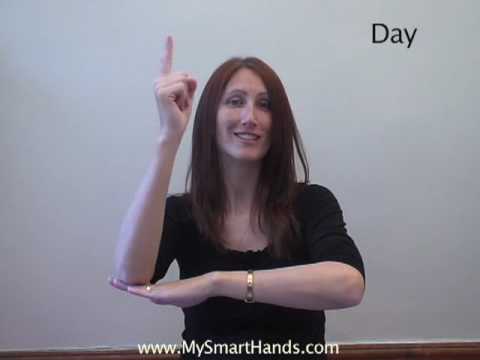
The sign “Day” represents a standard unit of time, typically referring to the period of daylight between sunrise and sunset. It is frequently used in everyday conversations about schedules, plans, and events. This sign is essential for discussing time-related topics in both formal and informal settings.
[VIDEO_PLACEHOLDER]
Table of Contents
Forming the sign
- Handshape: The dominant hand uses a flat handshape, resembling the letter “D.” The fingers are extended and held together, with the thumb positioned against the side of the index finger.
- Location: The sign is made in front of the body, typically at about shoulder height, to ensure visibility.
- Movement: The sign begins with the hand held in the “D” shape and moves downward in a slight arc before returning to the starting position. This movement represents the passage of time from day to night.
- Non-manual signals: Accompany the sign with an expression that matches the context. For example, a smile can indicate a positive discussion about the day ahead, while a frown might be appropriate when discussing a challenging day.
This sign effectively conveys the concept of a day and is recognizable in various contexts. It’s commonly used in sentences such as “What are your plans for the day?” or “Today was a great day!”
Using “Day” in sentences
The sign “Day” can be easily incorporated into everyday sentences. Here are a few examples:
1. **”What day is it?”** – In this context, fingerspelling the day of the week, such as “Monday,” can follow the sign for “Day.”
2. **”I work every day.”** – The sign can be paired with “work” to emphasize the routine nature of the action.
3. **”Tomorrow will be a sunny day.”** – Here, you can combine “tomorrow” and “sunny” with “Day” to create a complete thought about future plans.
Signs related to “Day”
To better understand the context and usage of “Day,” here are some related signs:
- Night – Represents the time period of darkness after sunset.
- Today – Refers to the current day.
- Tomorrow – Indicates the day following the current day.
- Week – Represents a span of seven days, adding context to discussions about time.
Where this sign comes from
The sign “Day” has its origins rooted in the visual and conceptual understanding of time. Many signs in ASL are derived from visual representations of their meanings. The downward movement in this sign symbolizes the transition from day to night, effectively illustrating the concept of a “day” as a cycle of time. The continuous adaptation of ASL helps this sign remain intuitive and relevant for users.
Common confusion with a similar sign
Some learners may confuse the sign “Day” with “Today,” as both involve the same handshape and location. However, the distinction lies in the movement and context. The sign for “Today” typically involves a more stationary hand without the downward movement that characterizes “Day.” Paying attention to context and movement can help clarify the intended meaning when communicating.
FAQ
Can I use “Day” for both past and future references?
Yes, “Day” can refer to any day, whether it’s in the past, present, or future, depending on the context provided in the conversation.
Is there a specific facial expression I should use with “Day”?
While there’s no strict rule, your facial expression should match the sentiment of the discussion. A positive expression works well when discussing enjoyable days.
How do I sign multiple days, like “three days”?
You can use the sign for “Day” and represent the quantity by using your non-dominant hand to indicate the number, or you might fingerspell the specific number of days if needed.
Is “Day” ever used in idiomatic expressions?
Yes, “Day” can be used in expressions like “Day by day,” which may require additional signs to convey the full meaning in context.
Can “Day” be combined with other signs to create a specific day of the week?
Absolutely! By combining “Day” with the sign for the specific day of the week, you can clearly communicate the intended meaning, such as “Monday” or “Friday.”
Practice ASL Signs
Use your camera to practice signs and get real-time AI feedback on your technique.
Free · No signup required