
Tomorrow in Sign Language (ASL)
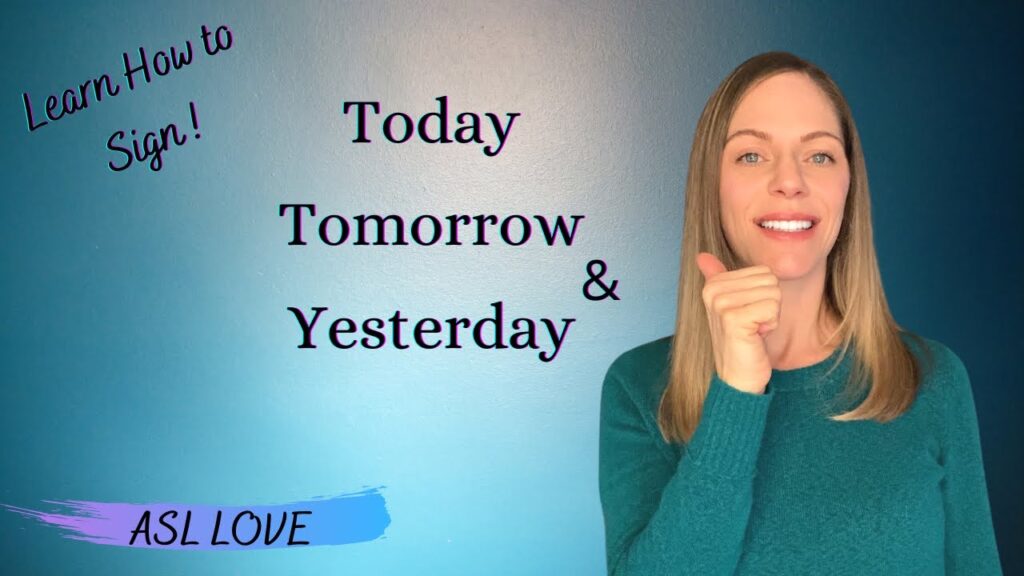
The sign “Tomorrow” refers to the concept of the day after today. It is commonly used in conversations about plans, schedules, and future events. Mastering this sign can help facilitate discussions about time and upcoming activities in a Deaf context.
[VIDEO_PLACEHOLDER]
Table of Contents
How to Form the Sign “Tomorrow”
- Handshape: Start with an extended dominant hand in the “A” handshape, where the thumb is placed against the side of the index finger.
- Location: Position your dominant hand near the side of your forehead, approximately at the level of your temple.
- Movement: Move your hand slightly away from your forehead in a forward motion, maintaining the “A” handshape throughout the movement.
- Non-manual signals: While signing “Tomorrow,” you can raise your eyebrows slightly to indicate the future tense. This helps clarify the meaning of the sign in context.
When you sign “Tomorrow,” focus on the smoothness of your movement and ensure your non-manual signals align with the sign, as they provide additional context and meaning. This sign is quick and straightforward, making it an accessible way to refer to future events in conversation.
Using “Tomorrow” in Sentences
Integrating “Tomorrow” into your sentences can enhance clarity when discussing future plans. Here are a few examples:
- “I have a meeting scheduled for tomorrow.”
- “Are we still going to the park tomorrow?”
- “Tomorrow, I will start my new job.”
In each of these examples, “Tomorrow” helps specify when an action or event will take place, making it a vital part of time-related discussions.
Signs Related to “Tomorrow”
Familiarizing yourself with signs that relate to “Tomorrow” can help expand your conversational skills. Here are a few to consider:
- Today: Used to refer to the current day.
- Yesterday: Refers to the day before today.
- Next: Indicates a subsequent event or occurrence.
- Future: A broader term for upcoming time.
Common Confusion with Similar Signs
New learners often confuse “Tomorrow” with the sign for “Next.” While “Tomorrow” specifically refers to the day after today, “Next” can apply to any upcoming event, such as the next item in a sequence or schedule. Being mindful of the context in which you use these signs will help you communicate more effectively.
Frequently Asked Questions
What is the importance of non-manual signals when signing “Tomorrow”?
Non-manual signals, such as raising your eyebrows, help convey the future tense and clarify the meaning of the sign. They provide additional context and emphasize the temporal aspect of your message.
Can “Tomorrow” be used in questions?
Yes, “Tomorrow” can easily be incorporated into questions. For example, you might ask, “Are you free tomorrow?” The sign remains the same regardless of the sentence structure.
How can I practice the sign “Tomorrow” effectively?
To practice, use it in various sentences about your upcoming plans. Pair it with other time-related signs to build your fluency in discussing future events.
Are there regional variations of the sign “Tomorrow”?
While “Tomorrow” is generally consistent across the United States, minor variations may exist in different Deaf communities. Observing and practicing with native signers can help you adapt to local nuances.
Practice ASL Signs
Use your camera to practice signs and get real-time AI feedback on your technique.
Free · No signup required