
Week in Sign Language (ASL)
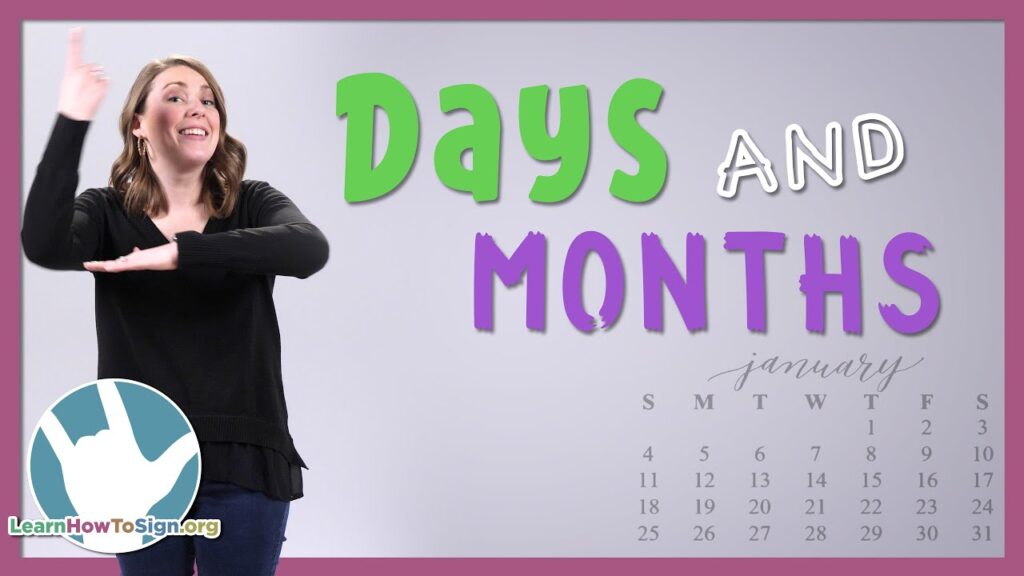
The sign “Week” refers to the common unit of time consisting of seven days, typically used in various contexts such as scheduling, planning, and discussing events. It’s a fundamental concept when talking about time, making it an essential sign in daily conversations. Understanding how to properly sign “Week” will enhance your ability to communicate effectively in ASL.
[VIDEO_PLACEHOLDER]
Table of Contents
Forming the sign
- Handshape: The dominant hand forms the letter “W” by using the index, middle, and thumb fingers while keeping the ring and pinky fingers closed.
- Location: The “W” handshape is positioned near the side of your head, typically around shoulder height.
- Movement: The sign involves a slight forward motion from the head to a neutral position in front of the body. This motion signifies the passage of time.
- Non-manual signals: As you make the sign, you may raise your eyebrows slightly to indicate the importance of the time being discussed.
To summarize, start with a “W” handshape, place it by your head, and move it forward while incorporating your facial expressions. This motion symbolizes the concept of a week passing by.
Using “Week” in sentences
When incorporating “Week” into sentences, you can use it to discuss schedules or upcoming events. For example, you can sign, “Next week, I have a meeting,” which is represented as “NEXT WEEK MEETING.” This structure makes it straightforward to convey your message clearly.
Signs related to “Week”
Here are a few related signs that may help enhance your vocabulary around time:
- Day – This sign represents a single day, crucial for discussing timeframes.
- Month – Use this sign when discussing longer periods of time.
- Year – Adds another layer to your time vocabulary.
- Schedule – Useful for planning and organizing events.
Regional variation
While the sign for “Week” is fairly standardized in ASL, there may be slight variations based on regional dialects or specific communities. For instance, some regions might incorporate different facial expressions or slight variations in the movement. It’s beneficial to observe and learn from local signers, as these differences can enrich your understanding and fluency.
FAQ
What is the difference between “Week” and “Day”?
“Week” refers to a seven-day period, while “Day” signifies just one day. Understanding the difference is crucial for effective communication about time.
Can I use “Week” to refer to a specific week?
Yes, you can specify a week by adding adjectives or context, such as “this week” or “next week,” to clarify your meaning in conversations.
Is there a different sign for “Weekend”?
Yes, “Weekend” is a separate sign that typically combines the signs for “Saturday” and “Sunday.” Knowing both can help you articulate your schedule more clearly.
How do I practice the sign “Week” effectively?
Practice the sign in context, such as by making sentences about your schedule. Repetition in daily conversations will help solidify your understanding and use of the sign.
Practice ASL Signs
Use your camera to practice signs and get real-time AI feedback on your technique.
Free · No signup required