
Chair in Sign Language (ASL)
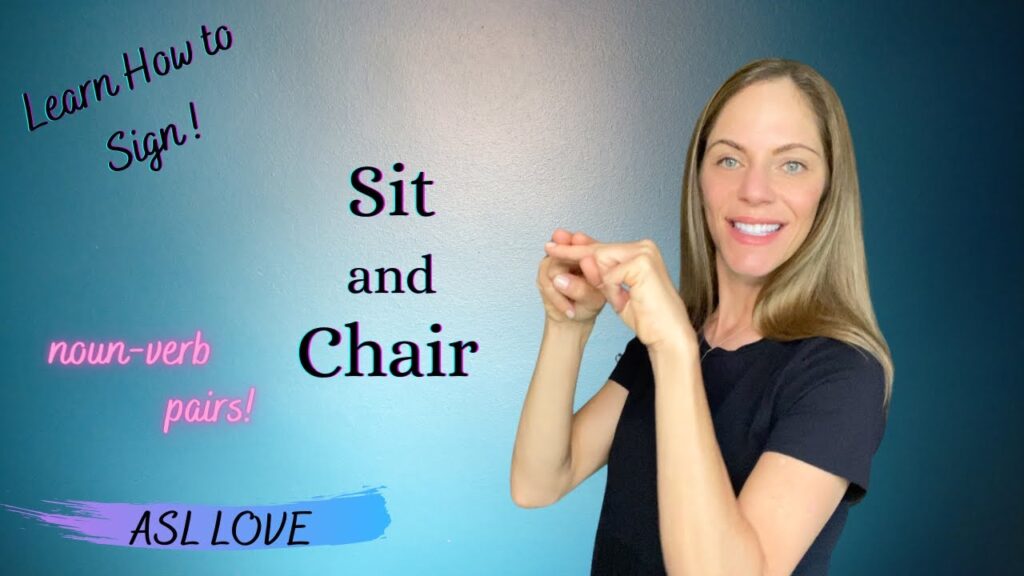
The sign for Chair represents the common furniture piece we use for sitting. It is frequently used in contexts involving home decor, seating arrangements, or discussions about furniture in general. Understanding how to sign Chair can enhance communication in various everyday scenarios.
[VIDEO_PLACEHOLDER]
Table of Contents
Forming the sign
- Handshape: Use your dominant hand in a bent ‘B’ handshape (with fingers extended and together, palm facing down).
- Location: The sign is made in front of your body, typically around waist level.
- Movement: With your dominant hand, mimic the action of placing a chair down by moving your hand slightly downward or to the side, as if settling into a chair.
- Non-manual signals: A slight nod or facial expression indicating comfort can accompany this sign, emphasizing the seating aspect.
When you form the sign Chair, ensure that your movements are fluid and confident, as this helps convey the intended meaning. The bent ‘B’ handshape effectively represents the physical structure of a chair, while the downward motion mimics the action of placing or sitting in a chair.
Using “Chair” in sentences
In conversations, you might say, “I need a chair for the meeting.” In ASL, you would sign the following: “MEET ME” (sign for meeting) “CHAIR” (sign for chair). When discussing furniture, you can include this sign in context: “This chair is comfortable” would translate to “THIS CHAIR COMFORTABLE” in ASL.
Signs related to “Chair”
Familiarizing yourself with related signs can enrich your vocabulary and contextual understanding. Here are some signs that relate closely to Chair:
- Table – Useful for discussing furniture arrangements.
- Sofa – Often used in conjunction with chair when talking about seating options.
- Couch – Another common piece of furniture that complements the discussion of seating.
- Sit – The action associated with the chair itself.
- Furniture – A broader term that encompasses chairs and other seating options.
Regional variation
The sign for Chair may have slight variations depending on the region or community. For example, in some areas, the movement might be more pronounced or accompanied by additional gestures that reflect local signing styles. It’s beneficial to observe and adapt to these variations when communicating with different Deaf individuals.
FAQ
What is the handshape for Chair?
The handshape for Chair is a bent ‘B’ shape made with your dominant hand.
Can I use the sign for Chair in different contexts?
Yes, you can use the sign for Chair when discussing different types of chairs, such as office chairs, dining chairs, or even metaphorically when talking about roles in a meeting.
Is there a specific sign for different types of chairs?
While the basic sign for Chair remains the same, you can specify types by adding descriptive signs or fingerspelling, like “OFFICE CHAIR.”
Do hearing people use this sign as well?
Typically, the sign for Chair is primarily used by Deaf individuals, but hearing people who have learned ASL may use it in appropriate contexts.
What is the importance of facial expressions when signing Chair?
Facial expressions in ASL add context and emotions to signs, including Chair, helping clarify your intent and enhancing the overall communication.
Practice ASL Signs
Use your camera to practice signs and get real-time AI feedback on your technique.
Free · No signup required