
Furniture in Sign Language (ASL)
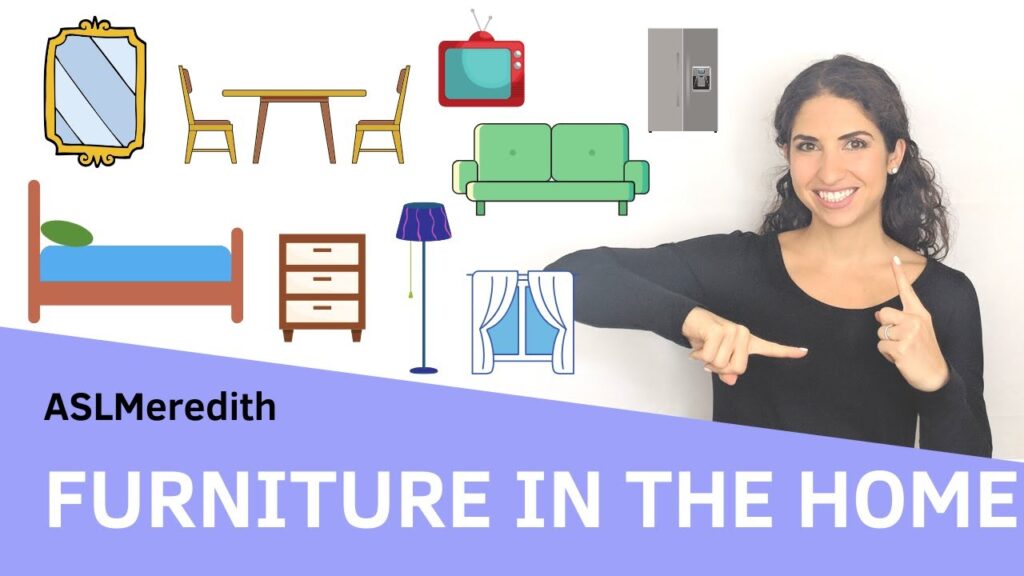
The sign for Furniture represents various items used to furnish a living space, such as chairs, tables, and sofas. It is commonly used in conversations about home decor, interior design, and shopping for household items. This sign helps to clearly communicate concepts related to home and comfort.
[VIDEO_PLACEHOLDER]
Table of Contents
Forming the sign
- Handshape: Use the dominant hand in a flat “B” handshape. The fingers should be together and extended, with the thumb pointing outwards.
- Location: Position your flat hand in front of your chest, about mid-line.
- Movement: Move the hand slightly forward and downward in a gentle arc, as if you are placing furniture down onto the floor.
- Non-manual signals: Maintain a neutral facial expression while signing, but feel free to add a slight nod to emphasize the action of placing furniture.
The movement simulates the act of setting down a piece of furniture, making it a visual and intuitive sign. The flat handshape conveys the flat surfaces of furniture items, enhancing the meaning of the sign. By incorporating these elements, the sign becomes an effective way to convey information about objects that furnish our living spaces.
Using “Furniture” in sentences
In everyday communication, you might say, “I bought new Furniture for my living room.” This illustrates how the sign can be integrated into a sentence about home improvement. Another example could be, “Do you like this Furniture design?” Here, the sign is used to inquire about personal taste in furniture styles.
It’s essential to use the sign appropriately according to context. When discussing furniture pieces, such as a sofa or a table, it can be more specific by adding additional signs to clarify which item is being referenced.
Signs related to “Furniture”
- Table – Sign for a flat surface typically used for eating or working.
- Chair – Sign indicating a seat that often accompanies the concept of furniture.
- Sofa – A specific type of furniture designed for seating multiple people.
- Couch – Another term for a piece of furniture similar to a sofa, often used interchangeably.
- Decor – Sign for decorative elements that complement furniture in a living space.
Where this sign comes from
The sign for “Furniture” has its roots in the early development of American Sign Language, which was influenced by both French Sign Language and local sign systems used by the Deaf communities throughout the United States. As the concept of furniture became central to discussions about home and living environments, the sign evolved to encompass a range of items that serve functional and aesthetic purposes within a home.
This evolution reflects the growing importance of home furnishings in American culture, as well as the desire to communicate effectively about one’s living space. Understanding the history of this sign can deepen one’s appreciation for its use in everyday conversation.
Common confusion with a similar sign
One common confusion arises between the sign for “Furniture” and the sign for “House.” While both are related to living spaces, they represent different concepts. “Furniture” refers specifically to the items within a house, such as tables and chairs, whereas “House” refers to the structure itself. To avoid confusion, it’s essential to clarify the context when using these signs, ensuring clear communication regarding whether you’re discussing the physical building or the items contained within it.
FAQ
Can “Furniture” refer to all types of furniture items?
Yes, the sign for “Furniture” encompasses a variety of furniture items, including chairs, tables, sofas, and more. It serves as a general term for furnishing items in a living space.
How can I specify different types of furniture when signing?
You can specify different types of furniture by combining the sign for “Furniture” with the specific item sign, such as “Chair” or “Table,” to make your meaning more precise.
Is there a difference in signing “Furniture” based on region?
While the sign for “Furniture” is generally consistent across regions, some variations may exist in different Deaf communities. It’s best to familiarize yourself with local signs as needed.
What should I do if I’m unsure about the sign for a specific piece of furniture?
If you’re uncertain about a specific sign, don’t hesitate to fingerspell the name of the furniture item. This ensures clarity, especially when discussing less common items.
Practice ASL Signs
Use your camera to practice signs and get real-time AI feedback on your technique.
Free · No signup required