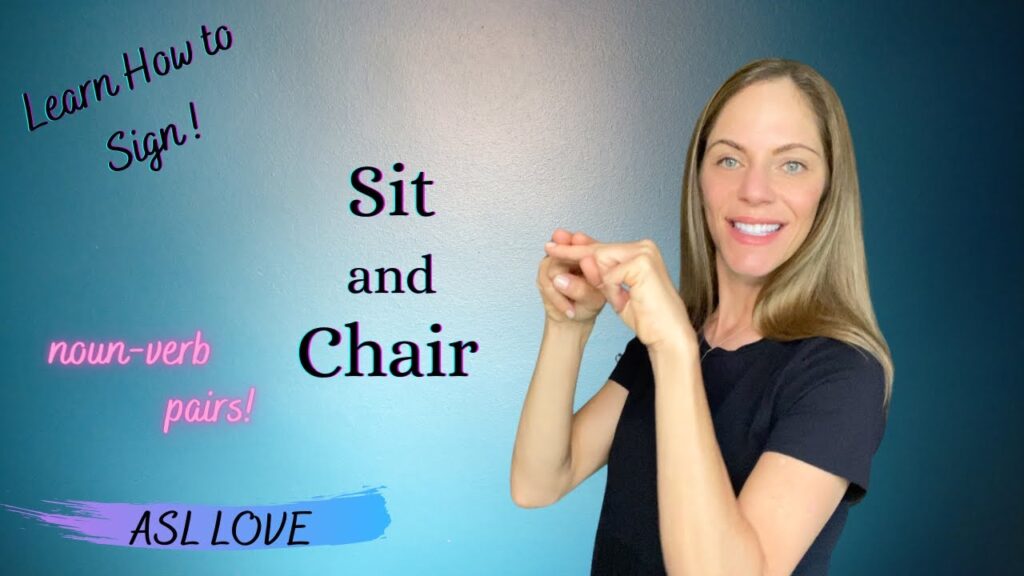
Sit in Sign Language (ASL)

How to sign Sit in ASL
Practice sign language with AI coachingTry it free →

The sign for “sit” is used to indicate the action of sitting down or to refer to a seated position. This sign is often used in various contexts, such as during classes, meetings, or casual conversations when inviting someone to take a seat.

Last reviewed: March 15, 2026

Frequently Asked Questions

How can I use the sign for ‘sit’ in sentences?

The sign for ‘sit’ can be incorporated into various sentences. For example, you might say, ‘Please sit down,’ by signing ‘please’ followed by ‘sit.’ This helps to convey your message clearly and politely.

Are there regional variations of the sign for ‘sit’?

Yes, regional variations do exist in ASL. While the standard sign for ‘sit’ involves placing your dominant hand in a ‘flat’ position as if indicating a seated person, some regions may have slight variations in handshape or movement. It’s always beneficial to observe local signers to understand these nuances.

Is there a difference between formal and informal usage of the sign for ‘sit’?

The sign for ‘sit’ itself remains the same in both formal and informal contexts. However, the context in which you use it may differ; for instance, in formal settings, you might pair it with polite signs like ‘thank you‘ or ‘please’ to convey respect, while in casual situations, you may use it more freely.

What are some similar or easily confused signs with ‘sit’?

The sign for ‘sit’ can sometimes be confused with signs like ‘stand’ or ‘stay.’ It’s essential to pay attention to hand shapes and movements, as ‘stand’ involves a different motion. Practicing in front of a mirror can help you distinguish between these signs.

How does the sign for ‘sit’ compare to BSL (British Sign Language)?

In BSL, the sign for ‘sit’ is different from ASL. BSL uses a specific handshape and movement that might not resemble the ASL sign. Understanding these differences is important for effective communication when interacting with Deaf communities in different regions.

What are some effective teaching tips for the sign ‘sit’?

When teaching the sign for ‘sit,’ demonstrate it in context, such as during a classroom activity or a conversation. Encourage students to practice with each other, using role-play scenarios to reinforce their understanding. Visual aids, like videos or illustrations, can also enhance learning and retention.

Table of Contents

Sign at a Glance

Type Verb
Sign Type Asymmetricaldifferenthandshape
Location Hand
Handshape curved_h
Movement Straight
Iconicity Moderately Iconic (3.56/7) — Arbitrary
Frequency Common (5.615/7)
Age of Acquisition Toddler (2-3 years) (~25 months)
Semantic Category Event
ASL Signbank View sign video →

Data: ASL-LEX 2.0 · ASL Signbank (Caselli et al., 2017)

How to Sign “Sit”

  1. Start with your dominant hand in a flat “B” handshape (palm facing down).
  2. Position your hand at waist level, as if you are placing it on a surface.
  3. Move your hand downwards slightly, simulating the action of lowering oneself into a seated position.
  4. Maintain a relaxed facial expression, and you can nod slightly to reinforce the action of sitting.

Common Mistakes

  • Some learners may use a fist instead of a flat hand, which can change the meaning of the sign.
  • Not moving the hand down enough to indicate the action, making it unclear that the sign refers to sitting.
  • Forgetting to include appropriate facial expressions, which are essential in conveying meaning in ASL.

Practice ASL Signs

Use your camera to practice signs and get real-time AI feedback on your technique.

Start Practicing →

Free · No signup required