
Fly in Sign Language (ASL)
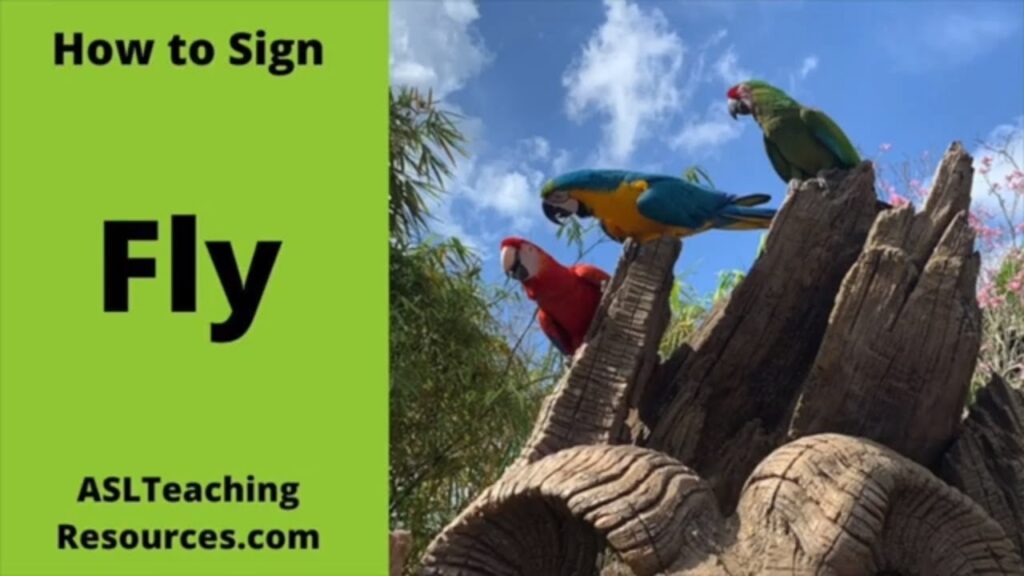
The sign “Fly” represents the action of flying, which can refer to birds, airplanes, or even the act of someone or something moving swiftly through the air. This sign is commonly used in various contexts, including discussions about travel, nature, and even metaphorical expressions of freedom. Understanding how to sign “Fly” will enhance your ability to communicate about these topics with the Deaf community.
[VIDEO_PLACEHOLDER]
Table of Contents
Forming the sign
- Handshape: Use your dominant hand in a bent “B” handshape. Your fingers should be extended and together, while your thumb is extended to the side.
- Location: Position your hand in front of your body, typically around chest height. This placement allows for a clear view of the movement.
- Movement: Move your hand forward and slightly upward, mimicking the motion of an object taking off or soaring through the air. You can repeat this movement to indicate multiple instances of flying.
- Non-manual signals: Accompany the sign with facial expressions that convey excitement or speed. Raised eyebrows can indicate a question or enthusiasm, while a relaxed face may convey calmness.
This sign effectively mimics the natural motion of flying, making it intuitive to understand. Practice the sign in front of a mirror to ensure your movements are clear and expressive.
Showing tense, aspect & repetition
In ASL, verbs can convey different tenses, aspects, and repetitions through movement and context. For the sign “Fly,” you can show tense by altering the duration and speed of the movement. For example, a quick, upward motion can indicate that something is flying right now, while a prolonged movement may suggest a habitual action, like “I fly often.” Repeating the sign can emphasize continuous or multiple flights.
“Fly” in everyday signing
This sign is versatile and can be used in a variety of contexts. For instance, you might use “Fly” when talking about a recent trip, discussing the migration of birds, or describing a child’s play. Incorporating “Fly” into your everyday vocabulary will enhance your storytelling abilities and make your conversations more engaging.
Mistakes to avoid
One common mistake when signing “Fly” is to use a flat handshape instead of the correct bent “B” handshape. This can lead to confusion, as it may resemble a different sign. Additionally, ensure that your movement is fluid and not jerky, as this can change the meaning of the sign. Lastly, avoid signing “Fly” too far from your body, as this can make it less recognizable.
Common confusion with a similar sign
Some may confuse the sign “Fly” with the sign for “Bird.” While “Fly” involves the upward and forward motion of an object moving through the air, “Bird” uses a pinching motion near the mouth to indicate the beak of a bird. Understanding the distinct movements and handshapes will help you differentiate between these two signs.
FAQ
What is the context in which I would use “Fly”?
You can use “Fly” when discussing travel, nature, or metaphorical concepts of freedom. For example, you might say, “I will fly to New York,” or “Birds fly south for the winter.”
Can “Fly” be used as a noun?
While “Fly” is primarily a verb in ASL, it can also refer to a fly (the insect) when signed in a different context, utilizing a different handshape and movement.
Are there any regional variations for signing “Fly”?
The sign for “Fly” tends to be consistent across many regions, but local signs may exist for specific birds or modes of flying, which could vary.
How can I practice signing “Fly” effectively?
Practice in front of a mirror to observe your movements and handshape. Additionally, try incorporating “Fly” into sentences about personal experiences with flying or watching birds.
Is there a way to emphasize the speed when signing “Fly”?
Yes, you can emphasize speed by making the movement quicker and more dynamic. Accompanying it with an enthusiastic facial expression also helps convey speed and excitement.
Practice ASL Signs
Use your camera to practice signs and get real-time AI feedback on your technique.
Free · No signup required