
NZSL What Is Your Name – How to Ask and Introduce
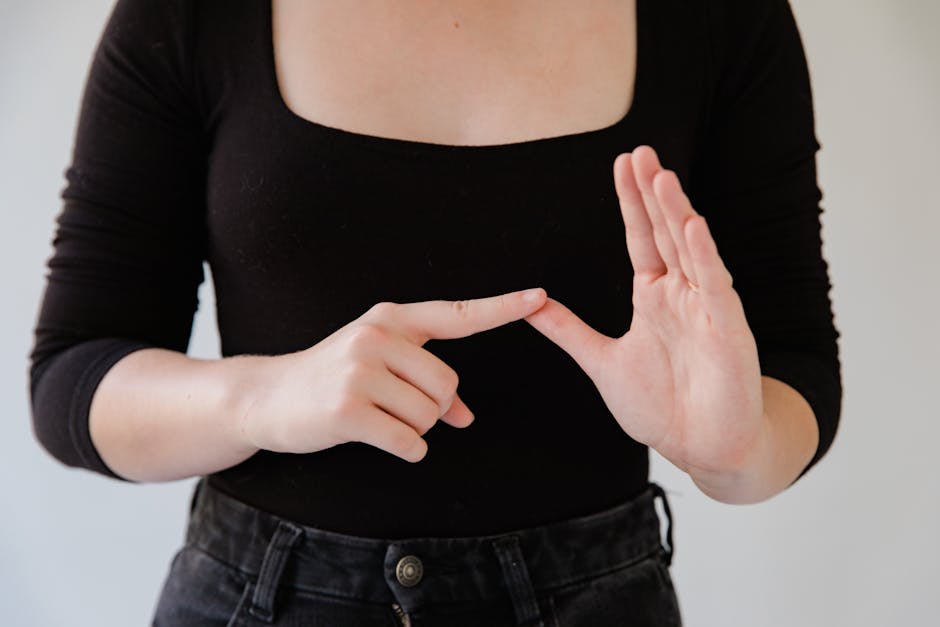
Learning “nzsl what is your name” — how to ask someone’s name and introduce yourself — is the most essential conversational skill for any NZSL beginner. It’s the gateway to every interaction with the Deaf community and the phrase you’ll use more than any other in your early NZSL journey. The good news: it’s simple to learn and immediately useful.

Table of Contents
Asking “What Is Your Name?”
In NZSL, “What is your name?” follows topic-comment structure: YOUR — NAME — WHAT, with furrowed eyebrows marking it as an information question. Point toward the person (YOUR), sign NAME, then sign WHAT with questioning facial expression. The furrowed eyebrows are mandatory grammar — without them, the sentence loses its question function.
A simpler version — just signing NAME with a questioning look while pointing at the person — works perfectly in casual contexts. Like English’s “Your name?” instead of the full “What is your name?”, this abbreviated form is common and natural in relaxed NZSL interaction.
The NAME sign in NZSL is specific to New Zealand. While it may share features with BSL or Auslan versions (due to BANZSL family connections), always learn and use the NZSL-specific form from the NZSL Online Dictionary to ensure accuracy in New Zealand Deaf community contexts.
Practice Makes Perfect
Test your sign language skills with our free practice app.
Practise the complete question phrase until it flows naturally. You’ll use it at every Deaf event, every new introduction, and every community gathering. Fluent delivery of this phrase makes a strong first impression and shows respect for NZSL as a language.
Introducing Yourself
To say “My name is…” point to yourself (MY), sign NAME, then fingerspell your name using the NZSL manual alphabet. The two-handed alphabet shared with BSL and Auslan lets you spell any name clearly. Practise your name until it flows without hesitation — it’s the word you’ll fingerspell most often in NZSL.
Mouth your full name while fingerspelling it. This lip-reading cue, combined with the fingerspelled letters, helps the other person catch your name even if your fingerspelling is still developing. Don’t worry about speed — clarity matters more than pace at this stage.
Be prepared to repeat your name. Name exchanges often involve repetition — the Deaf person may ask you to spell it again or spell it back to confirm they’ve got it. This confirming exchange is standard NZSL protocol, not a sign that your fingerspelling is poor.
After exchanging names, add “nice to meet you” or “I’m learning NZSL” to extend the introduction. These follow-up phrases set a positive tone and, in the case of the learning disclosure, help the other person calibrate their signing speed and complexity for your level.
Name Signs in NZSL
In Deaf culture, people are often given name signs — personalised signs that identify them without fingerspelling. Name signs are given by the Deaf community, not self-chosen. They may be based on a physical characteristic, personality trait, or creative association. Receiving a name sign is a mark of community acceptance.
Until you receive a name sign, always fingerspell your name. Don’t invent your own name sign — this is an important cultural norm. Self-assigned name signs don’t carry the community-given meaning that makes name signs culturally significant. Use fingerspelling and let the community decide if and when to give you a name sign.
Some Deaf people use their name sign exclusively among those who know it and fingerspell when meeting new people. As a learner, you’ll primarily encounter fingerspelled names. As your community connections deepen, you’ll learn people’s name signs and may eventually receive one yourself.
Māori names follow the same protocol — fingerspelling using the NZSL alphabet. For common Māori names, the Deaf community may have developed specific name signs. The NZSL dictionary and community members can guide you on how specific names are commonly expressed in NZSL.
Building on Introductions
After names, common follow-up questions include “Where are you from?” and “What do you do?” Learning these extensions gives you a complete introduction sequence that covers the basics of getting to know someone in NZSL.
“I’m learning NZSL” is a powerful follow-up. Signing SIGN LANGUAGE — I — LEARN tells the Deaf person you’re a learner, prompting them to sign more slowly and use simpler vocabulary. This one phrase dramatically improves every subsequent interaction during your early learning period.
Hello and thank you bookend every introduction. Start with a warm hello, exchange names, share a bit about yourself, and close with a sincere thank you for their patience and conversation. This complete sequence — greeting, introduction, closing — gives you a comfortable framework for every new encounter in the NZSL community.
Every introduction is a step deeper into the community. The first time feels daunting. The fifth time feels easier. The twentieth time feels natural. Keep introducing yourself, keep attending events, and keep practising. The NZSL community remembers and appreciates every learner who shows up and tries.
Related Articles
Practice ASL Signs
Use your camera to practice signs and get real-time AI feedback on your technique.
Free · No signup required