
Love Bite in New Zealand Sign Language (NZSL)
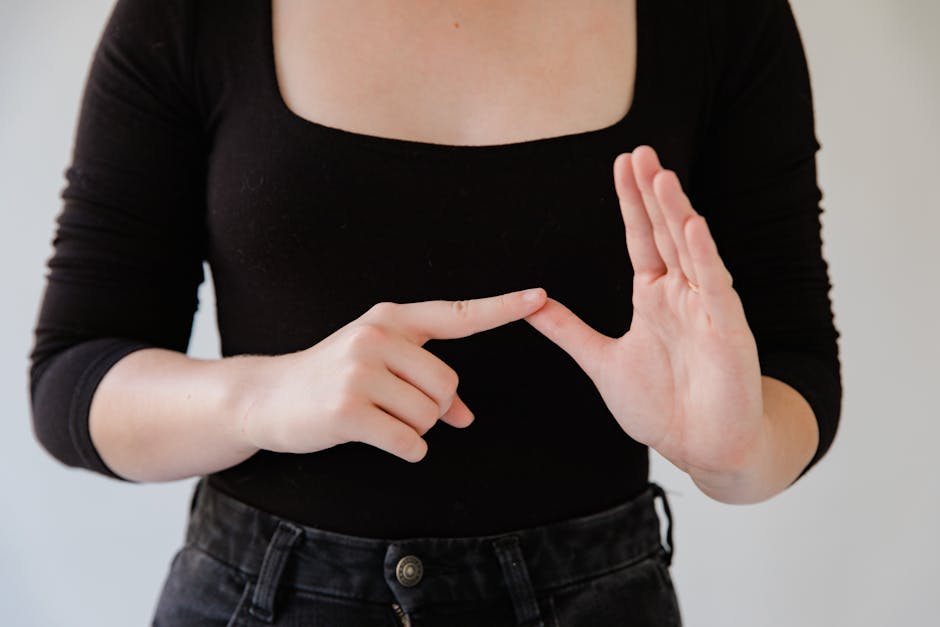
The sign “love bitehickeyngau kakī” is a fun expression used informally within the NZ Deaf community to refer to a playful or affectionate bite, often shared between loved ones. It’s a way to convey intimacy and affection, and is commonly used in casual conversations among friends or partners.
Table of Contents
How to Sign “Love Bitehickeyngau KakīNoun; Verb” in NZSL
- Start with your dominant hand in a flat ‘B’ shape (palm facing down).
- Position your hand near your mouth, as if you are about to give a gentle bite.
- Move your hand slightly forward, mimicking the action of biting, while keeping a playful facial expression.
- For added emphasis, you can lightly tap your non-dominant hand with the dominant hand during the movement.
Common Mistakes
- Forgetting to use facial expressions, which are key in NZSL to convey tone and emotion.
- Using a flat hand instead of the correct ‘B’ handshape, leading to confusion.
- Not maintaining the playful movement, which is essential for the sign’s meaning.
NZSL vs ASL
The sign for “love bitehickeyngau kakī” differs significantly from American Sign Language (ASL). In ASL, the concept might be conveyed with a different sign or gesture entirely, lacking the playful nuance found in NZSL. This highlights the unique cultural expressions within NZSL, shaped by local experiences and influences, including those from British Sign Language (BSL) as well as te reo Māori.
Related Signs
- (All Of) You – A sign used to address a group or individual affectionately.
- (Baby’S) Dummy – Refers to a pacifier for infants.
- (Be) Careful – A warning or reminder to be cautious.
Frequently Asked Questions
How can I use “love bitehickeyngau kakī” in a sentence?
You can use it in a playful context, such as “I gave them a love bitehickeyngau kakī!” to express affection.
Are there any regional variations for this sign in NZ?
Most of New Zealand uses this sign consistently, but some regions may have slight variations in facial expressions or hand movements.
Is there a similar sign in ASL?
ASL may use a different sign for similar expressions of affection; it’s good to learn the differences when communicating with ASL users.
What tips do you have for learning this sign?
Practice with friends and pay attention to facial expressions, as they add depth to the sign’s meaning.
Can I use this sign in formal situations?
This sign is quite informal and best suited for casual conversations rather than formal settings.
Practice This Sign
Try signing Love Bitehickeyngau KakīNoun; Verb with your camera and get AI coaching on your handshape, movement, and location.
Free · No signup required