
Just in New Zealand Sign Language (NZSL)
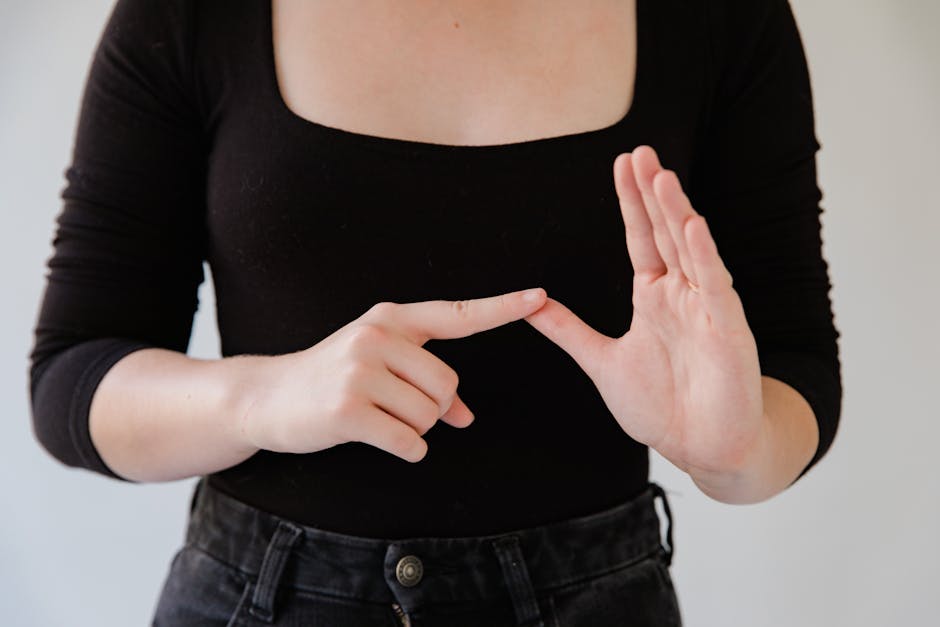
The sign for “justmerely, only, recently” (kātahi anō, noa) is commonly used in the NZ Deaf community to express limitation or to emphasize that something is not more than just what is stated. This sign can convey a sense of recentness or exclusivity in conversation, making it a valuable addition to everyday communication.
Table of Contents
How to Sign “Justmerely, Only, RecentlykāTahi Anō, Noaadverb” in NZSL
- Start with your dominant hand open, fingers extended and together, palm facing downward.
- Position your hand slightly above waist height, in front of your body.
- Move your hand forward a short distance while keeping your fingers together and straight.
- As you move your hand, slightly nod your head or raise your eyebrows to indicate emphasis on “only” or “just”.
- Finish the movement with a relaxed hand, returning to the starting position.
Common Mistakes
- Some learners may confuse the direction of movement; remember it should move forward slightly, not sideways or upwards.
- Facial expressions are crucial; neglecting to nod or raise eyebrows can change the emphasis or meaning.
- Using the wrong hand shape, such as a closed fist instead of an open hand, can lead to misunderstandings.
NZSL vs ASL
In NZSL, the sign for “justmerely, only” has a unique hand shape and movement that differs from ASL. In ASL, this concept is often communicated with a different sign that may involve a more complex movement and facial expression. Understanding these nuances is essential for effective cross-cultural communication.
Related Signs
- (All Of) You – Used to refer to a group of people.
- (All Of) Youyou Allkoutou (Katoa)Pronoun – An inclusive reference to everyone addressed.
- (Baby’S) Dummy – Refers to a pacifier used by infants.
- (Be) Careful – A sign to indicate caution or attention.
- (Be) Passive – Used to express a state of being passive.
Frequently Asked Questions
How can I use this sign in a sentence?
You can say “I just merely want to help” by signing the concept of “I” followed by the sign for “justmerely” and then “help.”
Are there regional variations in how this sign is used?
While the sign is generally consistent across New Zealand, some users in different regions may have slight variations in movement or emphasis, so it’s helpful to observe local signing styles.
What is a similar sign to “justmerely”?
A similar sign would be “only,” which emphasizes exclusivity in the same way. The handshape and movement may be similar but could differ in facial expression.
What tips do you have for learning this sign?
Practice in front of a mirror to see your facial expressions and hand movements. Watching native signers can also help you understand the context better.
Is this sign commonly used in everyday conversation?
Yes, it’s frequently used in casual conversations to clarify or emphasize statements, making it an important sign to learn.
Can I use this sign in formal settings?
While it may not be as common in formal settings, it’s still appropriate as long as the context is clear and the audience understands its meaning.
Practice This Sign
Try signing Justmerely, Only, RecentlykāTahi Anō, Noaadverb with your camera and get AI coaching on your handshape, movement, and location.
Free · No signup required